

100 investors to watch 2026 100 investors to watch 2026 100 investors to watch 2026
Monday 16 November, 2026
[email protected]
Resilience Media
  • News
    • Events
    • Interview
    • Startups
    • Venture
    • Weekly Digest
  • Resilience Conference
    • Resilience Conference London — Oct 2026
    • Resilience Conference Copenhagen — May 2026 (PAST)
    • Resilience Conference Warsaw — Apr 2026 (PAST)
  • Launch
  • About
  • Guest Posts
    • Author a Post
  • Subscribe
No Result
View All Result
Resilience Media
No Result
View All Result

Frankenburg has raised up to $50M at a $400M valuation, say sources

The Baltic counter-drone startup is finding momentum amid an increased concern over drone incursions from adversaries

Ingrid LundenJulia GiffordbyIngrid LundenandJulia Gifford
January 28, 2026
in European Defence, News, Startups, Venture
Frankenberg CEO Kusti Salm at Resilience Conference 2025

Frankenberg CEO Kusti Salm at Resilience Conference 2025

Share on Linkedin

There are multiple thousands of kinetic and battle-ready drones being produced for use in Ukraine every month, but not just by Allied countries – by adversaries, too. Whatever use drones might have in future active combat beyond Ukraine, that drone race is putting a spotlight on startups building protection against incursions. In one of the latest developments, Frankenburg — a startup building low-cost, AI-based anti-drone missile systems — is ramping up. And to fuel that growth, Resilience Media has learned that it has raised capital approaching $50 million at a valuation of around $400 million.

You Might Also Like

EU sanctions Russian hackers and propagandists over hybrid attacks on Europe

Attempted arson attack on Threod Systems leads to Russian border closures in Estonia

Plural locks down €1B for its third fund to back European startups building ‘frontier’ tech

Multiple sources say the round is closed and will be announced soon. The funding is bringing in a slate of new investors, they added, and may lay the groundwork for a bigger round possibly as soon as later this year. Current backers of the startup include London’s Blossom Capital, Shellona Ltd, Estonian private equity firm MM Group, and the CEO of Milrem Robotics, Kuldar Vaarsi.

Big investors and supporters of defence tech in Europe have included General Catalyst and Plural, both of which declined to comment for this story.

Other investors that Resilience Media contacted explicitly said they were not involved in the round.

Kusti Salm, the CEO of Frankenburg, declined to comment for this story. We will continue to update this story as we learn more.

The investment is not only an important milestone for Frankenburg; it also underscores some bigger themes in defence technology moving into 2026.

Why counter-drone technology?

Frankenburg, based across Estonia and Latvia, was started in early 2024 after prominent Baltic technology founders and investors got behind the idea of building fast-to-produce, cheaper anti-drone missile systems specifically in aid of Ukraine.

But in the two years since, drones have grown more sophisticated; swarm-based use has become more commonplace in the war-torn country; and unwelcome drones and other objects are increasingly appearing in other countries’ airspace. And so more countries have started to think more about how to arm themselves with more updated defence technology against drone incursions on their own territories.

That has led to more attention for a range of companies. Some take a “soft-kill” (software-based) approach using radio magnetic spectrum. Some like Frankenburg build hardware and software – others in the space include Latvia’s Origin Robotics and LMT; Estonia’s DefSecIntel Solutions; Cambridge Aerospace in the US; and Atreyd from France – and approaches range from missile systems like Frankenburg’s to concepts for “drone walls”.

Frankenburg’s moment

There have been some milestone funding rounds for defence tech, including General Catalyst-backed Helsing last year raising at a what was believed to be a €12 billion valuation. For Frankenburg, a round of this size at this valuation is a big step.

The startup has disclosed than $5 million in seed funding, according to PitchBook data, with a post-money valuation of around $161 million (€160 million).

But with the bigger focus on counter-drone systems, it’s found momentum. Frankenburg has used the modest amount it has raised so far to expand its geographical footprint (such as this UK headquarters established in December 2024) and build and test its systems (it showed off this Shahed interceptor in Latvia in December 2025). Earlier in January, it announced a partnership with Babcock, the UK prime, to develop a maritime counter-drone system to protect ships, ports and off-shore assets.

Frankenburg’s star bench

For a Baltic defence startup, Frankenburg has an impressive network of people connected to it.

Taavi Madiberk — who is credited as the (sole) co-founder and is now the company’s non-executive chairman — is also the CEO and founder of next-generation energy storage/battery startup Skeleton Technologies. Martin Herem, an Estonian retired military commander, is an advisor. Milrem Robotics’s Vaarsi is also a board member in addition to strategic investor. And Salm, who joined as CEO in September 2024, has a pretty impressive resume, too: he’s currently a director at the NATO Innovation Fund (itself a prominent defence tech investor) and he was previously the permanent secretary in Estonia’s Ministry of Defence, among other roles.

This raft of people has helped the company launch, and has likely opened funding doors.

The funding climate remains hot for defence startups

Last year saw a record amount of money get channeled into startups in defence and the wider category of resilience, which, depending on how you cut it, was between $49.1 billion (PitchBook) and a more conservative $7.1 billion (Crunchbase).

This is due to multiple reasons: the geopolitical threat climate; the evolving technology of weapons; and the changing military mindset around accessing startups to stay on top of that innovation. All of this has led to more willingness and money to fund defence tech, and an easier route for bidding for and winning contracts.

Salm telegraphed as much during an interview at Resilience Conference last year, where he noted how bids have become significantly more compressed, while money availability has expanded.

It’s the “first time in 70 years we are in this situation, where there is private money available for developing defence technology and weapons,” he said on stage.

Meanwhile, business development has massively shifted.

“Conventionally the way the defence market works is that the customer comes in with their requirement,” Salm continued. “And the requirement is not a drawing on a whiteboard. It’s 800 pages of spec.” These days, you are more likely to see founders playing a role in defining requirements, he said. Speed of production, affordability and a flexible approach to “minimum viable product” are all considered.

One small cloud…

Some believe that the enthusiasm and disruptive new approaches may be resulting in too much haste. “We hear their product is not really performing that well and their commercial traction and revenues are not that great,” grumbled one investor when asked about the company. Others, clearly, disagree.


 

Tags: counter-droneDronesEstoniaexclusiveFrankenburgfundingLatvia
Previous Post

Ukraine says drone campaign logged nearly 820,000 verified strikes in 2025, with UAVs driving majority of battlefield interactions

Next Post

Weekly Digest: Drones now destroy 80% of Russian targets in Ukraine, Frankenburg raises $50M at $400M valuation

Ingrid Lunden

Ingrid Lunden

Ingrid is an editor and writer. Born in Moscow, brought up in the U.S. and now based out of London, from February 2012 to May 2025, she worked at leading technology publication TechCrunch, initially as a writer and eventually as one of TechCrunch’s managing editors, leading the company’s international editorial operation and working as part of TechCrunch’s senior leadership team. She speaks Russian, French and Spanish and takes a keen interest in the intersection of technology with geopolitics.

Julia Gifford

Julia Gifford

Julia Gifford is a Canadian-Latvian writer and communicator, a tech advocate who gets excited about telling the world about Europe’s tech excellence and impactful initiatives from the region. She has recently published her first book, Treasures of Latvia, and has previously written for Tech.eu, Labs of Latvia, and more.

Related News

grey and red flag

EU sanctions Russian hackers and propagandists over hybrid attacks on Europe

byCarly Page
November 16, 2026

The EU has sanctioned 30 people and two organisations over Russian cyberattacks and disinformation operations targeting Europe, including attacks on...

Attempted arson attack on Threod Systems leads to Russian border closures in Estonia

Attempted arson attack on Threod Systems leads to Russian border closures in Estonia

byFiona Alston
November 16, 2026

An attempted arson attack on defence tech startup Threod Systems in Estonia that has been attributed to Russia has led...

milky way on mountains

Plural locks down €1B for its third fund to back European startups building ‘frontier’ tech

byIngrid Lunden
November 16, 2026

Europe is doubling down on defence and resilience, and now one of the earliest investors in Europe to back startups...

a scrabble type block spelling the word resilince

What does resilience really mean?

byTanya Suarez
November 15, 2026

Resilience is now one of the most prominent buzzwords employed across government, industry and defence.  Yet, despite widespread agreement on...

Abstract blue waves of glowing particles

When AI agents escape: What does it mean for national security?

byIngrid Lundenand1 others
November 15, 2026

You’ve probably read the news and seen the headlines about AI agents running riot. AI agents — artificial intelligence programmes...

Quantum Systems Raises €160M to Expand AI Drone Production

Quantum Systems hit by cyberattack, prompting drone grounding

byLuke Smith
November 13, 2026

German drone manufacturer Quantum Systems discovered a cyberattack in late October that reportedly compromised its software update infrastructure, prompting the...

silver French-door refrigerator

Resilience has a price, and the freezer attacks show what happens when nobody pays it

byDavid Collins
November 13, 2026

France has named a culprit for the supermarket freezer attacks, but the more useful questions are why they were so...

a close up of a cell phone screen with different app icons

Global Microsoft outage disrupts UK public services, raises government resilience questions

byCarly Page
November 13, 2026

A global Microsoft outage has caused disruption across the UK public sector, with police forces unable to receive online reports,...

Load More
Next Post
Weekly Digest: Drones now destroy 80% of Russian targets in Ukraine, Frankenburg raises $50M at $400M valuation

Weekly Digest: Drones now destroy 80% of Russian targets in Ukraine, Frankenburg raises $50M at $400M valuation

cloudy skies

Europe’s cloud future is about collaboration

Top stories

Helsing launches Clarity, a competitor to Palantir’s Maven
European Defence

Helsing launches Clarity, a competitor to Palantir’s Maven

November 11, 2026
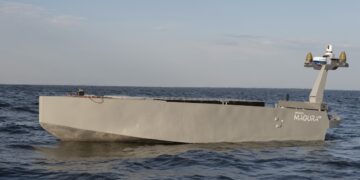
Ukraine’s Uforce unveils a heavy-duty unmanned surface vessel for naval logistics
Drones & UAS

Uforce raises $700M at a $6B valuation to scale out its multi-domain defence roll-up play

November 12, 2026
Axon invests $1.2B in Skydio after companies reject acquisition
News

Axon invests $1.2B in Skydio after companies reject acquisition

November 6, 2026
Canada’s Dominion Dynamics is building a combat drone for the arctic
Drones & UAS

Canada’s Dominion Dynamics is building a combat drone for the arctic

November 12, 2026

Resilience Media is an independent publication covering the future of defence, security, and resilience. Our reporting focuses on emerging technologies, strategic threats, and the growing role of startups and investors in the defence of democracy.

  • About
  • News
  • Resilence Conference
    • Resilience Conference Copenhagen 2026
    • Resilience Conference Warsaw 2026
  • Guest Posts
  • Subscribe
  • Privacy Policy
  • Terms & Conditions
  • Mission Statement & Code of Practice
  • Press

© 2026 Resilience Media

No Result
View All Result
  • Home
  • About
  • Subscribe
  • Events
  • Guest Posts
  • Interview
  • News
  • Resilience Conference London 2026
  • Resilience Conference Copenhagen 2026
  • Resilience Conference Warsaw 2026

© 2026 Resilience Media

This website uses cookies. By continuing to use this website you are giving consent to cookies being used. Visit our Privacy and Cookie Policy.