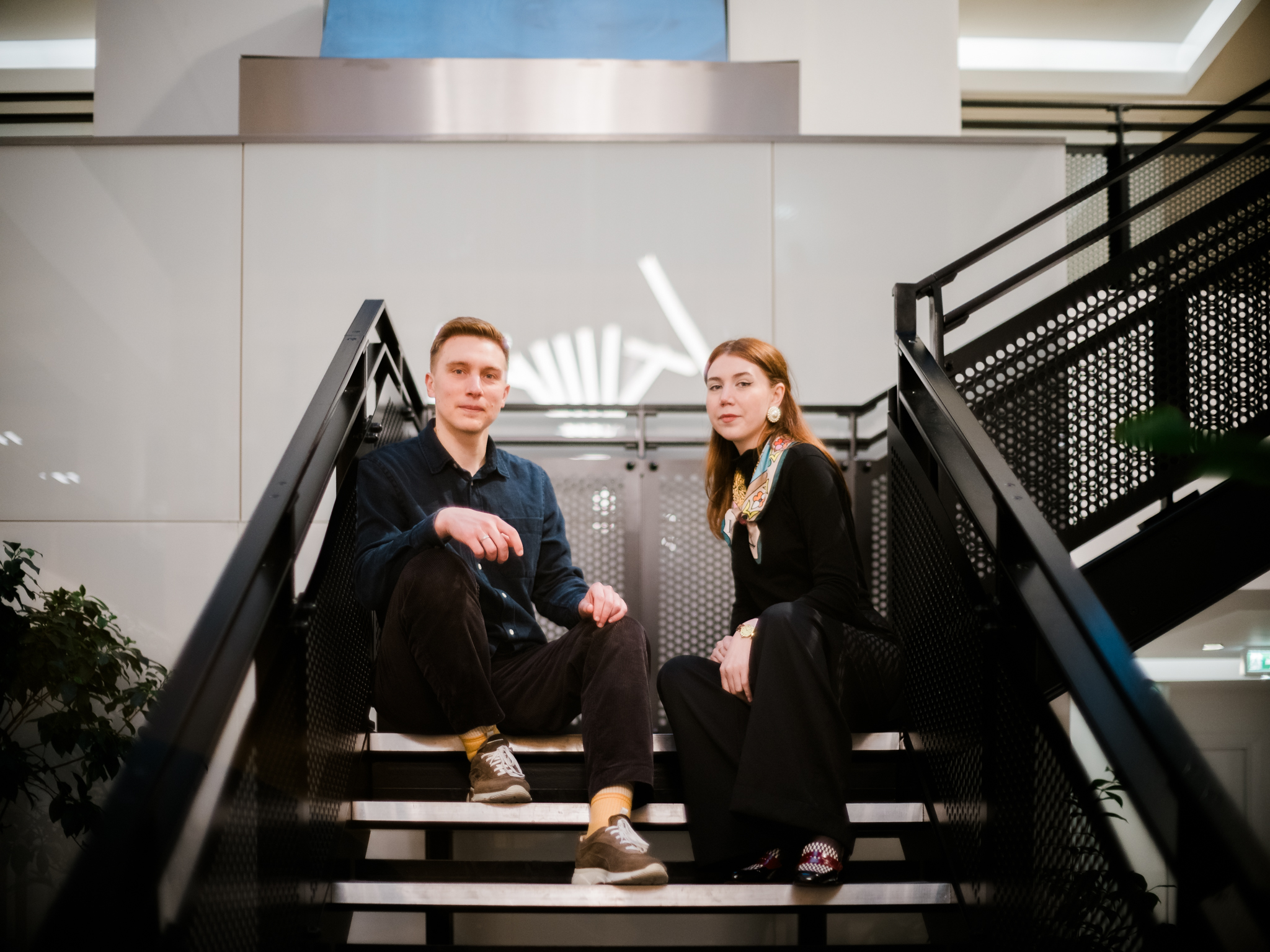
LetsData’s co-founder and CEO Andriy Kusyy took to the stage at TechChill in Riga recently and had a strong message for the audience about the future of disinformation: get ready for a lot of noise because it’s all about repurposing.
His team, he said, first saw this play out when tracking a coordinated operation impersonating political candidates. A month later, it resurfaced, but with another target. “The same playbook reappeared, almost unchanged, but this time it was aimed at banks, with the goal of scamming their customers.”
Early detection and takedown of disinformation campaigns is crucial to preventing them resurfacing in this way. Monitoring systems in more than 50 countries, Ukraine-founded LetsData is one of the startups building AI tools to detect patterns and provide early warnings to its end users, which it says include governments, enterprises, military and strategic communications offices.
We took a break from the bustle of the conference and stepped outside to sit in the cool sun. We bonded over Kusyy’s hometown of Lviv, a place I’ve visited several times, but only in the last several years, in the midst of Russia’s full-scale invasion. I vow to enjoy it more after the war.
Kusyy himself might, too. Currently, he is based outside of Ukraine, with the rest of the team also remote, spread across many countries including Ukraine, Spain, the Baltics, Romania and Poland.
Born from disinformation
Kusyy co-founded the company with Ksenia Iliuk, the company’s COO, in 2022 as a response to the disinformation escalation from Russia’s full-scale invasion of Ukraine. They had worked on several projects in the information space together; LetsData is their first effort as founders.
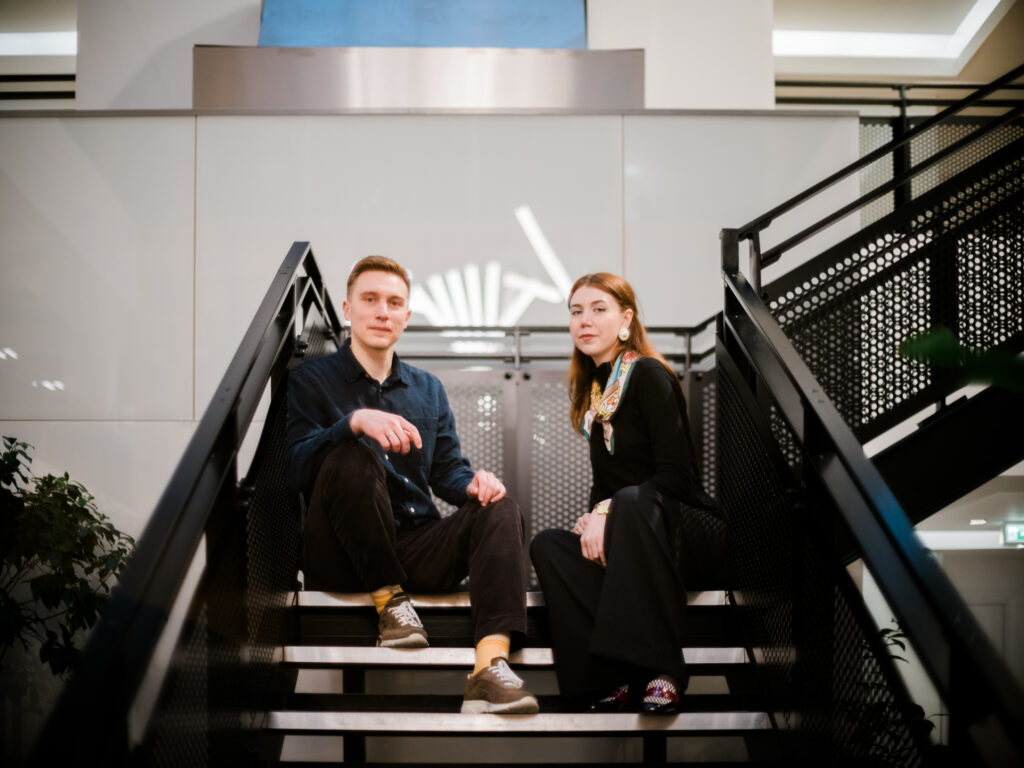
Kusyy previously worked for Grammarly, the Ukraine-founded AI writing assistant, where he was leading the machine learning platform team. I thank him for his service, as I admit I’m brutal at spelling!
Kusyy says that while the initial aim was to help his country fight back against the Russian invasion and specifically the misinformation campaign that has been waged alongside that, the scope of the effort soon scaled beyond Ukraine.
“Our first customers were around Ukraine, but then we started working more and more internationally,” he said. “Right now we are analysing the media space in more than 50 countries.”
Its start was not very typical, he continued. “We just hired a bunch of students at first, in Ukraine,” he said. Once the team built the first prototype, the startup starting winning a few contracts. Potential clients “really loved the idea of what we were building,” he said. “They were ready to start working with us on the promise that we would deliver [on the promise] in three months or so.”
Disinformation has long been a persistent problem, but as a focus for startups, would-be customers, and investors, projects to tackle it have waxed and waned. LetsData also found that funding for its efforts didn’t come immediately. Initially, the startup was bootstrapped, relying on revenues from those first contracts from government organisations and partnerships. Then, the first outside funding came from Startup Wise Guys, which funded the next generation of its product. Finally, as business grew, it raised a pre-seed round of $1.6 million, led by Polish VC SMOK Ventures and followed by Startup Wise Guys, Tilia Impact Ventures, 1991 Ventures, Wayra, and angel investors Marty Krátký-Katz and Pavel Bobosikov.
“Raising is confusing,” he said. “We made lots of mistakes on how we were approaching it. But luckily, we had very strong revenue traction, so despite all of the things that we did wrong, we are still able to close.”
In the interest of those following in his founder footsteps he shared his mistakes and what he learned from raising his first round:
- Don’t have twenty people ready to follow “on standby” while you are still securing the lead investor. “While they are waiting, they are losing their conviction,” he said.
- Fundraising is not the same as going through a loan process.
- Show traction, but also show more. “I don’t think it’s a good idea to build all of your story on the revenues alone,” he warned.
- What are the convictions of your founders? Who is your team? That’s the key thing investors want to know, he added.
The disinformation spread
Disinformation these days is part and parcel of modern warfare, he said.
“Ukraine is a good example of how the information operation and warfare work together,” said Kusyy, explaining how Russian adversaries use influencing operations to carry out a one-two punch. “When, for example, you have an attack on energy infrastructure, a few days before the attack, you will see lots of new accounts appearing on social media channels like Facebook, Telegram and so on.
“They will start posting different, confusing messages, like, ‘Oh, the government fucked up again. There will probably be electricity cut offs because of the government – they steal all the money.
“Then, you have the attack itself, which would lead to the electricity cut offs. All of those accounts will start ‘amplifying the damage’, as we call it. For example, ‘Oh, but the mayor’s house, they have electricity and you don’t, because it’s a corrupt state.’ The fact is that you can see that it’s part of the same coordinated effort,” he said. “It’s a pre‑cursor of an attack” — then the electricity attack itself — “and then afterwards, amplification of the damage.”
Attacks in the private sector, meanwhile, tend to use impersonation. Lately LetsData caught no less than 700 pages that were launched overnight impersonating a CEO of a large bank. That attack underscores why and how disinformation tracking services might scale and need AI for assistance: A catch like this, across several media platforms, requires automated monitoring and alerts, since no human team could manually spot a surge of that kind in as timely a way.
When a situation like this occurs, LetsData alerts the target and provides them with evidence, data and context so that its team can escalate it themselves. He added that LetsData is working on a product to escalate responses on behalf of clients.
“We primarily consider ourselves dual-use because we have both the use cases in the government and defence,” he said, “but we also think it’s very important to work with private companies.”
That is because when it comes to tracking and stopping disinformation, there is strength in numbers, said Kusyy.
“The more organisations that have instruments to detect [activity] early and take it down, the more expensive it is to run a [disinfo] campaign. That’s why we think it’s important that both the private sector and the government get involved.”