Thursday 12 March, 2026
[email protected]
Resilience Media
  • About
  • News
  • Resilience Conference
    • Resilience Conference Warsaw 2026
    • Resilience Conference Copenhagen 2026
    • Resilience Conference London 2026
  • Guest Posts
    • Author a Post
  • Subscribe
No Result
View All Result
  • About
  • News
  • Resilience Conference
    • Resilience Conference Warsaw 2026
    • Resilience Conference Copenhagen 2026
    • Resilience Conference London 2026
  • Guest Posts
    • Author a Post
  • Subscribe
No Result
View All Result
Resilience Media
No Result
View All Result

SkySafe launches Forensics as a Service, a way to trace drone accidents

John BiggsbyJohn Biggs
November 17, 2025
in News, Startups, Venture
Share on Linkedin

SkySafe is trying to close one of the most obvious gaps in counter-drone work, what happens after you spot a drone. The San Diego company has launched Forensics as a Service, a package that bolts digital forensics, reporting, and training onto its existing detection and airspace intelligence platform. The goal is clear, give law enforcement, public safety teams, and security organizations a way to trace incidents back to specific aircraft and operators using data that can stand up in court, not just on a situational awareness screen.

You Might Also Like

Scout Ventures raises $125 million to expand investment in defence and dual-use tech

The signal is the weapon: How mobile networks became infrastructure for modern war

Hadean, the AI battle simulation startup, closes bridge round ahead of a Big B

Most serious sites now have some kind of drone detection in place. The harder problem is attribution. Recovered aircraft often hold encrypted or damaged data, and local agencies rarely have the tools or specialists to get inside those logs. That means suspicious flights near prisons, stadiums, borders, or critical infrastructure may be recorded but never turned into solid evidence. SkySafe is trying to address that by treating forensics as part of the same workflow as detection, not a separate, ad hoc effort.

Thanks for reading! Subscribe for free to receive new posts and support my work.


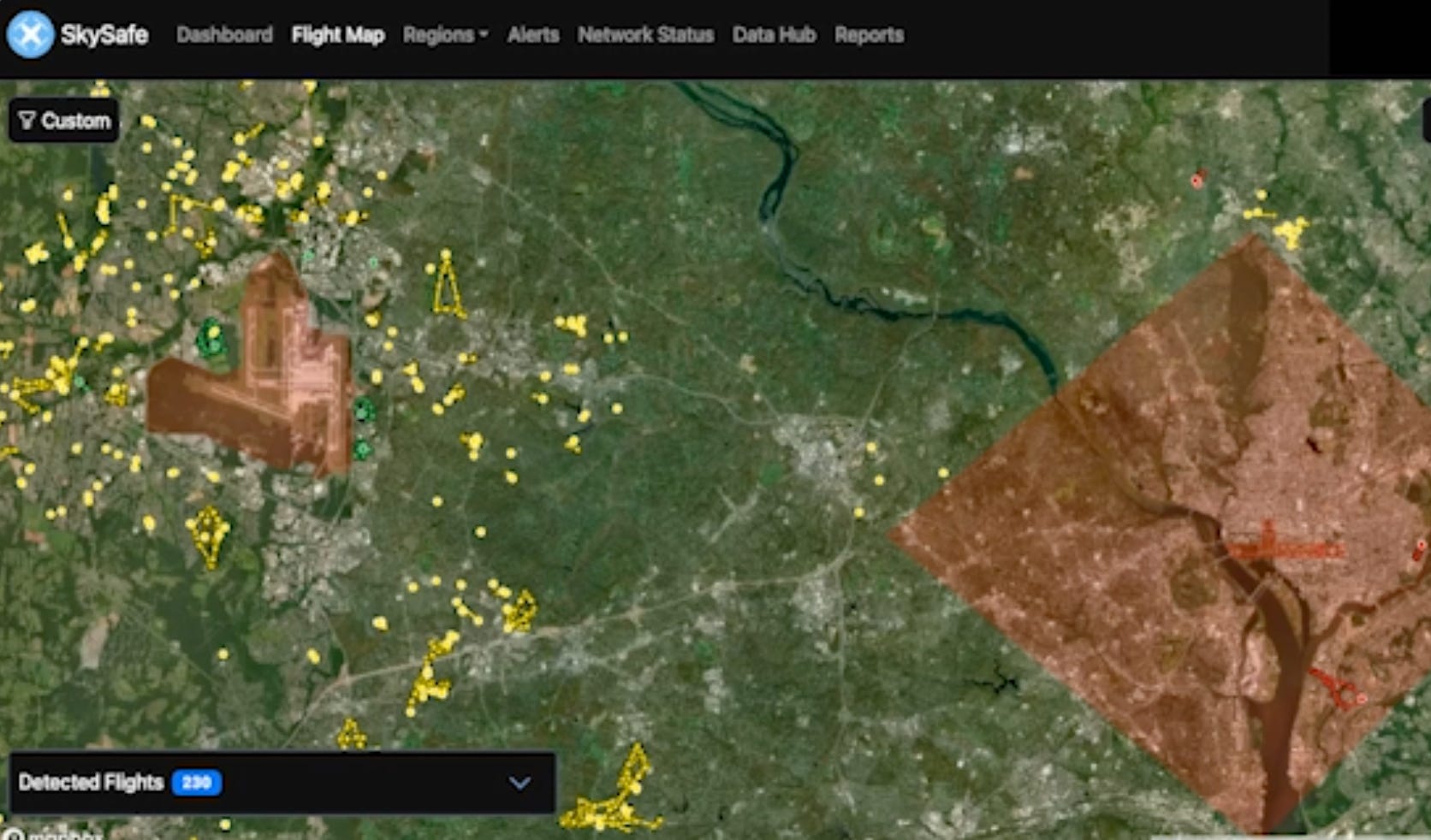
Forensics as a Service centers on SkySafe’s cloud platform, which already aggregates data from an extensive sensor network. Customers get access to historical drone activity, visualizations of flight paths, and identification data where available. On top of that, the company is offering covert forensics imaging devices, small systems that can extract and analyze data from recovered drones. The idea is to match flight logs, serial numbers, and other metadata from a seized aircraft to the tracks seen by SkySafe sensors at the time of a violation, so investigators can say with confidence that the drone they have on a table is the same one that flew over a restricted site.

The company is also trying to make the output usable in real cases, not just in internal reports. Its forensics team will help agencies validate data and build legally defensible reports from extracted logs and device identifiers. SkySafe says these reports are structured to meet evidentiary standards and support prosecutions, which has been a weak spot for many counter-drone deployments that stop at “we saw something” without a clean evidentiary chain.


Forensics as a Service includes instruction and certification for up to four personnel, covering how to handle and process devices, interpret drone data, manage evidence, and prepare for courtroom testimony. Exercises are scenario based, meant to mirror real incidents rather than abstract lab work. The message is that customers should not have to ship every drone off to a third party and wait for answers, they should be able to run core parts of the process in house.

“Integrating forensics into drone detection and airspace intelligence gives organizations the ability to truly understand and control what is happening in their skies,” said Melissa Swisher, SkySafe’s chief revenue officer. She called Forensics as a Service “the missing piece that completes that picture” by turning each incident into admissible evidence instead of a one-off alert.

“It gives law enforcement and public safety teams the ability to extract and analyze data from recovered drones, match that data with detections in the SkySafe Cloud, and generate prosecutor-ready reports that can hold up in court. In short, it connects detection to prosecution, transforming raw drone data into actionable, legally defensible evidence,” she said.

As small unmanned aircraft keep showing up around critical infrastructure, commercial hubs, and government facilities, the bar is moving from observation to action. SkySafe now positions itself as the only vendor that combines real time detection, deep analytics, and integrated forensics in a single platform. Whether agencies adopt this model at scale will come down to cost, legal outcomes, and how well these tools fit into existing investigative workflows, but the direction of travel is clear. The airspace problem is no longer just about seeing drones, it is about proving what they did and who was responsible.

“This is urgently needed now because demand has changed. Drone incidents are no longer isolated events; they’re happening daily across cities, borders, and critical infrastructure sites. Agencies need a scalable, predictable way to handle these cases without relying on one-off contracts or outside labs,” said Swisher.


 
Tags: DronesForensics as a ServiceSkySafe
Previous Post

Sunflower Labs raises $16M to scale autonomous security drones

Next Post

Proper Voltage makes batteries better for nearly anything, especially the battlefield

John Biggs

John Biggs

John Biggs is an entrepreneur, consultant, writer, and maker. He spent fifteen years as an editor for Gizmodo, CrunchGear, and TechCrunch and has a deep background in hardware startups, 3D printing, and blockchain. His work has also appeared in Men’s Health, Wired, and the New York Times. He has written nine books including the best book on blogging, Bloggers Boot Camp, and a book about the most expensive timepiece ever made, Marie Antoinette’s Watch. He lives in Brooklyn, New York. He runs the Keep Going podcast, a podcast about failure. His goal is to share how even the most confident and successful people had to face adversity.

Related News

Scout Ventures raises $125 million to expand investment in defence and dual-use tech

Scout Ventures raises $125 million to expand investment in defence and dual-use tech

byJohn Biggs
March 11, 2026

Scout Ventures has closed its fifth fund with $125 million in commitments, according to an announcement released March 10. The...

The signal is the weapon: How mobile networks became infrastructure for modern war

The signal is the weapon: How mobile networks became infrastructure for modern war

byJohn Biggs
March 11, 2026

Mobile World Congress (MWC) has been around since 1987. The conference, part trade fair, part consumer electronics expo, and part...

Hadean, the AI battle simulation startup, closes bridge round ahead of a Big B

Hadean, the AI battle simulation startup, closes bridge round ahead of a Big B

byIngrid Lunden
March 11, 2026

London-based Hadean began life several years ago as an AI gaming startup working on VR and video simulations, but it...

Hackathon-ing our way to a new defence ecosystem

Hackathon-ing our way to a new defence ecosystem

byFiona Alston
March 11, 2026

It takes a village to raise a child, but when it comes to building the next generation of defence in...

Lux Aeterna raises $10 million to build reusable, returnable satellites

Lux Aeterna raises $10 million to build reusable, returnable satellites

byJohn Biggs
March 10, 2026

Lux Aeterna, a Denver based space infrastructure startup, just raised a $10 million seed round led by Konvoy Ventures with...

Credit: Mcmurryjulie via Pixabay

Trojan force: Hidden backdoors may lurk inside AI models, report says

byPaul Sawers
March 10, 2026

What if an AI model carried hidden instructions that only activate when triggered by a particular input? That’s the subject...

The launch of Isembard’s innovative approach to manufacturing

Isembard raises $50M, plans to open 25 ‘AI-powered factories’

byIngrid Lunden
March 9, 2026

Isembard, a London startup that’s built a platform to help hardware makers in defence, aerospace and robotics manufacture components and...

shallow focus photo of flag of United States of America neon light

Trump cyber strategy outlines tougher stance on cybercrime and adversaries

byCarly Page
March 9, 2026

The White House last week published a new national cyber strategy promising a more assertive response to digital threats, signalling...

Load More
Next Post
Proper Voltage makes batteries better for nearly anything, especially the battlefield

Proper Voltage makes batteries better for nearly anything, especially the battlefield

Keen raises €150M to back defence tech in Europe

Keen raises €150M to back defence tech in Europe

Most viewed

InVeris announces fats Drone, an integrated, multi-party drone flight simulator

Uforce raises $50M at a $1B+ valuation to build defence tech for Ukraine

Auterion, the drone software startup, eyes raising $200M at a $1.2B+ valuation

Twentyfour Industries emerges from stealth with $11.8M for mass-produced drones

Senai exits stealth to help governments harness online video intelligence

Palantir and Ukraine’s Brave1 have built a new AI “Dataroom”

Resilience Media is an independent publication covering the future of defence, security, and resilience. Our reporting focuses on emerging technologies, strategic threats, and the growing role of startups and investors in the defence of democracy.

  • About
  • News
  • Resilence Conference
    • Resilience Conference Copenhagen 2026
    • Resilience Conference Warsaw 2026
    • Resilience Conference 2026
  • Guest Posts
  • Subscribe
  • Privacy Policy
  • Terms & Conditions

© 2026 Resilience Media

No Result
View All Result
  • About
  • News
  • Resilence Conference
    • Resilience Conference Copenhagen 2026
    • Resilience Conference Warsaw 2026
    • Resilience Conference 2026
  • Guest Posts
  • Subscribe
  • Privacy Policy
  • Terms & Conditions

© 2026 Resilience Media

This website uses cookies. By continuing to use this website you are giving consent to cookies being used. Visit our Privacy and Cookie Policy.