Wednesday 17 December, 2025
Resilience Media
  • About
  • News
  • Resilience Conference
  • Guest Posts
    • Author a Post
  • Subscribe
No Result
View All Result
  • About
  • News
  • Resilience Conference
  • Guest Posts
    • Author a Post
  • Subscribe
No Result
View All Result
Resilience Media
No Result
View All Result

Signal Steps up to the Post-Quantum Battlefield with Hybrid Cryptographic Ratchet

Signal has unveiled a new post-quantum cryptographic ratchet designed to safeguard against future ‘harvest now, decrypt later’ attacks

Resilience MediabyResilience Media
October 6, 2025
in Startups
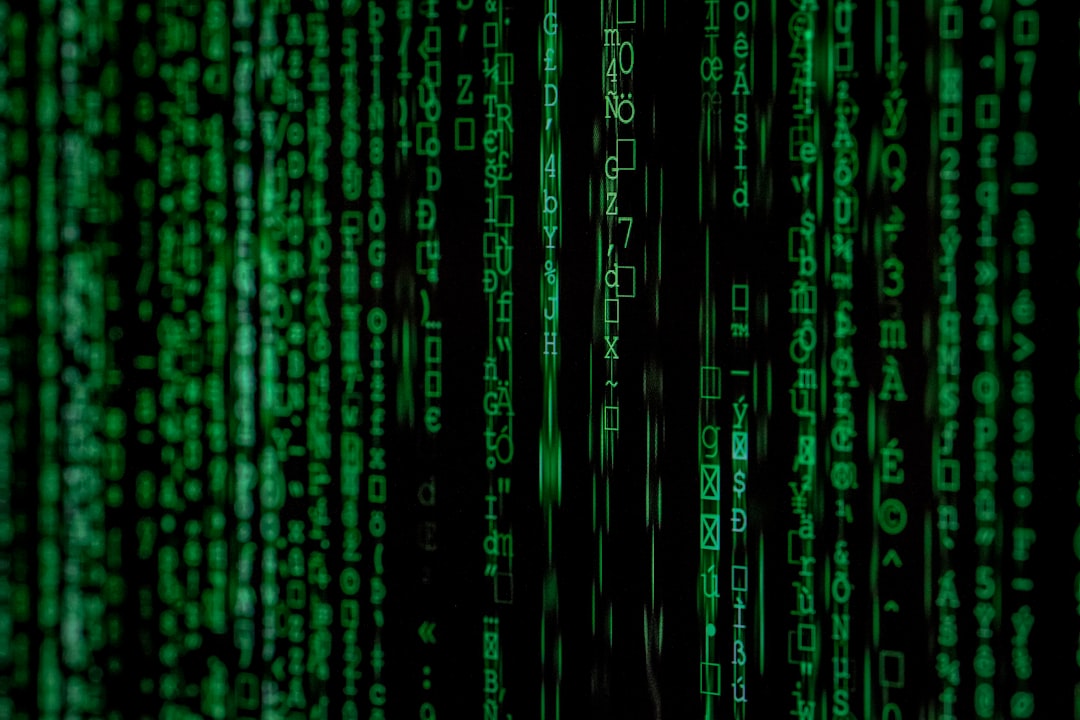
Photo by Markus Spiske on Unsplash

Photo by Markus Spiske on Unsplash

Share on Linkedin

The Signal Foundation has unveiled a new cryptographic ratchet scheme called the Sparse Post-Quantum Ratchet (SPQR), a major step toward shielding its protocol suite from the future threat of quantum computing.

You Might Also Like

Arondite and Babcock partner to move the British Royal Navy closer to a autonomous fleet

Auterion demonstrates a multi-manufacturer drone strike under real conditions

Helsing teams up with Kongsberg to boost its space strategy

The Signal Protocol – long seen as the gold standard for end-to-end encrypted messaging across civilian, military and government use – currently relies on a “Double Ratchet” design, in which symmetric-key updates and elliptic-curve Diffie-Hellman (ECDH) exchanges secure message streams. While the hash functions it uses remain safe from quantum attacks, ECDH would be vulnerable to a powerful enough quantum computer.

To tackle that risk, Signal previously added PQXDH, a hybrid handshake that introduces quantum-resistant key exchange when a session begins, blocking “harvest now, decrypt later” tactics. SPQR takes that protection further by adding a post-quantum ratchet that runs continuously throughout a conversation, not just at setup.

The new design combines state machine logic, erasure-code chunking, and hybrid key derivation, ensuring that each message refreshes shared secrets in a manner that resists both backwards and forward compromise – even if an attacker later gains access to one side’s device. In effect, Signal now has a “Triple Ratchet”: the existing Double Ratchet runs alongside the SPQR ratchet, with both outputs combined through a key derivation function. An adversary would have to break both the classical and quantum-resistant layers to read any messages.

Balancing this new protection with performance has been a challenge. Quantum-safe key encapsulation mechanisms (KEMs) produce larger ciphertexts and require precise message ordering – a poor fit for the messy, asynchronous reality of internet messaging, where packets can be delayed or dropped. Signal’s solution uses erasure coding, which splits large cryptographic blobs into smaller chunks, only some of which need to arrive to reconstruct the data. This tolerates network hiccups and even limited interference, though an attacker blocking most chunks would cause a visible denial-of-service rather than a silent failure.

Signal’s engineers also explored different state-machine strategies for deciding which side should send key material at any moment. Their simulations showed that some faster, parallel key-generation methods created unacceptable exposure if one device were briefly compromised; therefore, the final design takes a more cautious, serial approach.

Because many users and devices won’t support SPQR immediately, Signal is deploying it with a fallback: sessions can temporarily “downgrade” to the older ratchet when necessary. But crucially, once a conversation starts in SPQR mode, an attacker can’t force it back to classical mode mid-session. Over time, as users upgrade, older sessions will be phased out.

The design is grounded in formal, peer-reviewed cryptography. Academic and industry partners, including PQShield, AIST, and NYU, used ProVerif models to validate its properties, and Signal’s Rust implementation is directly linked to those proofs. Code is also translated into F* using the “hax” toolchain for further verification, ensuring the implementation matches its mathematical design.

For defence, intelligence, and government users, SPQR has clear implications. It shows that mainstream secure-messaging platforms are already preparing for a post-quantum future, and legacy systems in military or diplomatic contexts will need to do the same. It also raises transitional questions for coalition networks or cross-domain messaging tools that interoperate with Signal, as well as for adversaries hoping to stockpile today’s encrypted traffic for future decryption.

SPQR and the broader Triple Ratchet architecture are not cure-alls. Their strength depends on flawless implementation, complete rollout, and the continuing resilience of the underlying KEMs. Quantum-safe cryptography is still evolving, and future advances could shift the landscape again. But Signal’s move demonstrates a serious, technically rigorous commitment to keeping communications secure under even the harshest future threat models.

In short, SPQR strengthens Signal without reinventing it. It’s a careful upgrade that brings post-quantum defences into one of the world’s most widely trusted encryption protocols – and a sign that the race to quantum-harden secure systems is already well underway.


Tags: Signal
Previous Post

Force Multipliers: Why National Security and Defence Veterans Can Excel in European Venture

Next Post

Helsing Acquires Blue Ocean to Rev Up Its Marine Business

Resilience Media

Resilience Media

Start Ups. Security. Defense.

Related News

Arondite and Babcock partner to move the British Royal Navy closer to a autonomous fleet

byJohn Biggs
December 11, 2025

Arondite and Babcock have partnered to bring autonomy into the Royal Navy’s day to day operations. The two UK companies have agreed a...

Auterion demonstrates a multi-manufacturer drone strike under real conditions

byJohn Biggs
December 11, 2025

Munich-based Auterion ran what it calls the world’s first multi-manufacturer swarm strike with both FPV munitions and fixed-wing drones working as a...

Helsing teams up with Kongsberg to boost its space strategy

byIngrid Lunden
December 10, 2025

Defence startups that want to increase their chances of winning major government tenders are teaming up with primes. Today, Helsing...

Nu Quantum lands record $60M to build UK’s first scalable quantum-networking platform

byCarly Page
December 10, 2025

Cambridge-based Nu Quantum — which develops photonic technology used in quantum computing architectures — has secured a landmark $60 million in Series...

Anaphite targets cleaner battery production for with new UK government funding

byJohn Biggs
December 9, 2025

Anaphite has secured £1.4 million through the Innovate UK Investor Partnership Programme, money that will be used to apply its Dry Coating...

Orqa lifts EU drone production capacity in Croatia

byJohn Biggs
December 8, 2025

Orqa, a European developer of FPV and defence focused unmanned aerial systems, has completed a major expansion of its manufacturing...

Sky Spy snaps up $1.6M to expand in next-generation signal intelligence

byIngrid Lunden
December 4, 2025

A startup founded by Ukrainian technologists has raised some pre-seed funding to expand beyond the battleground on its home turf...

InVeris announces fats Drone, an integrated, multi-party drone flight simulator

byJohn Biggs
December 4, 2025

Atlanta-based InVeris has announced fats Drone, a virtual trainer for small unmanned aerial systems. Built on Bohemia Interactive Simulations’ VBS4 platform, the system lets troops...

Load More
Next Post
Photo by Cristian Palmer on Unsplash

Helsing Acquires Blue Ocean to Rev Up Its Marine Business

Photo by Tapio Haaja on Unsplash

Dispatches from Finland - Defence Tech Meetup 2025

Most viewed

UK launches undersea surveillance programme to counter growing Russian threat

Helsing teams up with Kongsberg to boost its space strategy

Quantum Systems closes a €180 million Series C extension, hits a €3 billion valuation

We Are Already Living in a World at War—It’s Time to Act Like It

Can the UK counter Russian laser threats?

Inside the drone revolution: How war has changed and what that means for modern armies

Resilience Media is an independent publication covering the future of defence, security, and resilience. Our reporting focuses on emerging technologies, strategic threats, and the growing role of startups and investors in the defence of democracy.

  • About
  • News
  • Resilence Conference
  • Guest Posts
  • Subscribe
  • Privacy Policy
  • Terms & Conditions

© 2025 Resilience Media

No Result
View All Result
  • About
  • News
  • Resilence Conference
  • Guest Posts
  • Subscribe
  • Privacy Policy
  • Terms & Conditions

© 2025 Resilience Media

This website uses cookies. By continuing to use this website you are giving consent to cookies being used. Visit our Privacy and Cookie Policy.