Tuesday 21 April, 2026
[email protected]
Resilience Media
  • About
  • News
  • Resilience Conference
    • Resilience Conference Warsaw 2026
    • Resilience Conference Copenhagen 2026
    • Resilience Conference London 2026
  • Guest Posts
    • Author a Post
  • Subscribe
No Result
View All Result
  • About
  • News
  • Resilience Conference
    • Resilience Conference Warsaw 2026
    • Resilience Conference Copenhagen 2026
    • Resilience Conference London 2026
  • Guest Posts
    • Author a Post
  • Subscribe
No Result
View All Result
Resilience Media
No Result
View All Result

Ukrainian autonomy company The Fourth Law unveils an anti-Shahed drone

John BiggsbyJohn Biggs
March 6, 2026
in News, Startups
Share on Linkedin

You Might Also Like

NCSC sounds resilience warning as cyberattacks threaten real-world disruption

Ukrainian Armor and The Fourth Law collaborate on a new EW-resistant drone

ETSI pushes back on EU plan to freeze out ‘high-risk’ players from standards work

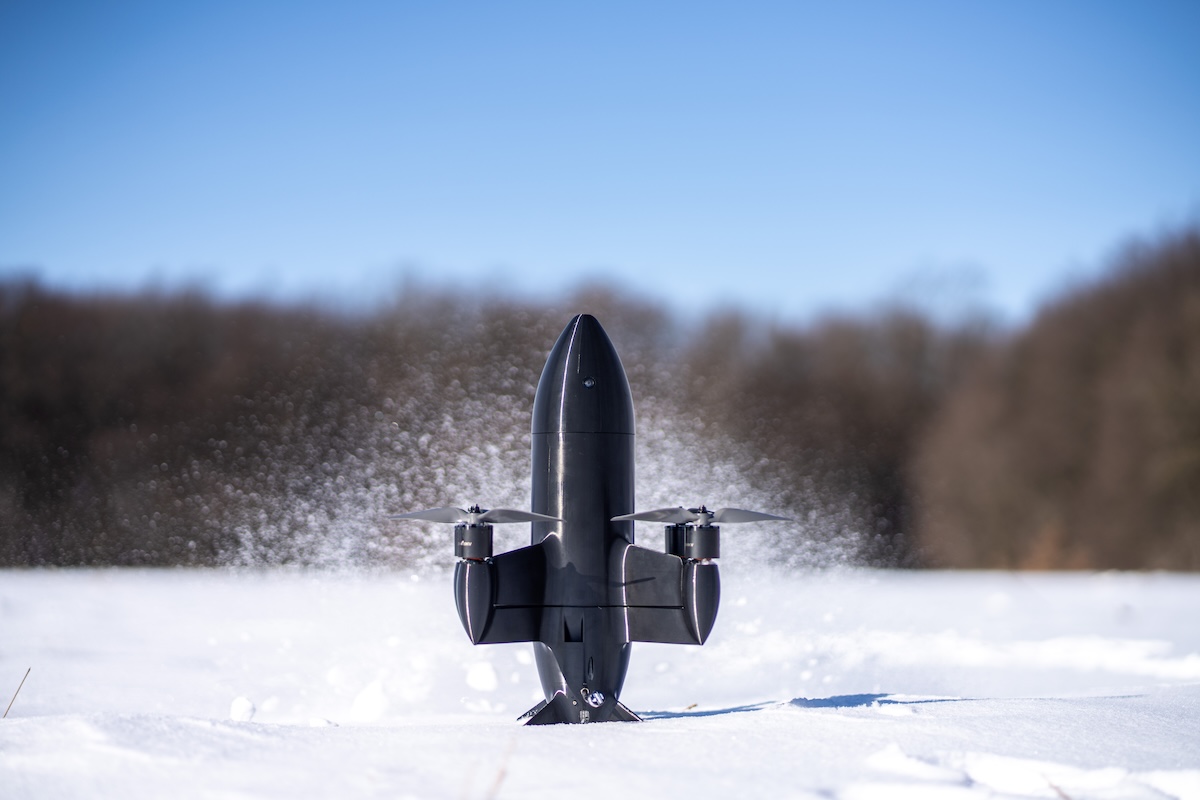
Ukraine-based autonomy company The Fourth Law has unveiled Zerov, an autonomous interceptor drone built to engage long-range strike UAVs in the Shahed class. The platform was developed as a response to the growing use of low-cost Iranian-designed drones that Russian forces have deployed extensively during the war.

The Fourth Law was established in Kyiv in 2023 by entrepreneur Yaroslav Azhnyuk together with a group of engineers and military veterans. The firm focuses on autonomous robotics for defense and maintains operations in Ukraine, the European Union, and the United States.

Shahed-type drones have played a central role in Russian strike campaigns against Ukraine, targeting energy systems, military facilities, logistics centers, and other infrastructure. Their comparatively low price has complicated traditional air defense planning, since intercepting them with conventional missiles can impose far higher costs on the defending side. The Fourth Law says Zerov was designed to fill that gap by offering an interceptor suited for repeated, large-scale engagements.

“In an era where drone warfare is reshaping conflicts from Europe to the Middle East, Zerov-8 is the latest of what massively scalable autonomous drone interception technology can provide,” said Yaroslav Azhnyuk, founder and CEO of The Fourth Law.

“We trained the system to see targets where the human eye or standard sensors fall short,” he said.

The company says Zerov includes its TFL Anti-Shahed autonomous detection module, an AI-based system intended to locate and follow aerial targets by analyzing movement behavior, thermal signatures, and other signals. After the system identifies a target, the tracking process continues automatically, allowing the operator to concentrate on the intercept rather than manually searching for the drone.

The interceptor uses a tailsitter airframe that enables vertical launch before transitioning into forward flight for the intercept phase. The aircraft can reach speeds of about 326 kilometers per hour and is designed to pursue drones traveling at up to roughly 270 kilometers per hour. Its operational radius is approximately 20 kilometers, and it carries a warhead weighing up to 0.5 kilograms. Operators can configure the platform with either daylight cameras or thermal sensors depending on mission conditions.

The onboard detection module performs automated analysis to identify airborne targets. When contrast between the drone and its background is sufficient, the system can detect targets at distances close to one kilometer. Earlier detection provides additional time for operators to position the interceptor and improves the likelihood of a successful intercept while reducing the need for manual visual tracking during the final stage of engagement.

According to the company, later versions are expected to integrate with external radar sensors and wider command-and-control networks so that targets can be assigned automatically. The system is also designed to function in environments affected by electronic warfare, with software protections intended to keep the interceptor operating even when communications are degraded.

The interceptor takes its name from Mykola Zerov, a Ukrainian poet and scholar linked to the Executed Renaissance, a generation of cultural figures persecuted by the Soviet regime in the 1930s. The company says the naming convention reflects its practice of honoring Ukrainian cultural figures through its technology programs.

Tags: DronesThe Fourth Lawzerov
Previous Post

Ukraine’s autonomous weapons makers push for industrial scale

Next Post

Augur, a ‘grey-zone’ national security startup, raises $15M

John Biggs

John Biggs

John Biggs is an entrepreneur, consultant, writer, and maker. He spent fifteen years as an editor for Gizmodo, CrunchGear, and TechCrunch and has a deep background in hardware startups, 3D printing, and blockchain. His work has also appeared in Men’s Health, Wired, and the New York Times. He has written nine books including the best book on blogging, Bloggers Boot Camp, and a book about the most expensive timepiece ever made, Marie Antoinette’s Watch. He lives in Brooklyn, New York. He runs the Keep Going podcast, a podcast about failure. His goal is to share how even the most confident and successful people had to face adversity.

Related News

black and gray laptop computer turned on

NCSC sounds resilience warning as cyberattacks threaten real-world disruption

byCarly Page
April 20, 2026

The UK’s cyber defence arm has warned that organisations must be ready to operate through attacks that go beyond data...

Ukrainian Armor and The Fourth Law collaborate on a new EW-resistant drone

Ukrainian Armor and The Fourth Law collaborate on a new EW-resistant drone

byLuke Smith
April 17, 2026

Two up-and-coming Ukrainian defence startups have collaborated to develop a UAS model that they claim is 2-4 times more effective...

waving flag

ETSI pushes back on EU plan to freeze out ‘high-risk’ players from standards work

byCarly Page
April 16, 2026

Europe's telecoms standards body has fired an early warning shot at Brussels’ next cybersecurity overhaul, arguing that plans to shut...

Klaus Hommels of Lakestar talks about defence consolidation and the future of procurement

Klaus Hommels of Lakestar talks about defence consolidation and the future of procurement

byJohn Biggs
April 15, 2026

Investor and entrepreneur Klaus Hommels, founder of Lakestar, sees a new era of European defence spending and investment. His comment?...

To infinity and back: the opportunity for reusable hardware in space

To infinity and back: the opportunity for reusable hardware in space

byResilience Media
April 15, 2026

Germany's Atmos Space Cargo is opening an office in Poland focused on defence capabilities, announced CEO Sebastian Klaus during a...

Danish startup Sapient Perception raises €2M to widen UAV vision for real-time battlefield decisions

Danish startup Sapient Perception raises €2M to widen UAV vision for real-time battlefield decisions

byCarly Page
April 15, 2026

A Danish startup promising to give drones a much wider field of view without sacrificing detail has raised €2 million...

Daimler Truck and ARX Robotics Team Up to Bring AI and Autonomy to Military Vehicles

ARX Robotics secures British Army contract

byLuke Smithand1 others
April 15, 2026

ARX Robotics has secured its first British Army contract, delivering UK-manufactured Gereon uncrewed ground vehicles for Recce-Strike experimentation through Task...

Airship startup Kelluu raises €15M from NATO, its first investment in Finland

Airship startup Kelluu raises €15M from NATO, its first investment in Finland

byIngrid Lunden
April 14, 2026

Defence is a multi-modal concept, and today a startup focused on building a stronger pipeline of intelligence data from a...

Load More
Next Post
high angel photography of football stadium

Augur, a 'grey-zone' national security startup, raises $15M

shallow focus photo of flag of United States of America neon light

Trump cyber strategy outlines tougher stance on cybercrime and adversaries

Most viewed

InVeris announces fats Drone, an integrated, multi-party drone flight simulator

Uforce raises $50M at a $1B+ valuation to build defence tech for Ukraine

Auterion, the drone software startup, eyes raising $200M at a $1.2B+ valuation

Senai exits stealth to help governments harness online video intelligence

Palantir and Ukraine’s Brave1 have built a new AI “Dataroom”

Twentyfour Industries emerges from stealth with $11.8M for mass-produced drones

Resilience Media is an independent publication covering the future of defence, security, and resilience. Our reporting focuses on emerging technologies, strategic threats, and the growing role of startups and investors in the defence of democracy.

  • About
  • News
  • Resilence Conference
    • Resilience Conference Copenhagen 2026
    • Resilience Conference Warsaw 2026
    • Resilience Conference 2026
  • Guest Posts
  • Subscribe
  • Privacy Policy
  • Terms & Conditions

© 2026 Resilience Media

No Result
View All Result
  • About
  • News
  • Resilence Conference
    • Resilience Conference Copenhagen 2026
    • Resilience Conference Warsaw 2026
    • Resilience Conference 2026
  • Guest Posts
  • Subscribe
  • Privacy Policy
  • Terms & Conditions

© 2026 Resilience Media

This website uses cookies. By continuing to use this website you are giving consent to cookies being used. Visit our Privacy and Cookie Policy.