Wednesday 17 December, 2025
Resilience Media
  • About
  • News
  • Resilience Conference
  • Guest Posts
    • Author a Post
  • Subscribe
No Result
View All Result
  • About
  • News
  • Resilience Conference
  • Guest Posts
    • Author a Post
  • Subscribe
No Result
View All Result
Resilience Media
No Result
View All Result

Digest 51: Lithuania declares Security Emergency as ICEYE, Nu Quantum lead defence tech funding surge

Issue 51: Plus Helsing and Kongsberg announce a partnership, Anaphite makes a cleaner battery, Orqa increases its manufacturing capacity, the UK makes its seabed safer, and more

Leslie HitchcockbyLeslie Hitchcock
December 11, 2025
in Weekly Digest
Share on Linkedin

Good afternoon from the team at Resilience Media

As predicted, December has certainly not been a slow news month. This week, UK-based Nu Quantum announced a $60M Series A round (excerpted below in our Funding Announcement section) and ICEYE raised a monster $200M Series E that saw the addition of Jeannette zü Furstenberg to its board. Helsing added space to its multi-domain portfolio with a partnership with Kongsberg. And the Lithuanian Government declared a state of emergency over the balloon and drone incursions into its airspace.

You Might Also Like

Digest 50: EU needs control, not sovereignty; Inside the drone revolution; and donate to our Ukrainian brigade fundraiser

Digest 49: Keen raises €150M fund, Erica Dill-Russell and Mike Pompeo join Kraken, and Helsing and Stark open UK factories

Digest 48: Pete Hegseth bets on agile defence tech, Knownsec leak unmasks China’s cyber arsenal, and our latest dispatch from Taipei

Lithuania is in a unique position with its major airport 32km (20mi) from the sizeable border it shares with Belarus and he country has also been vocal about its commitment to defending itself, with Soviet occupation in living memory. Both make the territory a target for ‘grey war’ tactics. I had the honour of attending the Baltic Armed Forces Reception two weeks ago and everyone in attendance from Estonia, Latvia, and Lithuania could recall Soviet tanks in their communities. By declaring these incursions a national security risk, the government is able to be more nimble in case the balloon and drone payload changes from cigarettes to something more nefarious. We are tracking this development in Lithuania from both a geopolitical and a startup perspective. If you’re working on a technology that could be part of Lithuania’s tech stack, let Julia Gifford, Resilience Media reporter know. We’d love to cover you.

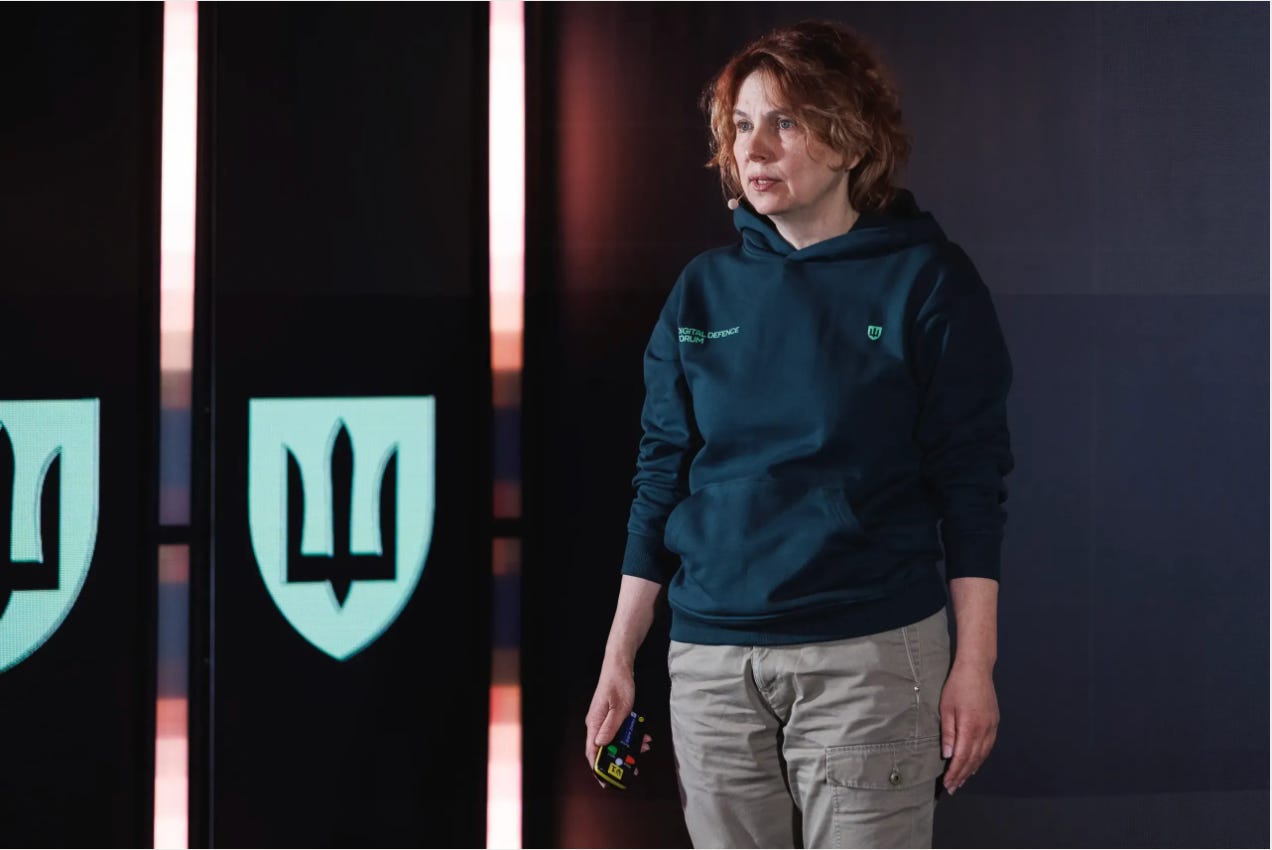
Resilience Media correspondent, Thomas Macaulay recently sat down with Ukraine’s Deputy Minister of Defence for Digitalisation, Oksana Ferchuk (pictured above) to talk about Ukraine’s plans to seed 7,000+ techies across its military. “We have thousands of IT-related personnel already in the Armed Forces, but they are occupying other, different positions,” Ferchuk said. “They are soldiers, not IT specialists, but they perform an IT role. We would like to make this institutional change — to have those positions officially and to have skilled people in such positions.” Something a lot of our governments can learn from. Read more in our Dispatches from Ukraine section below.

Elsewhere on Resilience Media:

  • Anaphite targets cleaner battery production for with new UK government funding
  • No Anduril is an island: US defence unicorn teams with GKN Aerospace on the Isle of Wight
  • Orqa lifts EU drone production capacity in Croatia
  • UK launches undersea surveillance programme to counter growing Russian threat

Got a tip, funding announcement, or news? Send it our way. I’ll be back in your inboxes next week.

-Leslie Hitchcock, co-founder and Publisher, Resilience Media


Our fundraiser with Help99 to help rebuild a Ukrainian frontline air defence lab is still live. ICYMI, an active-duty Ukrainian officer named Oleksandr spoke at Resilience Conference 2025 and shared that his unit, The Interceptor Battery of The Air Defence Division of the 3rd Assault Brigade, lost its R&D lab to a Russian bomb. This unit defends a 180km strip of Ukraine’s border against hundreds of drone attacks every day and night, and every day and night they save the lives of Ukrainian civilians and soldiers. We launched a fundraiser two weeks ago to help rebuild it.

Thank you to those of you who have donated already: we are within €10K of reaching our goal of €35,000. If you cannot donate, we ask that you share the campaign with your network.


Mykhailo Fedorov, Ukraine’s First Deputy Prime Minister and Minister of Digital Transformation, announced on Monday a significant step forward in how the country’s military will tap technology in its war with Russia. More than 7,000 “digital officers” – defence technologists – will be deployed to work “across all commands and branches,” Fedorov said in a short note on LinkedIn.

Fedorov’s post outlined the five areas these digital officers will oversee. They will implement systems within units, collect and provide feedback on how tech is being used, identify operational needs and work as clients and solution architects to meet those needs (which means working with the tech providers to buy and tailor solutions), and “foster an IT culture within the armed forces.”

The plan is a progression of the country’s Chief Digital Transformation Officer (CDTO) programme, which has seen tech specialists deployed across national and local government departments and community groups.

Ukraine’s military has become a global beacon for how tech like autonomous drones can change the game and help smaller groups of soldiers gain an advantage over bigger ones on the battlefield.

But a lot of that, especially in its earlier incarnations, emerged out of organic necessity, combined with the population’s technological and entrepreneurial nous, rather than concerted planning from the top. Seeding digital officers across the military could help Ukraine scale that tech advantage to all battalions.

“This new structure will significantly accelerate [the] army’s digitalisation,” Fedorov said.

Defence Minister Denys Shmyhal described the officers as “an IT vertical for the Armed Forces” who would “cultivate a digital culture” in every unit. “Such people are already working on the ground, and we will unite them into a single network,” he added. Keep reading here.


Cambridge-based Nu Quantum — which develops photonic technology used in quantum computing architectures — has secured a landmark $60 million in Series A funding. The startup said this is the largest round ever raised by a “pure-play” quantum networking company, and the biggest quantum Series A in the UK to date.

National Grid Partners, the investment arm of the National Grid, led the round, with participation from new investors Gresham House Ventures and Morpheus Ventures, and existing investors including Amadeus Capital Partners, IQ Capital, Ahren Capital, Cambridge Enterprise Ventures, East Innovate, NSSIF, and Sumitomo (Presidio Ventures). The round was first reported to be in the works by The Telegraph earlier this year.

Nu Quantum said it will be using the funding to continue building its distributed quantum computing platform, which is based on interconnecting quantum processors working in a unified, scalable fabric. As with a lot of the technology being developed for quantum computing, Nu Quantum’s focus is on functionality that will be necessary in a future where quantum computing will have made a breakthrough with error correction and moved beyond labs and into wider environments and broader use cases. Nu Quantum’s architecture, which it terms the “Entanglement Fabric”, could form the backbone of future quantum data centres, it says, enabling fault-tolerant machines with performance unreachable by any single quantum processor.


Previous Post

The evolution of state sovereignty and national security in the digital age

Next Post

The Chinese GTG-1002 espionage campaign is an AI security wake-up call

Leslie Hitchcock

Leslie Hitchcock

Leslie Hitchcock is a seasoned media executive and co-founder of Resilience Media, an independent publication dedicated to the defence of democracy and the intersection of startups, security, and defence technology. With nearly two decades of experience in the tech industry, she has been instrumental in shaping conversations around innovation and resilience in the face of global challenges. Prior to founding Resilience Media, Leslie served as the Director of Events at TechCrunch, where she led the production of the renowned TechCrunch Disrupt conferences across major tech hubs including New York City, San Francisco, London, and Berlin, as well as a suite of events in Nairobi, Lagos, Seoul, and Tel Aviv. Her tenure at TechCrunch solidified her reputation for curating impactful events that bridge the gap between technology innovators and investors. In 2024, recognising the growing need for a dedicated platform to address the evolving landscape of defence and security, Leslie co-founded Resilience Media alongside Dr. Tobias Stone. The initiative was launched during the inaugural Resilience Conference in London, aiming to foster collaboration between the tech sector and national security communities. Resilience Media has since become a pivotal resource, offering in-depth analysis, founder profiles, and policy discussions pertinent to the defence tech ecosystem.

Related News

Digest 50: EU needs control, not sovereignty; Inside the drone revolution; and donate to our Ukrainian brigade fundraiser

byLeslie Hitchcock
November 29, 2025

Good afternoon from the team at Resilience Media Yesterday we launched a fundraiser with Help99 to help rebuild a Ukrainian frontline air defence lab....

Photo from Teemu Seppala

Digest 49: Keen raises €150M fund, Erica Dill-Russell and Mike Pompeo join Kraken, and Helsing and Stark open UK factories

byLeslie Hitchcock
November 21, 2025

Good afternoon from the team at Resilience Media Greetings from Helsinki where the startup conference name lived up to the...

SECWAR ARSENAL OF FREEDOM FULL SPEECH screenshot via Department of War Youtube channel

Digest 48: Pete Hegseth bets on agile defence tech, Knownsec leak unmasks China’s cyber arsenal, and our latest dispatch from Taipei

byLeslie Hitchcock
November 14, 2025

Issue 48: Pete Hegseth proclaims Pentagon's pivot toward startup defence procurement, a major leak reveals China's cyber arsenal, and how...

Illustration by Bryce Durbin, Resilience Media

Digest 47: The lesson from Haraka Storm: Europe’s defence startups must be allowed to stumble if they’re ever to stand ready

byLeslie Hitchcock
November 6, 2025

Issue 47: While our adversaries test weapons in live combat, we debate optics. Plus, guest posts from Will Stone, UK...

Helsing’s Torsten Reil, General Catalyst’s Jeannette zü Furstenberg, and Tom Mackenzie of Bloomberg on stage at Resilience Conference 2025

Digest 46: What Netflix’s ‘A House of Dynamite’ gets right, according to defence experts

byLeslie Hitchcock
October 30, 2025

Good afternoon from the team at Resilience Media I watched A House of Dynamite last weekend and I was brought to tears...

General Sir Richard Barrons, Grace Cassy, and Shashank Joshi on stage at Resilience Conference 2025

An Outsider Takes the Helm: Rupert Pearce Named UK Armaments Director

byLeslie Hitchcock
October 23, 2025

Good afternoon from the team at Resilience Media Late last week, the UK Ministry of Defence announced the appointment of its much-needed...

Uwe Horstmann, CEO of Stark (photo courtesy Project A)

From VC to CEO – Uwe Horstmann Takes Reins at Stark

byLeslie Hitchcock
October 16, 2025

Good afternoon from the team at Resilience Media We were aware that Uwe Horstmann has been de facto CEO of Stark for at least the...

Photo by Gilly on Unsplash

Digest 43: While Europe Debates, Defence Tech Builds Drone Walls; Hugo Jammes on Veteran Talent; Sitehop Raises a £7.5M Seed Round

byLeslie Hitchcock
October 9, 2025

Good afternoon from the team at Resilience Media With increased Russian drone incursions into NATO airspace, there’s more talk about...

Load More
Next Post
Photo by Anthony Cantin on Unsplash

The Chinese GTG-1002 espionage campaign is an AI security wake-up call

Photo by Daniel Romero on Unsplash

Guest Post: Where are Europe’s female defence tech leaders?

Most viewed

UK launches undersea surveillance programme to counter growing Russian threat

Helsing teams up with Kongsberg to boost its space strategy

Quantum Systems closes a €180 million Series C extension, hits a €3 billion valuation

We Are Already Living in a World at War—It’s Time to Act Like It

Can the UK counter Russian laser threats?

Inside the drone revolution: How war has changed and what that means for modern armies

Resilience Media is an independent publication covering the future of defence, security, and resilience. Our reporting focuses on emerging technologies, strategic threats, and the growing role of startups and investors in the defence of democracy.

  • About
  • News
  • Resilence Conference
  • Guest Posts
  • Subscribe
  • Privacy Policy
  • Terms & Conditions

© 2025 Resilience Media

No Result
View All Result
  • About
  • News
  • Resilence Conference
  • Guest Posts
  • Subscribe
  • Privacy Policy
  • Terms & Conditions

© 2025 Resilience Media

This website uses cookies. By continuing to use this website you are giving consent to cookies being used. Visit our Privacy and Cookie Policy.