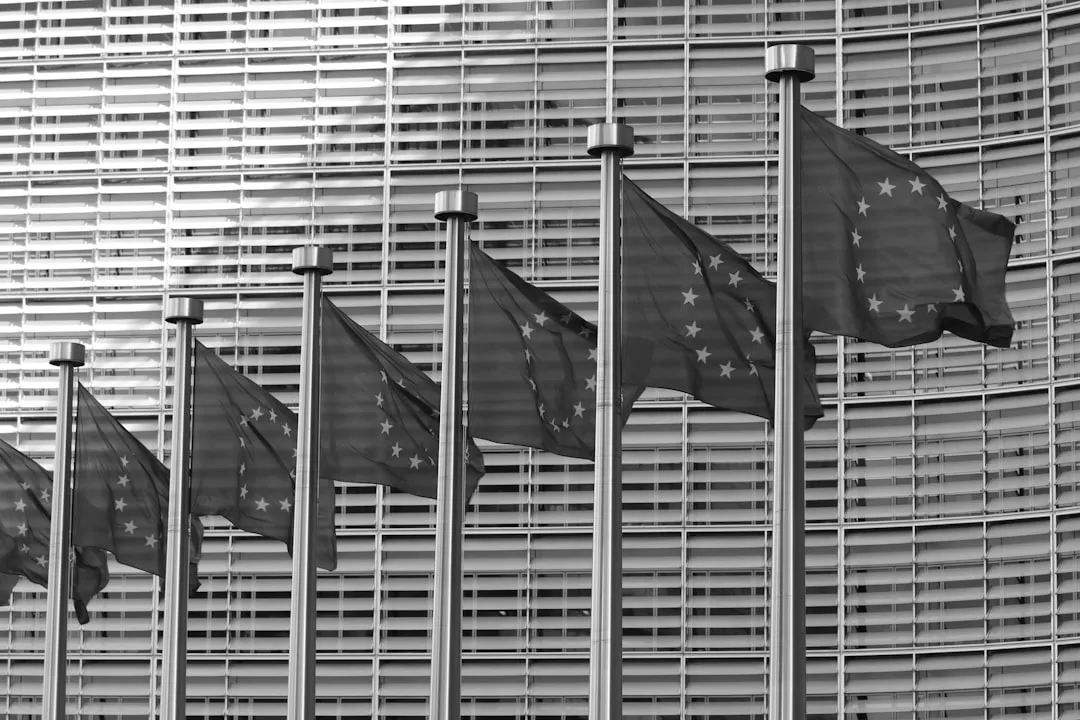
The European Commission laid out an “ambitious” plan for the bloc’s next long-term budget cycle on Wednesday. The proposed Multiannual Financial Framework (MFF) would run from 2028-2034 and clocks in just shy of €2 trillion in total planned spending – which make it the largest in the bloc’s history – assuming the EU’s executive gets its way with Council and Parliament which must get behind the plan.
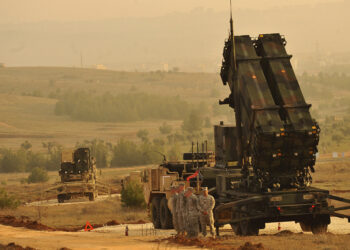
EU president, Ursula von der Leyen, lauded what she framed as a modernised budget as “the most ambitious ever proposed”, as well as couching it as “more strategic” and “more flexible” than previous MFFs. And defence is a key area where the Commission is keen for the bloc to have more capacity to flex. The proposal defines a €130.7 billion pot of money to cover “Resilience and Security, Defence Industry, and Space” – which the EU said represents a 5x boost on current budgets set back in 2018.
The previous EU budget allocated around €8 billion for defence industry spending – subsequently rising to around €10 billion via supplementary funding programmes bolted on following Russia’s invasion of Ukraine – and a little under €15 billion for space.
The proposal for a new supersized but combined pot is already jangling nerves in the European space industry, which had been lobbying for an up to 4x dedicated budget hike. The new umbrella budget at least implies that any serious EU flex on defence, should needs must, may end up cannibalising the space allocation. And it’s clear that the Commission’s approach is intended to bake in exactly such strategic flexibility.
At the same time, the EU has faced calls to allocate at least €100 billion to defence in this MFF – but by proposing to bundle defence with space and other less clearly defined areas (resilience may refer to managing migration flows, for example) it’s not immediately clear how much of the budget would go on defence (or, therefore, whether that funding target is hit).
The proposed defence-space budget sits within a newly consolidated industrial policy-focused pot, called the European Competitiveness Fund (ECF) – a mega-fund the EU wants to help unlock further public and private investment, in addition to the hundreds of billions being allocated to it via the MFF and elsewhere, to boost development of industrial capacities and support cutting-edge technologies across a range of strategic areas – including defence and AI.
Merging multiple EU funding programmes to streamline the EU’s approach to deploying funds while dialling up flexibility in how it can direct investments was a cross-cutting theme of the MFF. “[W]e’re investing more in our capacity to respond and more in our independence,” von der Leyen also said.
Despite this merging and bundling decreasing transparency somewhat, the Commission’s revised approach looks important for enabling a scaling up of support for Europe’s defence industry, even as security concerns are a clear driver behind its push for more agile funding vehicles – in other words, more geopolitically fraught times call for contingencies.
While EU is not a military union and member states continue to fund their own militaries – meaning the vast bulk of defence spending in Europe still falls under national budgets – the Commission has not spent the last several years just standing on the sidelines. In the bloc’s last funding cycle it began to ringfence funds for defence-related initiatives – which has seen EU funds being directed into defence R&D or transport infrastructure projects that are important for military mobility, among other areas.
It’s now looking to substantially scale up the level of background support and coordination it provides. “The long-term budget will help build a European Defence Union, that can shield itself, stay connected, and act fast whenever needed,” the Commission wrote – hinting at even greater longer term ambitions on this front.
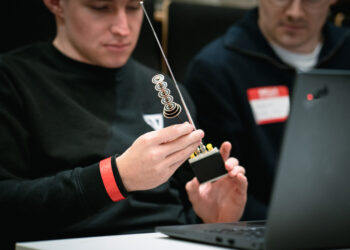
The European Defence Fund, the current defence-related budget, was introduced in the last EU budget cycle (2021) to target investment at defence innovation – and has been funding research into technologies like drones, AI and next-gen weapons. Other goals for the fund have been to encourage cooperation between member states to develop joint defence capabilities; enhance European strategic autonomy in defence procurement; and support startups and scaleups to break into defence supply chains.
All are areas set to have more EU funding ploughed into them if this MFF flies. The proposed new combined defence and space budget would also include a “military mobility” strand – aka the EU’s military “Schengen” to grease the free movement of military assets around the bloc – with a budget that’s tenfold larger than before.
The Commission said this will be deployed to back “dual-use infrastructure investments alongside civilian ones and contribute to a major boost for cybersecurity, infrastructure, and defence development overall”.