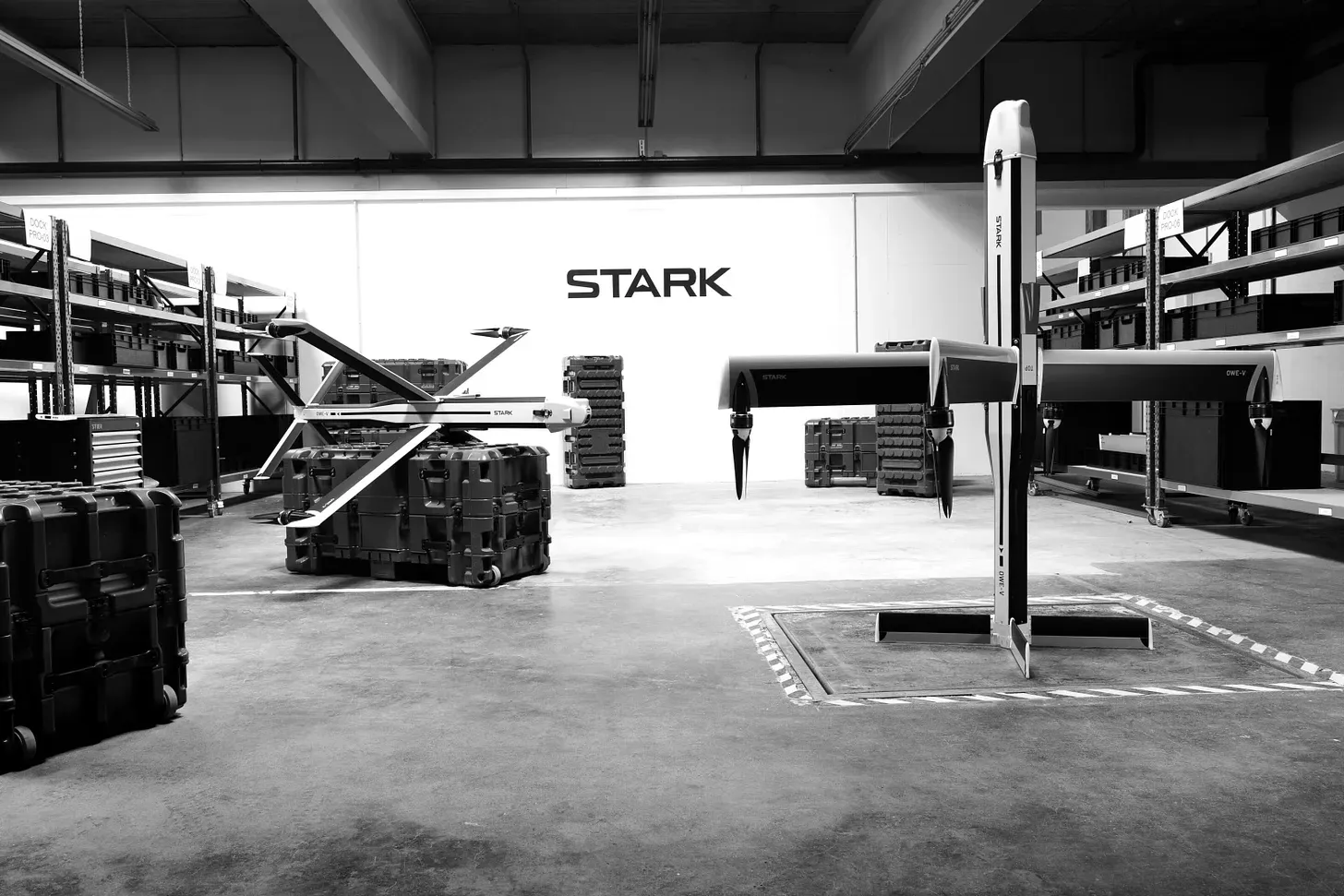
Weeks after officially opening its first ‘drone factory’ in the UK, German defence startup Stark — backed by the likes of NATO, In-Q-Tel and Sequoia — is making another move to lean into manufacturing. Today the drone maker announced the acquisition of AeroMass Technologies, a startup building supply chains for producing defence equipment. This is Stark’s second acquisition after buying autonomous flight navigation startup Pleno earlier this year.
Financial terms of the deal have not been disclosed. Nor is it clear whether AMT had raised funding. A listing on the UK’s Companies House register notes that AMT was voluntarily dissolved earlier this year and we understand that in fact this deal closed more than a year ago, in November 2024, and winding up the UK business while keeping a US entity that was acquired was a condition of the deal.
AMT was founded in 2023, and its focus is building out production networks of existing manufacturers across the UK and Europe — not just those that have built components for older or next-generation products, but also those that have “traditionally specialised in consumer goods” the company said.
The idea here is to build a more resilient production process through outsourcing.
The top-level manufacturer — in this case Stark — reduces overhead costs from building new facilities itself; it can scale the scope of its manufacturing to meet whatever level of demand there is; and there is in theory a better relationship between manufacturing supply and demand: the output potential of existing factories that are often small businesses (supply) gets connected more efficiently with orders for parts that need to be made (demand).
AMT claims to have “validated” this model through projects with the UK’s Minister of Defence and other allied militaries.
Stark today has three manufacturing facilities: the new shop in Swindon, one in Germany and one in Ukraine. Going forward, it will be interesting to see if Stark builds more standalone factories or if it uses AMT’s network in place of that.
The acquisition in notable for a few other reasons:
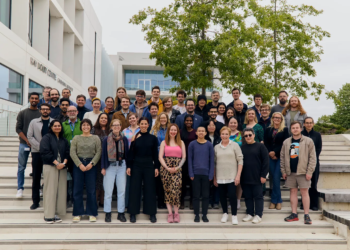
— Stark wants to show it is serious. The company has hit the ground running in the UK, with the publicised opening of its factory coinciding with a showcase to groups of would-be buyers and users in the UK military. That approach has been carried out in its AMT acquisition, too. The company notes in its announcement that it has “fully integrated” all of AMT’s systems into the STARK portfolio “for future projects.” And AMT co-founder James Earl has already taken on a position as Stark programme manager, where he will be scaling production both at the Swindon facility and further afield.
The companies did not disclose any details about customers or procurement orders.
— Earl has an interesting background that speaks to talent acquisition in defence tech startups. He trained with the Royal Air Force and initially had a military career as a helicopter pilot before moving into a variety of management, business development and sales roles across a range of civil next-generation transportation and aeronautics companies. These included a company that supplied services to Alphabet for its self-driving car efforts. Defence tech companies, especially those that have come out of technology roots, are hiring a lot of talent that gives them inroads into the defence industry and how it operates, and this is an example of that in action.
— Competition. One of Stark’s bigger startup rivals in the space of kinetic drones is Helsing. The latter company officially opened its first UK factory in Plymouth just days before Stark held a big event to inaugurate its large R&D and manufacturing space in Swindon. Helsing had a key partner in its Plymouth activities: Isembard, which itself provides services that are similar to what AMT was building, a platform for organising and manufacturing components and finished items across a distributed group of suppliers. You could see Stark’s acquisition as a one-up move on Helsing, bringing that kind of expertise in-house.
— On-demand is the name of the game. If legacy defence companies are typically slow to move in the procurement process, one advantage that startups can build in from the ground up is a more efficient, demand-based architecture that helps them get equipment to buyers faster.
“Stark was created to address the urgent need for a new approach to defence technology,” CTO Johannes Schaback said in a statement. “At the core of this new approach is an increased need for agility, in the way defence technology operates, in how it is deployed and in how it is manufactured. In acquiring AMT, we are leveraging not only their dynamic approach to production, but also their impressive manufacturing network, which will help to keep NATO safe.”
Stark’s first acquisition of Pleno was aimed at improving the flight navigation software used by its drones and other autonomous devices, particularly to help develop against signal jamming and building more swarm technologies. This latest deal will help Stark build out its physical business faster.
“At AMT we were obsessed with scaling fast, even if it meant at the expense of aesthetics. In our view, the only way to deliver the mass that modern warfare demands, is to put design for manufacturing at the centre of everything,” said Earl in a statement.
Stark itself is on a growth tear at the moment, which could mean potentially more funding for the startup coming soon on the back of the $62 million it raised earlier this year.