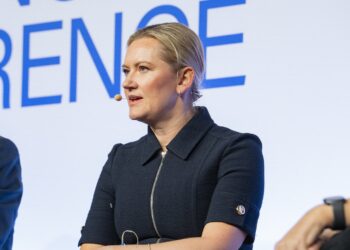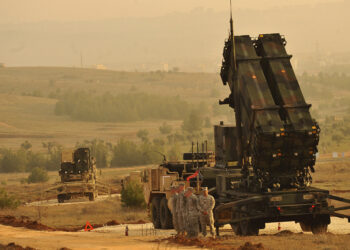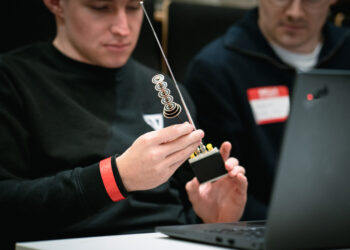
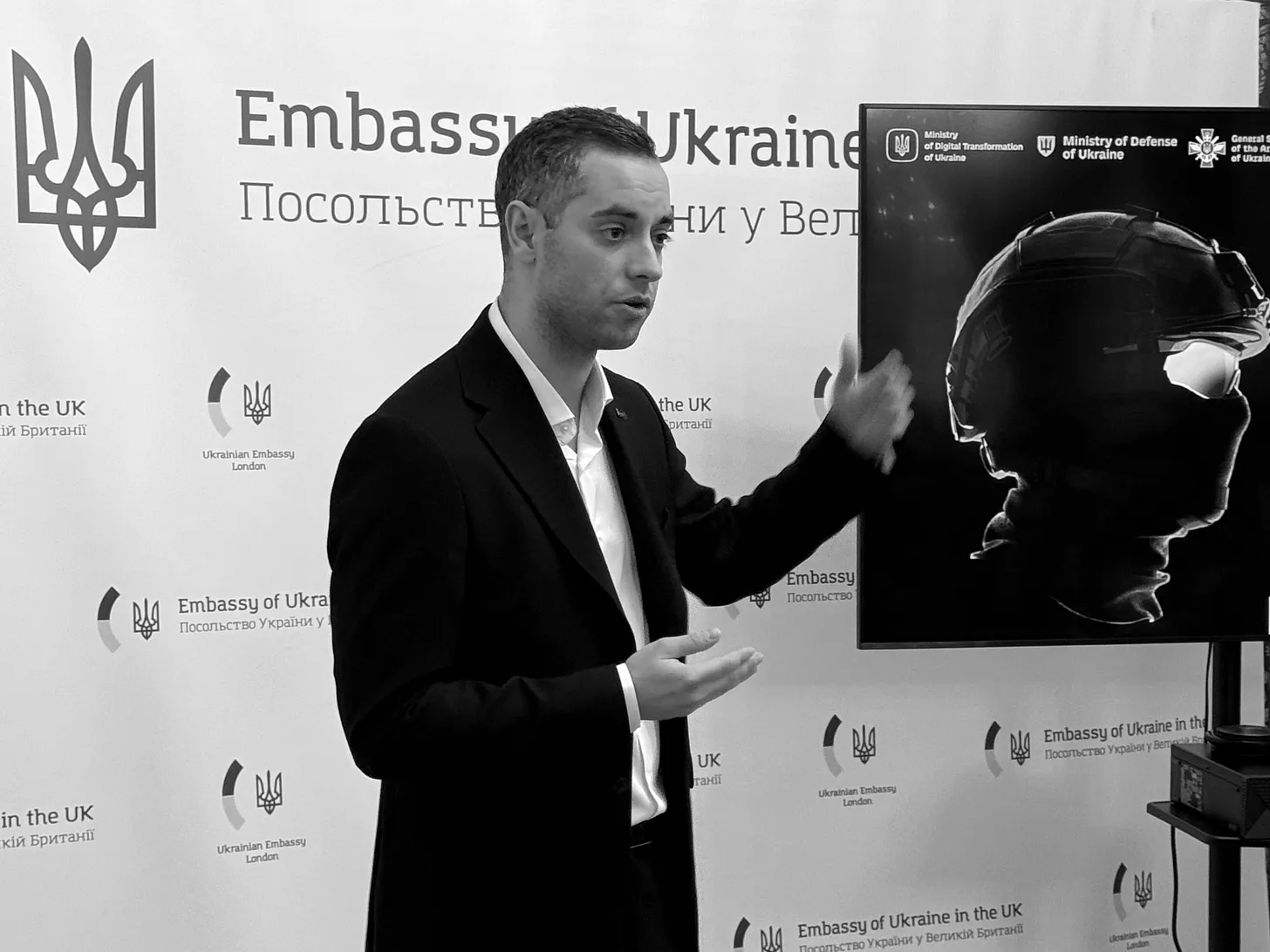
Last week we attended an important event at the Embassy of Ukraine in London to promote investment into Ukrainian defence tech startups. The event was hosted by Denys Demko, the First Secretary, who welcomed Artem Moroz, the Head of Investor Relations at Brave1 to host a Brave1 Demo Day. The Embassy was filled to capacity by investors, and the very tight security at the door was a reminder that Russia is fighting this war on our streets as well as in Ukraine. Here’s what we learned.
The event was supported by 1991.VC, which was founded 12 years ago in Ukraine as an accelerator, and is now a VC fund in the UK. Its founder, Denis Gursky, explained that “Defence and security is the new ESG, without security you can’t continue anything else.”
This was echoed by Denys Demko, who opened the event by reminding the audience, “this is about business, but it is also about an investment in your security and the security of your families.”
Before leaving back to Kyiv, Artem told us that,
the defence industry has long been conservative, with minimal change for decades. However, the war in Ukraine has disrupted technologies, procurement, and investment. While larger funds face restrictive mandates, this opens opportunities for agile investors willing to take calculated risks. Ukraine has become a hub for battle-tested defence technologies and is increasingly attracting investment from emerging defence-focussed venture capitalists, with this trend gaining momentum.
Questions were asked about how much a Ukrainian defence tech company could scale just in Ukraine. Artem pointed out that the production capacity of some defence related technologies is greater than the national budget for defence, so it is likely that in the future the government will lift the existing restriction on exports. This would open up international markets to Ukrainian defence tech startups that have battle-proven technologies. An investor in the audience pointed out that we should not be concerned now about foreign markets, as that will develop naturally after the war.
Investing Into Ukrainian Startups
The discussion addressed concerns about investing capital into Ukrainian entities, and how it can be expatriated later. Many Ukrainian defence tech startups are using legal entities abroad, in particular the UK, Delaware, and of course Estonia. The e-Residency program in Estonia has become a valuable tool for Ukrainian startups, providing an EU legal entity that can be managed online from Ukraine, and accessed by investors anywhere in the world.
Investment is to fund R&D
We pressed Artem on precisely why the government wants this foreign investment into Ukrainian startups – is it about getting capital into the country, creating tax paying entities in Ukraine, or about funding R&D and product development by Ukrainian innovators? Normally, government agencies seeking foreign direct investment are focussed on creating tax revenues. Artem clarified that right now, whilst the country is at war, the focus is on getting capital to support the development of technologies that can help them win the war. In that respect, it is less important to them whether that capital is invested into Ukraine directly, hence the open promotion of other jurisdictions.
NATO Stock Number fast track
An interesting insight was that defence startups in Ukraine are required by the government to obtain NATO Stock Numbers. While this typically takes up to three years in most NATO countries, in Ukraine it can take 3 months, and even in one case 3 weeks. With these numbers, they can then sell into the NATO supply chain, laying the ground for Ukrainian defence tech companies to scale internationally. Artem mentioned one German company relocating to Ukraine both to test and improve their product and to obtain their NATO Stock Number and then selling back into Germany.
Ukrainian Tech Priorities
Artem provided a list of the technology priorities of Brave1. The list gives a fascinating insight into the state of the war, and how it has evolved from a technological perspective:
- Missiles
- Anti-Shahed
- Lasers
- Sea Drones
- Swarm Drones
- Autonomous Strike
- Drone Carriers
- Solutions against Gliding Bombs
- A Ukrainian version of the Mavic drone
- Guided Munitions
Startup Pitches
The event included pitches by a number of Ukrainian founders, most of whom had travelled over 20 hours, by train out of Ukraine to Poland, and then by plane to London. All were compelling, serious, and impressive; we’ll be writing about them in a separate post. The pitch decks are available to investors via Brave1 once they have cleared security checks.
Barriers to venture investing in Ukraine
After the event at the Embassy, Resilience Media organised a private dinner for the Embassy and Brave1 to meet a group of investors and journalists. The dinner was co-sponsored by our friends at Point-Zenith.
Due diligence. The VCs pointed out that even if Brave1 do due diligence on all the startups on their platform, they are still obliged to do further due diligence themselves. The due diligence process becomes slow, and is complex for something like a Ukrainian defence tech company.
LP constraints. It also remains the case that most VCs are prevented from investing in defence startups by their LP agreements. As one VC pointed out, these funds were set up with 5-10 year mandates, and therefore the LP agreements often pre-date the war and this shift towards defence and dual-use. An option for investors is to invest directly into funds in Ukraine, such as D3 Ventures.
Other sources of capital. It seems more likely, according to the investors present, that family offices, angels, and more agile forms of capital like Venture Capital Trusts could be a better route for startups in Ukraine seeking investment. We will be looking more into the role of family offices in defence investment in the future.
For those wanting to find out more about this unique tech ecosystem, you can register to attend the Defense Tech Innovations Forum 2025 in Kyiv, where you can meet hundreds of companies, investors, and defence tech insiders. The key days of the event are 18-19 February (with side events on the 17th and 20th). Registration is available here.
About Brave1
Brave1 is a Ukrainian government platform established to coordinate the tech sector’s response to the war. From Artem: “most of us come from business, we have very few rules. Our strategic aim is to ensure our army has all the technology it needs to protect our country. We can compete [with Russia] with innovation. We do it locally and we connect with innovators in our allied countries.”
Brave1 provides support for foreign investors and defence tech companies to access the Ukrainian market. It matches investors and startups with frontline units, the military, and manufacturing to support testing and deployment of key defence technologies. The agency can also make grants of up to $200,000 to support early-stage technologies. In addition, they expect over $100m to be invested in 2025, growing from $40m in 2024, with local startups now raising rounds of $5-10m.
You can contact Brave1 at www.brave1.gov.ua
And don’t forget, you can make a donation to support Ukraine here, or join the Estonian ‘NAFO 69th Sniffing Brigade’ by donating to specific fundraisers here.