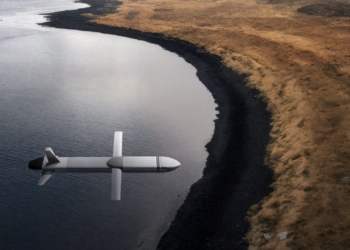
Rocket maker Frankenburg Technologies reported that it conducted “kill-chain hard-kill intercept against a fast-moving aerial target” on 12 December 2026 at the Ādaži NATO base in Latvia. The announcement is significant in context of Europe’s current air defense problem, where low cost aerial threats can exhaust expensive interceptors and strain limited inventories.
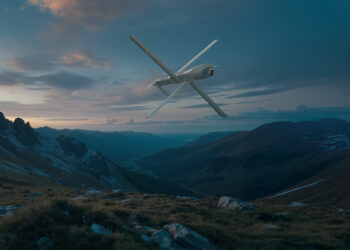
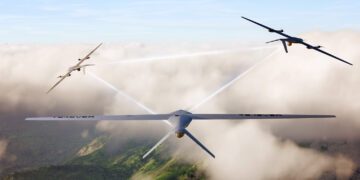
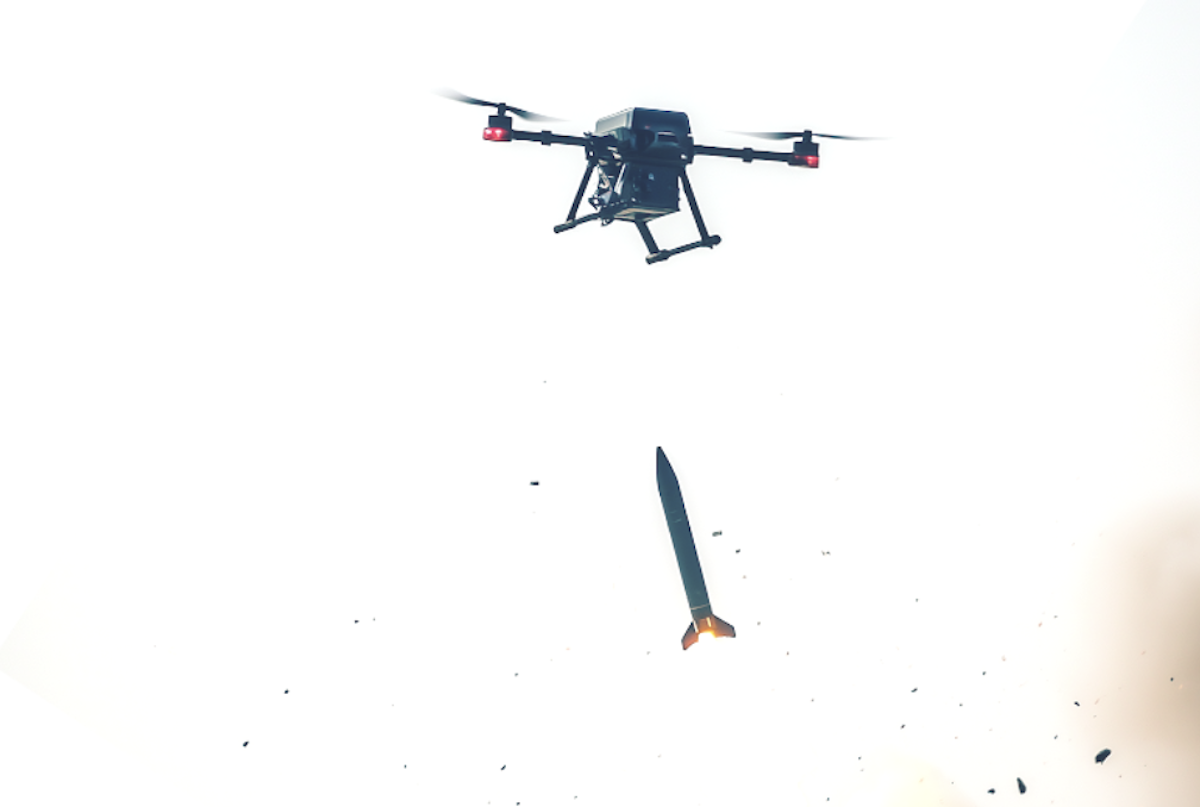
In a video provided by the company, we see their Mark 1 rocket take off and attack a propeller-powered drone. The company offered a number of specs regarding the interaction, including the 200 km/h air speed and 2 meter wingspan. The drone is about the size of a standard Geran-3 Russian attack drone.
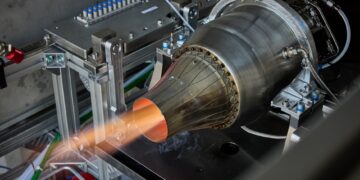
The company positions their Mark 1 rocket as a short range guided interceptor designed for mass manufacturing. It states that the missile is built entirely from commercially available components and was developed from initial concept to a live fire demonstration in 13 months, a timeline it contrasts with traditional missile development programs that often extend over many years.
“Mark 1 is designed for affordability and mass manufacturing,” said Kust Salm, Frankenburg
CEO. “We will now move into mass production at a rate of hundreds of missiles per day and bring the unit cost down to the low five figures.”
The missiles range is at least 2 kilometers and can act as fire-and-forget weapons or Lock-On-After-Launch to hit targets in poor weather. The missiles are compatible with ASTERIX and SAPIENT and can carry high explosives.
The Mark 1 mission is inject affordability and mass production into a munitions manufacturing culture that has long priced out a number of smaller players on the world stage. By showing an active missile taking down a common enemy, Frankenburg has proven that the good munitions don’t have to cost millions.
“Our missile system requires only a few hours of operator training, unlocking the opportunity
for virtually any service member—or civilian security professional—to contribute to air-
defence missions. This democratization of capability is particularly relevant for the protection
of critical national infrastructure facing the rapidly escalating threat of unmanned aerial
systems,” said Andreas Bappert, Chief Technology Officer for Frankenburg.