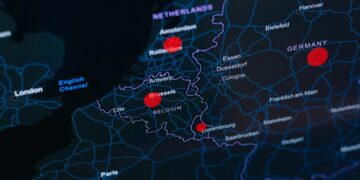
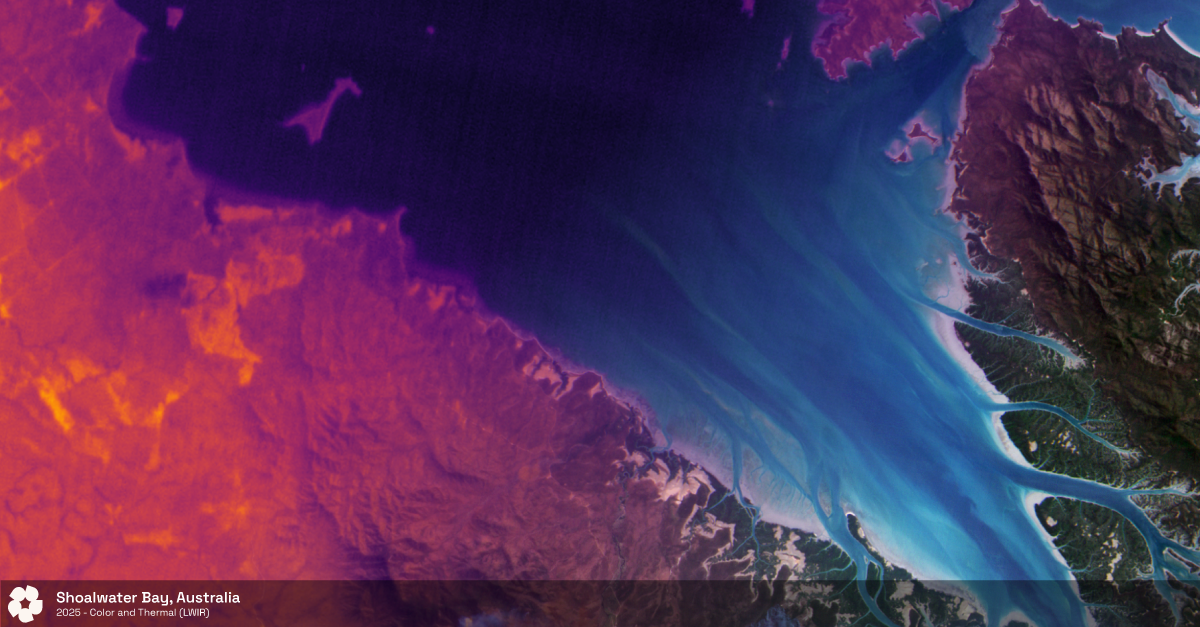
A startup building AI-based thermal infrared satellite technology to provide data for water resource management, public safety and defence applications has closed $60 million in funding to expand its business.
Luxembourg-based Hydrosat has two thermal satellites in orbit, thermal data that it says covers more than 10 million square kilometres of imagery per day across more than 60 countries, and a roster of customers in civil government, commercial and defence that include the NOAA, NRO (the National Reconnaissance Office of the U.S. Army), the Space Force and Air Force, Bayer, SupPlant, and Nutradrip. Hydrosat will be using the funding to expand in all of those sectors, underscoring how solutions for these salient markets continue to converge.
Per PitchBook data, around $18 million of this Series B was raised in late August 2025 from an undisclosed investor, although you can connect the dots: Hydrosat notes that it received an undisclosed amount of funding from the Luxembourg Future Fund around the same time.
Thursday, Hydrosat noted that the Series B is coming from a mix of existing and new investors, with a number of them holding a track record of backing defence and resilience technology startups.
Hartree Partners, Subutai Capital Partners, and Space 4 Earth all co-led the round, with new backer Truffle Capital and previous backers OTB Ventures, Blue Bear Capital, Statkraft Ventures, Cultivation Capital, Santa Barbara Venture Partners, and Luxembourg Future Fund all in the round, with the company said is a mix of financing and equity.
Per Pitchbook data, the valuation of the company is around $180 million. In an interview, CEO and co-founder Pieter Fossel would not comment on the valuation but also didn’t dispute it.
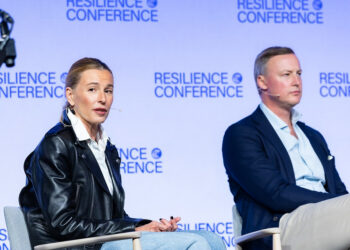
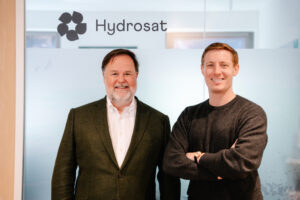 Hydrosat has been around since 2017, starting out based in Washington, DC, but eventually moving over to Luxembourg, where co-founders Fossel and president Royce Dalby (pictured here, Fossel on right) are now based, after acquiring a company in The Netherlands to expand its data science. Its name speaks to the startup’s technology around thermal imaging and how it relates to water movement. From the start it’s been targeting its product across different customer segments.
On the commercial side, as with a number of other satellite data companies (names include Planet Labs, EOS and Trinity) Hydrosat has built proprietary algorithms that integrate satellite data with other crop and soil data — a dataset that it says now covers more than 120 crop types — to understand the movement of water and how to use it most efficiently in the management of crops. In its words, its aim is “to uncover variations in stress across all crop types, even when they appear healthy on the surface.”
This is a key problem in agriculture for a number of reasons, among them water supplies becoming less predictable due to climate change; pollution; and geopolitical and economic shifts.
It happens that many of these same factors apply to how defence and civil government are managed, too, thus giving Hydrosat a dual-use angle. Around 30 percent of the company’s business comes from non-commercial customers and Fossel said he sees that proportion growing in the future.
“Really from the inception of the company, we have supported defence use cases,” said Fossel. “What got me personally really interested in water issues was the intersection between water and geopolitics.” Incidents like the Arab Spring, he pointed out, started out initially as water access disputes.
Regarding Hydrosat, Fossel said that military intelligence uses heat data, for example, to understand what activity adversaries might be carrying out under cover of night or underground or in camouflage (three ways that they can hide what they are doing from optical satellite imaging). Thermal and moisture data that Hydrosat also collects can also be used to plan activities or understand the impact of battles that have hit dams, resulting in floods and other disasters.
“Water can be weaponised,” Fossel said.
Hydrosat today already has a number of PhDs among its employees, and its leadership has some interesting experience that sets it up to continue expanding in all of the sectors where it already operates.
Fossel and his co-founder Dalby both had extensive exposure to the defence industry prior to founding Hydrosat, and Fossel also happens to be an investor in Anduril by way of having backed a solid rocket motor startup called Adranos that Anduril acquired in 2023 (an acquisition that turned Anduril into a supplier to primes).
Meanwhile, CTO Scott Soenen has a strong background in satellite and space tech, including several years in senior engineering and CTO roles at Capella Space, Planet Labs and BlackBridge. He’s based in Carlsbad, CA, and runs the company’s development labs there.
Investors are interested in the company precisely because of how it taps into the convergence of use cases across commercial and non-commercial entities, focusing on a critical resource in the process.
“This was a fantastic opportunity for us to invest in a broad spectrum of observation, and into a specific company that is complementary to everything we’ve seen so far but that nobody was [addressing],” said Wojtek Walniczek, a partner at OTB Ventures, in an interview.
The company today has a strong footprint in the U.S. and Europe that speaks to the resilience profile of both of those regions, but that is not the limit of where Hydrosat hopes to build business. The company said that the funding will not just be used to continue building out its tech and business in existing markets, but also to expand to work in Central Asia, MENA, India, and Latin America, all key areas in the globalised agribusiness world, not to mention developing economies where clean water remains at a premium.