Sunday 28 June, 2026
[email protected]
Resilience Media
  • News
    • Events
    • Interview
    • Startups
    • Venture
    • Weekly Digest
  • Resilience Conference
    • Resilience Conference Warsaw 2026
    • Resilience Conference Copenhagen 2026
    • Resilience Conference London 2026
  • About
  • Guest Posts
    • Author a Post
  • Subscribe
No Result
View All Result
  • News
    • Events
    • Interview
    • Startups
    • Venture
    • Weekly Digest
  • Resilience Conference
    • Resilience Conference Warsaw 2026
    • Resilience Conference Copenhagen 2026
    • Resilience Conference London 2026
  • About
  • Guest Posts
    • Author a Post
  • Subscribe
No Result
View All Result
Resilience Media
No Result
View All Result

Inside the future of aviation with the CEO of Grid Aero

John BiggsbyJohn Biggs
February 6, 2026
in Interview, News, Startups
Share on Linkedin

Aerospace engineer Arthur Dubois, Grid Aero’s CEO, argues that autonomy in the air coming faster than autonomy on our roads. Airspace is more structured and predictable, and, as he notes in our interview, “kids don’t jump out into the middle of the road.” The challenge, then, is not the sophistication of the algorithms so much as proving their reliability. Aviation demands demonstrable performance and his planes — essentially stripped down propeller transport aircraft with no cockpits — offer amazing durability and distance while reducing human risk.

You Might Also Like

Nokia resurfaces to help build Finland’s border guard anti-drone capability

Sanctioned Chinese cyber giant claims AI can rival Anthropic’s Mythos

SE3 Labs unveils its spatial AI tools for defence backed by Lakestar and Sequoia Scouts


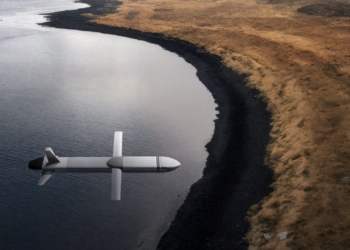
Grid Aero is building a class of aircraft that sits in the important gap between traditional cargo planes and small drones. The company, founded just over a year ago, is developing a large autonomous aircraft capable of carrying thousands of pounds over thousands of miles. In aviation terms, this is a Group 5 unmanned aircraft system, closer in size and capability to a small plane than to what most people think of as a drone.

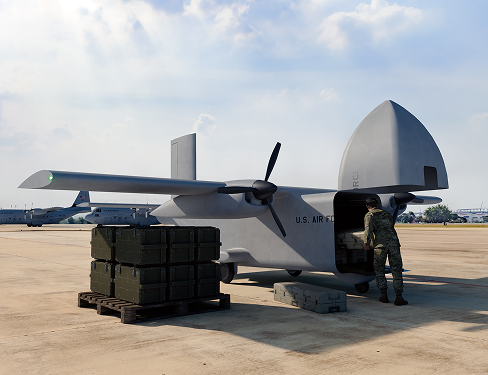
Grid Aero’s aircraft looks like a conventional plane, with wings and twin engines, but without a cockpit or any of the systems required to keep humans alive onboard. By removing life support, crew safety systems, and pilot accommodations, the aircraft becomes simpler, cheaper, and more expendable. These aircraft are meant to operate in environments where loss is a possibility.

“It’s really just like this super bare bones aircraft that’s designed to carry heavy payloads to the middle of nowhere, thousands of miles into the Pacific if you have to,” said Dubois. “And that’s really where the innovation comes in on the logistics front. It is this combination of low cost, pretty big aircraft that can fill a logistics mission that previously only was filled by manned aircraft.”

Dubois said that what operators need instead is a way to move meaningful payloads over long distances using drones that are low cost enough to risk. Grid Aero’s aircraft is designed to sit exactly at that intersection.

While the aircraft is capable of fully autonomous flight from takeoff to landing, Grid Aero does not view autonomy as the only option. Human operators can interact with the system, reroute flights, or take remote control when needed. The company is currently in the prototype phase, with a full-scale aircraft undergoing testing.Dubois is engaging both military and commercial customers, but widespread deployment is still several years away. Dubois estimates that it will be roughly five years before these aircraft become visible to the general public, largely because early operations will be intentionally kept out of populated areas.

The most interesting aspect is, quite, simply, the reduced complexity of these drones. While they look impressive, Dubois points out that it’s the mesh network and the sensors that make them much more than any other airplane in the sky. And it’s this melding of simplicity, capacity, and autonomy that makes Grid Aero a fascinating company.


Tags: airplanesDronesgrid aerostartups
Previous Post

Announcing the Resilience Conference 2026 Event Schedule

Next Post

Westwire expands UK defence manufacturing footprint with new Swindon facility

John Biggs

John Biggs

John Biggs is an entrepreneur, consultant, writer, and maker. He spent fifteen years as an editor for Gizmodo, CrunchGear, and TechCrunch and has a deep background in hardware startups, 3D printing, and blockchain. His work has also appeared in Men’s Health, Wired, and the New York Times. He has written nine books including the best book on blogging, Bloggers Boot Camp, and a book about the most expensive timepiece ever made, Marie Antoinette’s Watch. He lives in Brooklyn, New York. He runs the Keep Going podcast, a podcast about failure. His goal is to share how even the most confident and successful people had to face adversity.

Related News

Nokia resurfaces to help build Finland’s border guard anti-drone capability

Nokia resurfaces to help build Finland’s border guard anti-drone capability

byJohn Biggs
June 26, 2026

Nokia announced its participation in an industrial consortium led by the Finnish Border Guard to build anti-drone systems for government...

a chinese flag hanging from the side of a building

Sanctioned Chinese cyber giant claims AI can rival Anthropic’s Mythos

byCarly Page
June 26, 2026

A Chinese cybersecurity company sanctioned by the US claims it has developed an artificial intelligence system capable of hunting software...

SE3 Labs unveils its spatial AI tools for defence backed by Lakestar and Sequoia Scouts

SE3 Labs unveils its spatial AI tools for defence backed by Lakestar and Sequoia Scouts

byIngrid Lunden
June 26, 2026

Large Language Models are changing how non-technical people engage with AI, and those learnings are permeating into the world of...

Copenhagen-based startup Acodyne lands €2.5 million pre-seed round for autonomous cargo drones

Copenhagen-based startup Acodyne lands €2.5 million pre-seed round for autonomous cargo drones

byJohn Biggs
June 25, 2026

Copenhagen-based Acodyne announced it has raised €2.5 million in pre-seed funding to help build autonomous cargo aircraft designed for "heavy...

Nearfield Instruments

Nearfield Instruments raises $380M to stake Europe’s claim in the global chip supply chain

byPaul Sawers
June 25, 2026

Sovereignty has emerged as one of the defining strategic preoccupations in Europe today, intersecting with almost every aspect of national...

Irish space tech firm Ubotica raises $11M

Irish space tech firm Ubotica raises $11M

byFiona Alston
June 24, 2026

Ubotica, the Irish space tech firm developing orbital AI for satellites, has raised $11 million to scale the commercialisation of...

Dutch semiconductor company is bringing secure, authenticated satellite positioning to handheld devices

Dutch semiconductor company is bringing secure, authenticated satellite positioning to handheld devices

byJohn Biggs
June 23, 2026

For years, authenticated satellite positioning has largely been reserved for expensive, power-hungry systems operating in defence, aviation, and other specialised...

Stark inks Virtus deal with NATO member in Northern Europe, one week after expanding to Sweden

Stark confirms monster €500M funding round, reportedly approaching a €3B valuation

byIngrid Lunden
June 23, 2026

It's another big news day for defence tech startups in Europe. Stark -- the company building air and surface attack...

Load More
Next Post
Westwire expands UK defence manufacturing footprint with new Swindon facility

Westwire expands UK defence manufacturing footprint with new Swindon facility

birds flying in the sky during night time

Is Starlink still the un-jammable panacea many had thought? 

Most viewed

InVeris announces fats Drone, an integrated, multi-party drone flight simulator

Uforce raises $50M at a $1B+ valuation to build defence tech for Ukraine

Auterion, the drone software startup, eyes raising $200M at a $1.2B+ valuation

Palantir and Ukraine’s Brave1 have built a new AI “Dataroom”

Twentyfour Industries emerges from stealth with $11.8M for mass-produced drones

Senai exits stealth to help governments harness online video intelligence

Resilience Media is an independent publication covering the future of defence, security, and resilience. Our reporting focuses on emerging technologies, strategic threats, and the growing role of startups and investors in the defence of democracy.

  • About
  • News
  • Resilence Conference
    • Resilience Conference Copenhagen 2026
    • Resilience Conference Warsaw 2026
    • Resilience Conference 2026
  • Guest Posts
  • Subscribe
  • Privacy Policy
  • Terms & Conditions
  • Mission Statement & Code of Practice
  • Press

© 2026 Resilience Media

No Result
View All Result
  • Home
  • About
  • Subscribe
  • Events
  • Guest Posts
  • Interview
  • News
  • Resilience Conference London 2026
  • Resilience Conference Copenhagen 2026
  • Resilience Conference Warsaw 2026

© 2026 Resilience Media

This website uses cookies. By continuing to use this website you are giving consent to cookies being used. Visit our Privacy and Cookie Policy.