Friday 8 May, 2026
[email protected]
Resilience Media
  • About
  • News
  • Resilience Conference
    • Resilience Conference Warsaw 2026
    • Resilience Conference Copenhagen 2026
    • Resilience Conference London 2026
  • Guest Posts
    • Author a Post
  • Subscribe
No Result
View All Result
  • About
  • News
  • Resilience Conference
    • Resilience Conference Warsaw 2026
    • Resilience Conference Copenhagen 2026
    • Resilience Conference London 2026
  • Guest Posts
    • Author a Post
  • Subscribe
No Result
View All Result
Resilience Media
No Result
View All Result

Munich facility gives Spire a base for sovereign space capabilities

John BiggsbyJohn Biggs
May 8, 2026
in News, Startups
Share on Linkedin

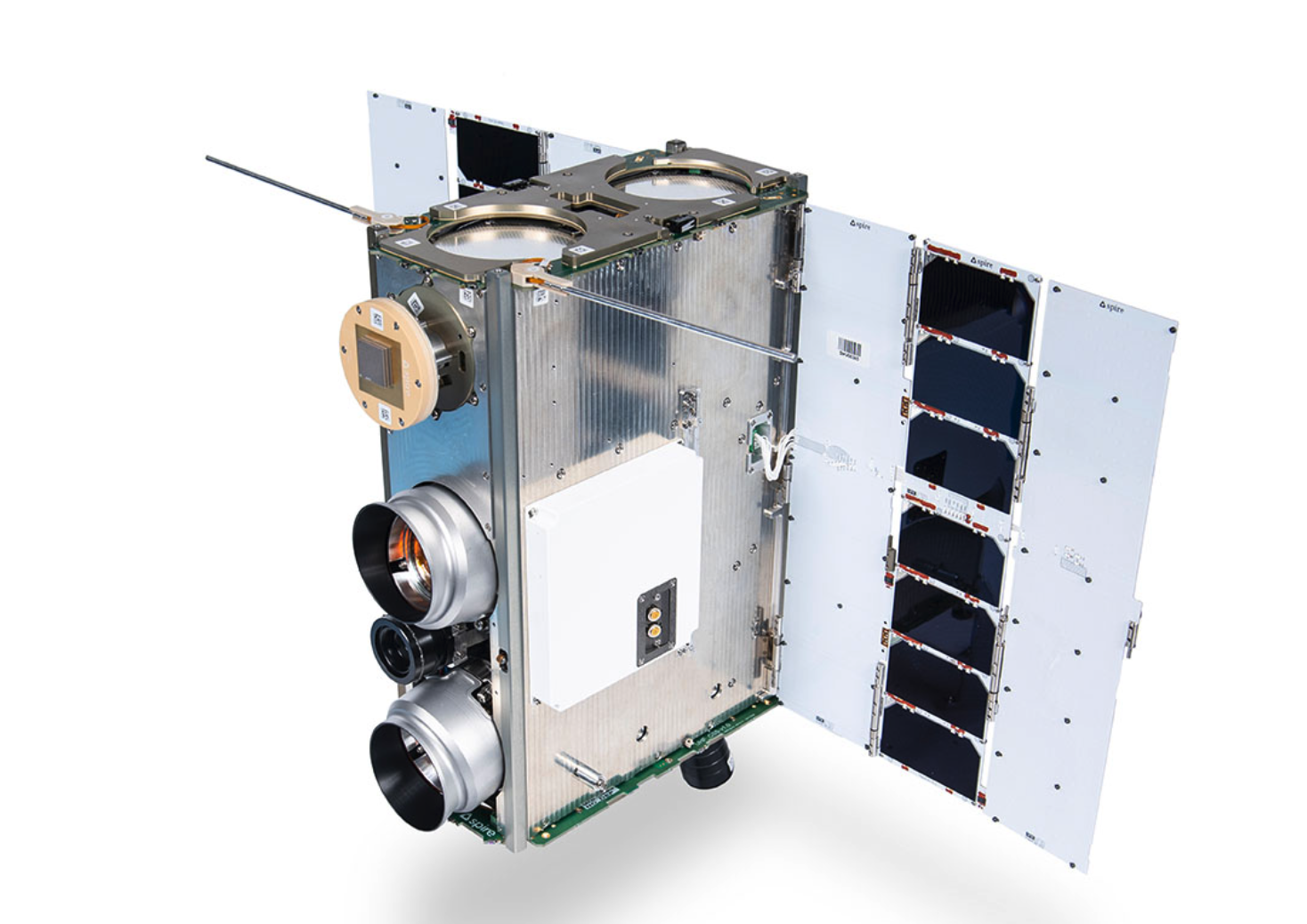
Spire Global has opened a satellite manufacturing facility in Munich as European governments push to expand sovereign space and intelligence capabilities amid growing concern over dependence on foreign systems.

You Might Also Like

Ukrainian Magura sea drone found in Greek cave near Lefkada

Two drones entering from Russia and armed with warheads land in Latvia

Analysis: Europe’s chip ambitions risk going stale

Spire operates a constellation of satellites focused on radio frequency sensing, weather monitoring, maritime tracking, aircraft monitoring, and spoofing and jamming detection. The company has increasingly positioned its RF sensing infrastructure as a tool for both monitoring and national security applications.

The new facility will support the production of small satellites for security, reconnaissance, and radio frequency monitoring missions. The new site includes “an ISO-certified clean room and vertically integrated infrastructure, with the capacity to produce up to 100 satellites per year,” according to a release.

Spire said the Munich operation will initially support the EURIALO project, an initiative backed by the European Space Agency under its Advanced Research in Telecommunications Systems (ARTES) Space Systems for Safety & Security (4S) program. The effort is focused on developing GNSS-independent aircraft geolocation systems that can track aircraft through radio frequency emissions rather than traditional navigation signals.

The project reflects growing European concern about the vulnerability of satellite navigation systems to jamming and spoofing attacks. European defense planners and security agencies have increasingly warned that dependence on GPS and related navigation infrastructure creates risks for both military and civilian transport systems.

“By combining satellite manufacturing with Spire’s proven RF geolocation capabilities, we are enabling a new class of responsive space-based intelligence systems that can be integrated into national and European security frameworks and expanding our industrial footprint to support the growing demand for space-based intelligence solutions,” said Theresa Condor, Spire CEO.

Germany has accelerated spending on space and defense technologies since the start of the war in Ukraine, with particular focus on surveillance, communications resilience, and independent intelligence collection capabilities. European governments have also become more interested in rapidly deployable satellite constellations that can supplement or replace vulnerable legacy systems during conflict.


 

Tags: GermanyGPSsatellitesspire
Previous Post

Ukrainian Magura sea drone found in Greek cave near Lefkada

John Biggs

John Biggs

John Biggs is an entrepreneur, consultant, writer, and maker. He spent fifteen years as an editor for Gizmodo, CrunchGear, and TechCrunch and has a deep background in hardware startups, 3D printing, and blockchain. His work has also appeared in Men’s Health, Wired, and the New York Times. He has written nine books including the best book on blogging, Bloggers Boot Camp, and a book about the most expensive timepiece ever made, Marie Antoinette’s Watch. He lives in Brooklyn, New York. He runs the Keep Going podcast, a podcast about failure. His goal is to share how even the most confident and successful people had to face adversity.

Related News

Ukrainian Magura sea drone found in Greek cave near Lefkada

Ukrainian Magura sea drone found in Greek cave near Lefkada

byJohn Biggs
May 8, 2026

Greek authorities are investigating the discovery of an unmanned surface vehicle (USV), known as a Magura V5 waterborne drone, off...

‘One alone isn’t a fighter’: Latvia opens up to allies as NATO DIANA supersizes

Two drones entering from Russia and armed with warheads land in Latvia

byJulia Gifford
May 8, 2026

A drone incursion this week in Latvia highlights the risk of grey-zone threats as fighting continues on in Ukraine against...

black and white computer keyboard

Analysis: Europe’s chip ambitions risk going stale

byPaddy Stephens
May 8, 2026

Headlines warn that helium shortages – caused by the ongoing war in Iran and the wider region – are threatening...

ARX expands Ukraine presence as uncrewed ground robot demand surges

ARX expands Ukraine presence as uncrewed ground robot demand surges

byJohn Biggs
May 7, 2026

The robotic ground war is heating up in Ukraine with companies are sending hundreds of uncrewed ground vehicles (UGVs) to...

(L-to-R): James Palles-Dimmock (CEO) with co-founders Prof John Morton (CTO) and Prof Simon Benjamin (CSO)

Quantum Motion raises $160M for silicon-based quantum computers that fit in a server rack

byPaul Sawers
May 7, 2026

Large-scale quantum computers remain an elusive goal, but with multiple nations hustling to be the first to build and use...

L-to-R: Joakim Sjöblom (co-founder & CEO), Sebastian Reismer (head of construction), Carl Duforce (co-founder & COO)

Swebal raises $35M to rekindle Europe’s TNT supply chain

byPaul Sawers
May 7, 2026

NATO is facing a shortage of TNT, an essential explosive in the manufacturing of weapons. Now, startups are setting up...

Estonia is setting up a new ‘rare drone’ tech testing lab to ease the European bottleneck

Estonia is setting up a new ‘rare drone’ tech testing lab to ease the European bottleneck

byFiona Alston
May 6, 2026

Estonia has unveiled plans for a new lab designed to test the next wave of defence technology, a facility that...

black and gray quadcopter drone

UK commits £46.5M to accelerate drones and air taxis while introducing national ID system

byCarly Page
May 5, 2026

The UK government has committed nearly £50 million to accelerate the deployment of drones and advanced air mobility systems, while...

Load More

Most viewed

InVeris announces fats Drone, an integrated, multi-party drone flight simulator

Uforce raises $50M at a $1B+ valuation to build defence tech for Ukraine

Auterion, the drone software startup, eyes raising $200M at a $1.2B+ valuation

Palantir and Ukraine’s Brave1 have built a new AI “Dataroom”

Senai exits stealth to help governments harness online video intelligence

Twentyfour Industries emerges from stealth with $11.8M for mass-produced drones

Resilience Media is an independent publication covering the future of defence, security, and resilience. Our reporting focuses on emerging technologies, strategic threats, and the growing role of startups and investors in the defence of democracy.

  • About
  • News
  • Resilence Conference
    • Resilience Conference Copenhagen 2026
    • Resilience Conference Warsaw 2026
    • Resilience Conference 2026
  • Guest Posts
  • Subscribe
  • Privacy Policy
  • Terms & Conditions

© 2026 Resilience Media

No Result
View All Result
  • Home
  • Subscribe
  • About
  • Events
  • Guest Posts
  • Interview
  • News
  • Resilience Conference London 2026
  • Resilience Conference Copenhagen 2026
  • Resilience Conference Warsaw 2026
  • Startups
  • Venture
  • Weekly Digest

© 2026 Resilience Media

This website uses cookies. By continuing to use this website you are giving consent to cookies being used. Visit our Privacy and Cookie Policy.