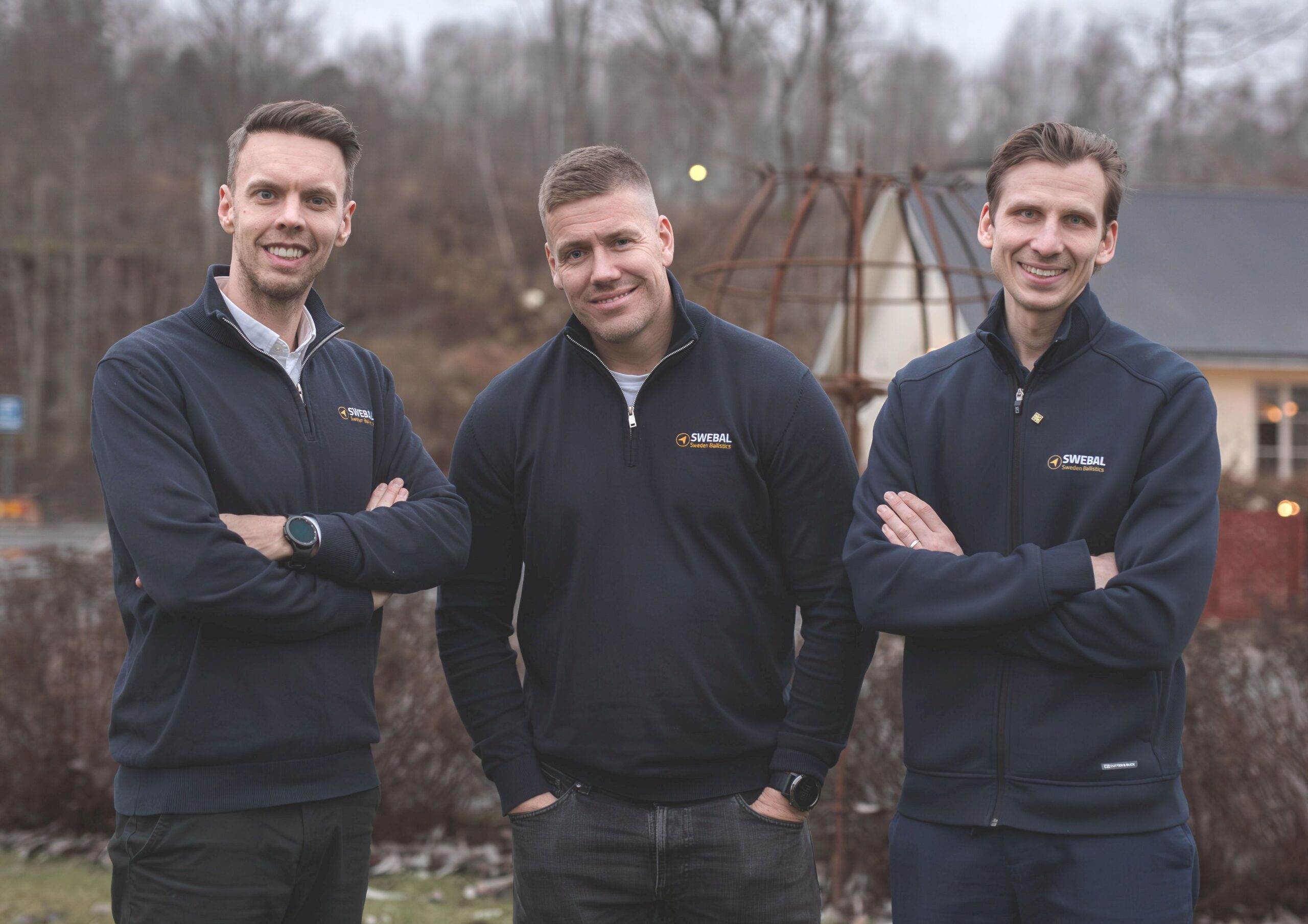
NATO is facing a shortage of TNT, an essential explosive in the manufacturing of weapons. Now, startups are setting up to see how they can fill the gap. In the latest development, Sweden Ballistics, a defence manufacturing company that also goes by the name Swebal, has raised €30 million ($35 million) in equity funding to complete construction of a new TNT production facility.
Founded out of Nora, Sweden, in 2024, Swebal says the funding will allow it to move ahead with construction of the plant in Nora, which would become one of the first new TNT production facilities to be built in Europe since the Cold War, with full-scale production expected by 2028.
The round includes backing from Sweden’s former Chief of Army, Major General (ret) Karl Engelbrektson, alongside Pär Svärdson, founder of e-commerce companies Apotea and Adlibris, and Thomas von Koch, a founding member and former chief executive of private equity firm EQT, as well as a group of Swedish family offices.
Upstream bottleneck
Europe is ramping up ammunition production across the continent, with manufacturers expanding capacity to meet demand driven by the war in Ukraine. In some cases, output has increased sharply, with companies such as Rheinmetall scaling artillery shell production to levels that now exceed US output.
But that expansion is hitting a bottleneck: access to explosives and propellants. While governments and industry have focused on increasing the number of shells produced, the upstream materials required to fill them remain in short supply.
Trinitrotoluene, or TNT, is a core component in munitions, used in artillery shells, aerial bombs, and mines. While European governments have accelerated investment in weapons systems and ammunition production since Russia’s invasion of Ukraine, the supply of explosives has emerged as a constraint on output.
Europe currently has limited domestic TNT production capacity. Poland’s Nitro-Chem (a subsidiary of the state-owned defence prime PGZ) remains one of the few NATO-aligned producers. With some 10,000 tonnes of TNT produced annually, it is also the biggest producer in the NATO bloc. Its output, however, is already committed under long-term contracts, meaning there is none to fill new orders. Nitro-Chem is working on expanding production, but the shortage has left manufacturers reliant on imports to meet demand, exposing supply chains to geopolitical risk and logistical delays.
Swebal is positioning its new facility as a way to address that demand. The company expects the plant to produce more than 4,000 tonnes of TNT annually once operational, supplying European manufacturers involved in expanding artillery and munitions production.
Swebal co-founder and CEO Joakim Sjöblom said the scale of demand reflects not just a supply gap, but a broader push by European governments to bring explosives production back onshore, with manufacturers already securing future supply.
“Swebal’s 4,000 metric tonnes is contributing to closing the supply gap, but Europe is still far away from being sovereign within energetic materials,” he explained to Resilience Media. “As Europe moves supply chains back to the continent, we see very strong demand and have allocated several years ahead.”
The new facility builds on groundwork laid over the past year, including environmental approval from Sweden’s Land and Environmental Court secured in December. With financing now in place, the company is preparing to move ahead with construction later in 2026.
A slow build-out across Europe
Swebal isn’t the only effort underway to expand Europe’s explosives capacity, though projects typically remain years away from full production.
In Finland, explosives manufacturer Forcit is planning a new TNT facility in Pori, backed by government demand and long-term procurement agreements, with output expected later in the decade. Poland’s Nitro-Chem’s planned expansion is expected to double output in the coming years.
And the UK is exploring new domestic explosives production as part of a broader effort to rebuild ammunition supply chains, with multiple sites under consideration by the Ministry of Defence.
Collectively, these projects point to a gradual rebuilding of Europe’s explosives base. However, most remain in planning or expansion phases, with new capacity unlikely to come online at scale before the latter part of the decade.
Sjöblom said the emergence of multiple projects reflects the scale of the gap, arguing that Europe will need significantly more capacity to meet demand, particularly given the pace of ammunition consumption seen in Ukraine.
“We are big supporters of all projects and initiatives contributing to the space, as we all share the same ambition and attack the same bottleneck,” he said. “After the Second World War, it took decades before we achieved mutual disarmament, and with the learnings from Ukraine, the European stockpiles will be significantly larger than before. All in all, these data points tell us that we are looking at least 10 years of imbalance in supply and demand.”
In the meantime, manufacturers are being pushed to increase output using a supply chain that has yet to catch up, leaving explosives as a limiting factor in how quickly production can grow. That creates a mismatch between demand and supply: while ammunition output is being scaled now, much of the supporting infrastructure will take years to come online.
For Swebal, that lag is shaped in part by regulatory timelines. Sjöblom said the company began permitting processes in 2024, with roughly two years required before construction could begin, followed by a further two years to complete the facility.
“In a nutshell, two years of pre-studies and permitting, and two years of construction is as quick as you can possibly act within the European framework,” Sjöblom explained. “If I could accelerate any of these, it would be the permitting, where some of these processes should be able to run in parallel, instead of sequence, and hence shortening timelines without causing harm to the democratic aspect.”
Swebal says its facility will operate continuously and rely on European-sourced materials and equipment, reducing dependence on long-distance imports. Once operational, the Nora plant is expected to run around the clock, supplying explosives needed for artillery, drone munitions, and other systems.
Even so, projects like Swebal’s are unlikely to close the gap in the near term, with new capacity taking years to come online against a backdrop of sustained demand.