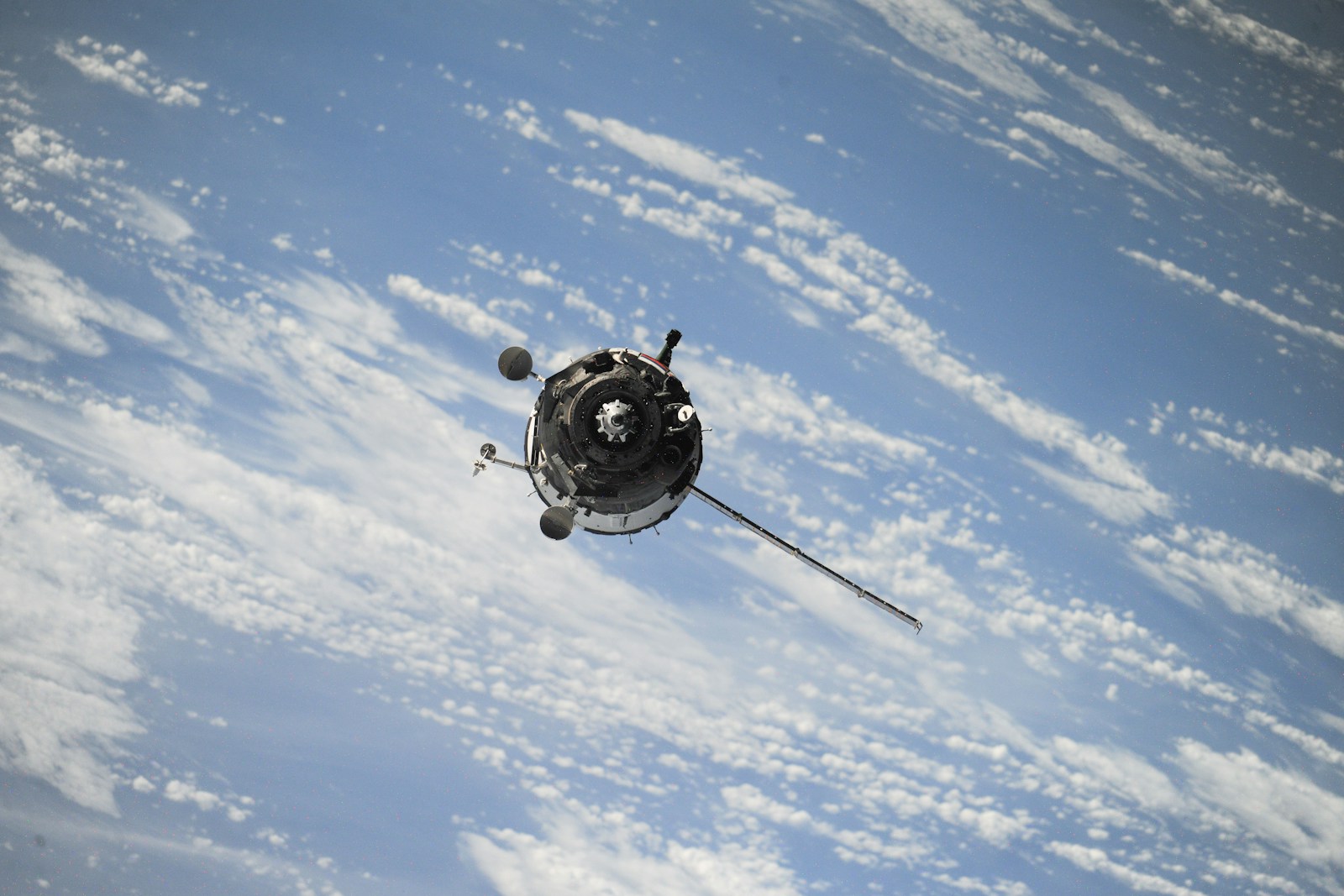
In space, resilience must now take centre stage. Why? Because more and more, it is becoming impossible to prevent actions that cause harm to satellites – satellites that are growing rapidly in number.
The latest reminder of this came recently, with reports of Russia developing a “nuclear-capable weapon that could take down satellites” – a “serious national security threat,” in the words of US House Intelligence Committee chairman Mike Turner. But the risk isn’t a sudden explosion that downs several satellites at once.
It’s sometimes said that the best guarantee of the resilience of our satellite infrastructure and the numerous services that depend on it is making sure that any critical task is spread across a number of satellites.
The reasoning is that if one satellite in a constellation were to fail, other nodes in that network would take over. However, one obvious problem with this approach is that if satellites are mass-produced, then they share the same vulnerabilities, which are not always obvious at the design and manufacturing stage. But the bigger problem relates to what would happen were a nuclear weapon to be detonated in orbit, and it highlights why resilience must be baked into the design of the satellite itself.
The detonation of a nuke in space, as the U.S. Starfish Prime test showed, would create an artificial radiation belt. Any spacecraft – civilian or military – that passed through that belt would be exposed to heavy radiation.
And in time, they would sustain damage of the kind that causes solar panels, electronics, sensors, and the structure of the spacecraft itself to degrade. Because the speed at which satellites broke down would be different, any fleet operator would have a very difficult time attempting to repair or replace the spacecraft in that fleet.
In the meantime, the satellites would go on attempting to do their jobs, but likely producing unreliable data. That would have knock-on effects for navigation, for aviation, for financial transaction timing, for telecommunications. Small discrepancies between what the data said and what the truth was would snowball, potentially causing chaos.
A Russian attack in orbit would violate the Outer Space Treaty of 1967. But this treaty is already being eroded in practice, through both ‘accidents’ and deliberate acts that fall short of open attack.
Even if all the countries of the world that were active in space signed a new, stronger treaty, or committed to keeping to the treaty of 1967, it would remain notoriously difficult to know exactly what was going on in orbit, and countries like Russia would almost certainly still break it.
A hostile state actor could detonate a nuclear weapon almost anonymously, leaving others either to guess or do nothing. The pragmatic approach is to compel spacecraft designers and manufacturers to put resilience at the heart of their process. Materials that can withstand extreme radiation without adding to the weight or cost of spacecraft now exist.
It’s human nature often to put off doing what’s necessary until fate forces our hand. But we must not wait for a calamity to take place in orbit to change our approach to spacecraft protection. The change we need to make is not, in fact, dramatic – but its effect could be.
If, from the first, we began designing spacecraft with sustained operation under stress in mind, then even if a nuclear weapon were detonated in orbit, essential services on Earth could continue. More likely would be that detonating such a weapon would cease to make for a sound strategy, since the damage could be contained. In other words: resilience is a deterrent – and it is now materially achievable thanks to the existence of radiation-tolerant composites, hardened electronics, and shielding approaches already in use or near deployment.
There are signs that we’re beginning to think more clearly about this. The European Space Agency has taken steps to increase structural resilience, for instance.
But time is of the essence. A Russian nuclear attack in space has been discussed since at least 2024. It remains a possibility. Standards, testing, and procurement need to reflect this. So does coordination across civil, commercial, and defence actors. The best materials scientists across the NATO countries must be enabled to innovate and to scale the advanced materials solutions that already work. If this happens, we can make sure that, at least for now, our space infrastructure – and the way of life – remains stable.
Dr Robert Brüll is the CEO of FibreCoat