
Sunday 26 April, 2026
[email protected]
Resilience Media
  • About
  • News
  • Resilience Conference
    • Resilience Conference Warsaw 2026
    • Resilience Conference Copenhagen 2026
    • Resilience Conference London 2026
  • Guest Posts
    • Author a Post
  • Subscribe
No Result
View All Result
  • About
  • News
  • Resilience Conference
    • Resilience Conference Warsaw 2026
    • Resilience Conference Copenhagen 2026
    • Resilience Conference London 2026
  • Guest Posts
    • Author a Post
  • Subscribe
No Result
View All Result
Resilience Media
No Result
View All Result

The dangerous economics of drone warfare

It currently costs far more to destroy a UAS threat than it does to launch one

Jan-Hendrik BoelensbyJan-Hendrik Boelens
March 11, 2026
in Guest Posts
birds flying over the field
Share on Linkedin

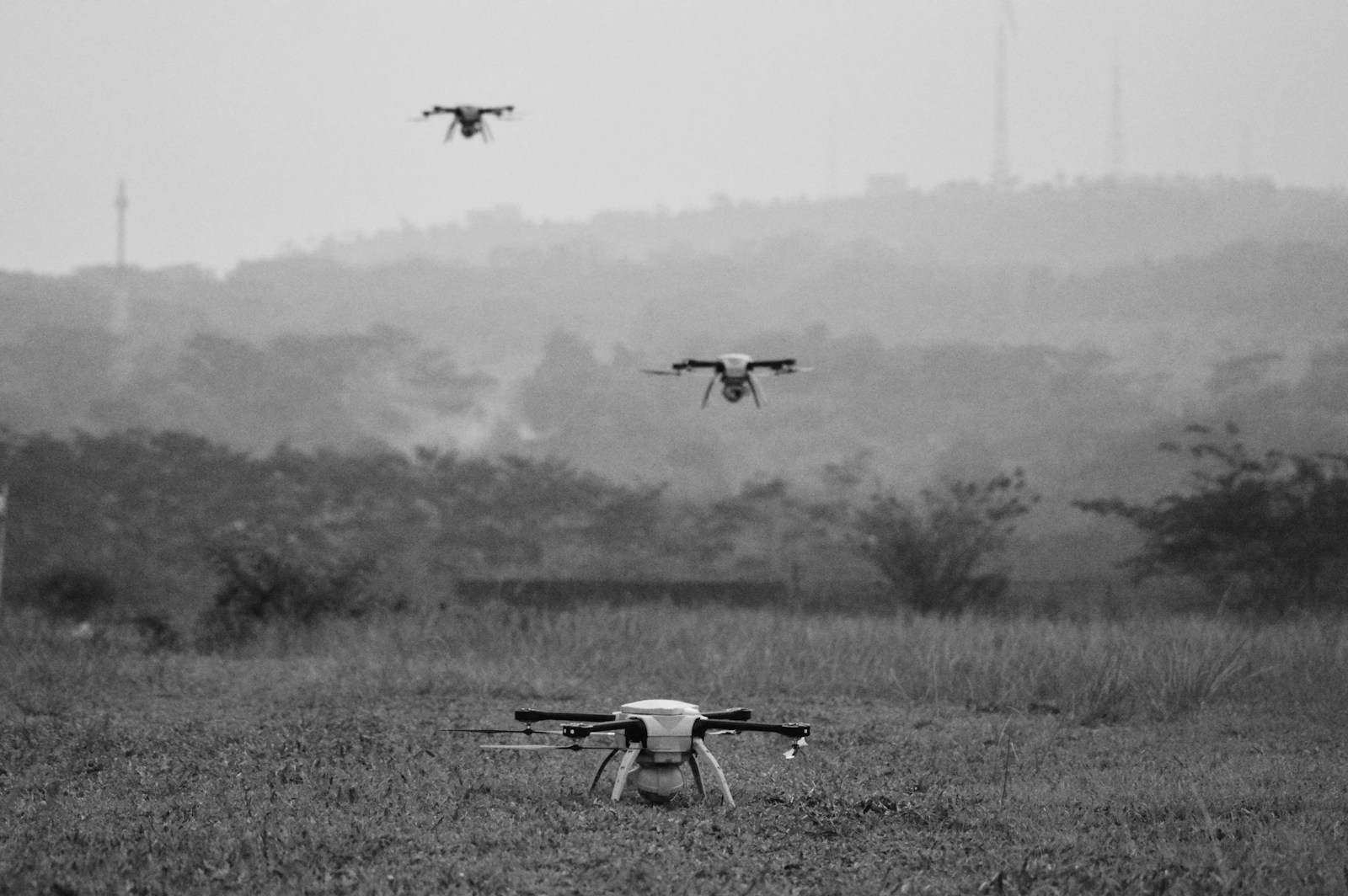
Modern air defence is entering a dangerous economic inversion: in many cases, it now costs far more to destroy a threat than it does to launch one.

You Might Also Like

Nowhere to hide

The UK is on the precipice of geopolitical and military irrelevance

Is defence tech a ‘proper’ VC-backable vertical?

Recent Iranian strikes across the Gulf illustrate the scale of the problem. Over the course of a single weekend, Iran launched more than 500 drones, alongside ballistic and cruise missiles, towards the UAE and other regional targets. Emirati air defences achieved remarkable interception rates, reportedly destroying more than 90% of incoming threats and preventing major damage to civilian population centres.

Operationally, the defence worked. Financially, the balance looks very different.

For every dollar spent launching drones, defenders may spend twenty or more shooting them down. In the case of Iran’s Shahed-type drones, which are estimated to cost $20,000 to $50,000 each, analysts estimate the total cost for those attacks at up to $360 million. The cost of intercepting them, however, may have exceeded $1.5 billion, as the interceptors currently used can cost hundreds of thousands – or even millions – of dollars.

This has been described as akin to using “Ferraris to intercept e-bikes”.

The economics of attrition

This asymmetry is not accidental. By launching large numbers of inexpensive drones alongside more advanced weapons, attackers force defenders to expend costly interceptors and draw down stockpiles that cannot be replenished quickly. Even the most capable air defence networks face pressure when forced to operate this way for extended periods.

The same logic has been visible in Ukraine for several years. Russia’s use of Shahed drones has repeatedly forced Ukrainian air defences to intercept large waves of comparable, inexpensive threats, consuming scarce interceptors and placing sustained pressure on defensive systems.

What is changing now is how defenders are responding.

Recent reporting suggests the Pentagon and several Gulf states are exploring the use of Ukrainian-developed interceptor drones designed specifically to destroy these Shahed-type drones at a fraction of the cost of traditional interceptors. Ukrainian companies have begun producing these interceptors for only a few thousand dollars each, offering a far more sustainable way to counter large drone swarms.

Rethinking air defence

One response to this challenge is to rethink the architecture of counter-drone defence. Rather than relying primarily on expensive interceptors, several emerging approaches aim to separate detection from interception and enable earlier, more distributed sensing of incoming threats. These range from lower-cost interceptor drones to electronic or gun systems and other layered defences. Another approach — which my company, Alpine Eagle, takes — places sensors in the air to detect and track low-flying drones earlier and share targeting data across defensive networks.

This allows traditional air defence architectures to continue doing what they were designed to do: defeating high-value targets such as aircraft, cruise missiles and ballistic missiles. These systems remain extraordinarily capable in that role. But when they are forced to engage hundreds or thousands of inexpensive drones, the economic model begins to break down.

Technological sophistication

The implications extend far beyond the Middle East conflict and the Ukraine war.

We’re increasingly seeing drones being used not only as strike weapons but also as instruments of pressure and espionage. Persistent aerial threats can disrupt airports, probe critical infrastructure and impose financial strain on defensive systems even when they fail to reach their targets.

Maintaining air defence under these conditions requires changing the economic logic of defence itself, bringing the cost of interception closer to the cost of the threat.

Future counter-drone architectures must detect threats earlier, respond faster and scale across large areas without relying solely on a small number of highly expensive interceptors. That means distributed sensing networks, rapid coordination between platforms and layered defensive systems that combine electronic warfare, guns and autonomous interceptors.

Such approaches recognise a fundamental reality of modern warfare: airspace control is no longer determined solely by technological sophistication, but also by cost efficiency and production capacity.

Drone warfare has changed the economics of defence. Without cheaper and more scalable air defence systems, the cost of protecting airspace may continue to rise faster than many states can sustain.

Jan-Hendrik Boelens is the CEO and co-founder of Alpine Eagle, a counter-UAS startup based in Munich.

Tags: Alpine Eaglecounter-droneDronesUAS
Previous Post

The signal is the weapon: How mobile networks became infrastructure for modern war

Next Post

Scout Ventures raises $125 million to expand investment in defence and dual-use tech

Jan-Hendrik Boelens

Jan-Hendrik Boelens

Jan-Hendrik Boelens is the co-founder and CEO of counter-UAS technology startup Alpine Eagle

Related News

Nowhere to hide

Nowhere to hide

byHugo Jammes
March 27, 2026

"All warfare is based on deception. Hence, when we are able to attack, we must seem unable; when using our...

The UK is on the precipice of geopolitical and military irrelevance

The UK is on the precipice of geopolitical and military irrelevance

byGuest Author
March 24, 2026

Imagine the headline next week: “Trump seizes Cyprus, Chagos and Gibraltar from the UK.”  Such is the ambiguity of Britain’s...

a bridge over a body of water with a statue in the background

Is defence tech a ‘proper’ VC-backable vertical?

byAnton Verkhovodov
March 16, 2026

Several months ago, on a famous VC podcast, I heard an idea that I consider heresy: defence tech is not...

asphalt road between trees

Munich Security Conference got the urgency right. The hard part comes next

byRobin Dechant
March 6, 2026

A few weeks on from the Munich Security Conference, something many of the Resilience Media community no doubt attended, I...

If Russia Wins: Lessons for the UK and Europe

If Russia Wins: Lessons for the UK and Europe

byHugo Jammes
February 17, 2026

In the build-up to the Munich Security Conference (MSC), I finally read a book many had recommended. Carlo Masala’s ‘If...

a factory filled with lots of orange machines

The second valley of death

byRobin Dechant
February 2, 2026

Every founder knows about the first valley of death – that phase where you're doing everything possible to find your...

cloudy skies

Europe’s cloud future is about collaboration

byAntti Pennanen
January 30, 2026

For years, data sovereignty had been treated as a theoretical concern – debated in policy circles yet usually deferred behind...

World Economic Forum

Capital under siege: Sanctions, supply chains and politics now drive VC decisions

byHugo Jammes
January 22, 2026

For the last three decades, European venture capital has benefited from a grand assumption that rarely makes it into pitch...

Load More
Next Post
Scout Ventures raises $125 million to expand investment in defence and dual-use tech

Scout Ventures raises $125 million to expand investment in defence and dual-use tech

US and UK ballistic missile defence capabilities brought into focus as Iran lashes out against region

US and UK ballistic missile defence capabilities brought into focus as Iran lashes out against region

Most viewed

InVeris announces fats Drone, an integrated, multi-party drone flight simulator

Uforce raises $50M at a $1B+ valuation to build defence tech for Ukraine

Auterion, the drone software startup, eyes raising $200M at a $1.2B+ valuation

Palantir and Ukraine’s Brave1 have built a new AI “Dataroom”

Senai exits stealth to help governments harness online video intelligence

Twentyfour Industries emerges from stealth with $11.8M for mass-produced drones

Resilience Media is an independent publication covering the future of defence, security, and resilience. Our reporting focuses on emerging technologies, strategic threats, and the growing role of startups and investors in the defence of democracy.

  • About
  • News
  • Resilence Conference
    • Resilience Conference Copenhagen 2026
    • Resilience Conference Warsaw 2026
    • Resilience Conference 2026
  • Guest Posts
  • Subscribe
  • Privacy Policy
  • Terms & Conditions

© 2026 Resilience Media

No Result
View All Result
  • Home
  • Subscribe
  • About
  • Events
  • Guest Posts
  • Interview
  • News
  • Resilience Conference London 2026
  • Resilience Conference Copenhagen 2026
  • Resilience Conference Warsaw 2026
  • Startups
  • Venture
  • Weekly Digest

© 2026 Resilience Media

This website uses cookies. By continuing to use this website you are giving consent to cookies being used. Visit our Privacy and Cookie Policy.