Every founder knows about the first valley of death – that phase where you’re doing everything possible to find your first customers and make them happy. Build, test, iterate, learn. I’ve been through this myself. If you survive, more customers will come, investors get excited, and capital flows (or you get acquired, as in my case).
Building hardware is hard. Everyone knows it. Most hardware companies don’t even make it to product-market fit. And for those that survive, there’s a second valley waiting: the gap between making a few prototypes and producing thousands of units. This is where companies either fade away or become generational. Successfully scaling production is what separates the two.
We’re seeing this play out in defence right now. When companies have proven their technology works, Ukraine has validated it, and governments are signing contracts, the challenge isn’t building a prototype anymore. It’s delivering thousands of working units on time.
As robotics companies begin deploying fleets that automate real physical work across industries, they’ll face the exact same scaling challenge in the future. The winners will be determined by who can manufacture at scale, not just innovate.
The production cliff
Going from 10 prototypes to 10,000 units isn’t just “doing the same thing more times.” It’s an entirely different game. And don’t get me wrong. Building even a single prototype of a fundamentally new product is a success in itself. It’s brutally hard.
Your prototype supplier who hand-assembled components with care? They can’t deliver at volume. Your carefully selected parts? Half of them aren’t available in the quantities you need, and the lead times just jumped from six weeks to nine months. That clever design decision that saved you two weeks in prototyping? It now adds €100 to every unit because it can’t be automated. The spreadsheet you’ve used as a manufacturing execution system (MES) can’t cope with scale. Now you need to deal with the implementation of an MES by your favorite industrial automation provider.
The trade-offs are very hard. Automate too early and you’ve locked in processes before you’ve worked out the bugs. Now every design change requires retooling. Automate too late and you’re hand-building units while competitors scale past you. Optimize for the current supplier and you’re locked in. Keep too many suppliers and managing them becomes impossible.
The reality check
Both emerging defence companies and primes are living this challenge right now. The demand is real and urgent. But demand doesn’t matter if you can’t deliver. European governments need thousands of drones for the “drone wall” on NATO’s eastern flank as an example. These aren’t prototype orders. They’re industrial-scale commitments. The companies that can actually manufacture at volume will define European defence for decades. The ones that can’t will watch from the sidelines.
The winners will be determined by who can manufacture at scale, not just innovate.
Robotics will face this next. Right now, most robotics companies are focused on solving the data bottleneck and getting their first deployments right. A few robots in a warehouse, a few quadrupeds inspecting gas pipelines. But as autonomous systems prove their value and fleets scale to hundreds or thousands of units doing real physical work, production capacity will become the bottleneck. The same pattern will repeat.
The talent problem
Here’s the uncomfortable truth: almost nobody has done this before.
There are plenty of people who’ve built prototypes and taken products to a few units. There are thousands of people who understand scale. Automotive engineers who’ve worked on building millions of cars that roll off production lines from the likes of BMW, Mercedes or VW. But the people who’ve made the journey from zero to scale?
Tesla is the obvious example. The company nearly died in “production hell” making the Model 3. They figured it out, barely, and that institutional knowledge is gold. SpaceX did it with Starlink (though satellites are simpler than cars). Beyond that, the list gets thin fast.
Most European defence and robotics companies are hiring from the prototype side. Brilliant engineers who’ve built amazing things at small scale. They’re missing the people who are able to actually industrialize production from scratch.
What actually works
I’ve been talking to the leaders scaling production at neo-primes and emerging robotics companies. A pattern keeps coming up: they’re working on first principles while learning from industries such as automotive. Yes, traditional European car companies are struggling with electrification and software. But they still know things about manufacturing that startups are rediscovering the hard way.
Here are a few of them:
- Hire operators who’ve handled complexity at speed. You need people who’ve worked on complex technical problems under intense timeline pressure. They know how to make trade-offs fast and keep moving when things break. Ideally, you can pair a few senior operators who have done it before with young, ambitious talent
- Partner with experts in scaling production. Work with companies that have done this before. Automotive OEMs are a natural fit (e.g., Helsing and Schaeffler partnership). They bring decades of high-precision manufacturing expertise and established supplier networks that can accelerate your scaling timeline
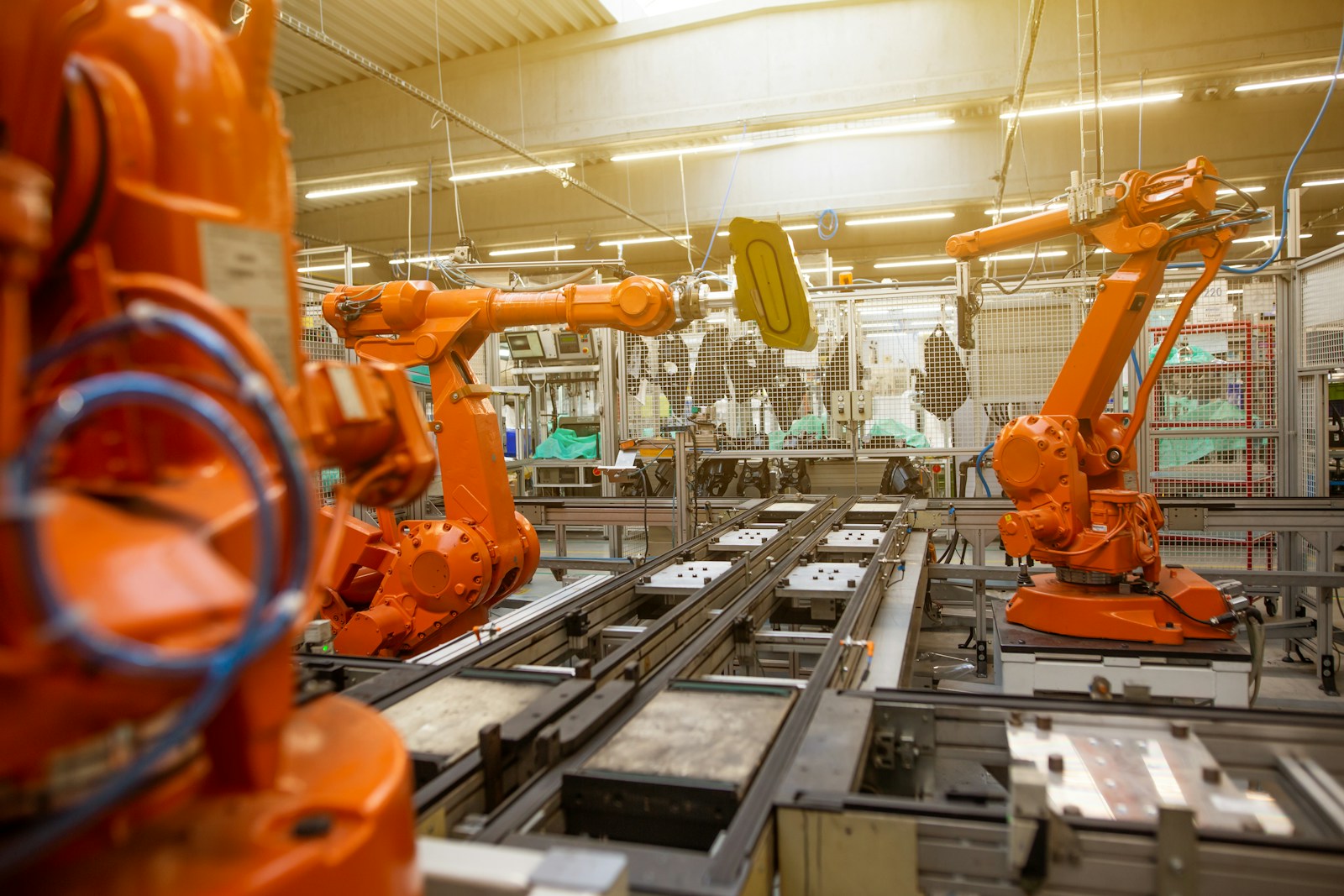
- Pilot production lines. Build a small version of your factory, work out all the problems, then scale. Don’t try to debug your production process at full volume
- Protect the line. Once production is running, the worst thing you can do is stop it for design changes. Production issues should drive improvements, not emergency redesigns
- Design for manufacturing (DFM) from day one. If your mechanical engineers aren’t talking to the people who’ll build it, you’re designing something that looks good in CAD but is a nightmare to assemble. Put the engineers and technicians of the production line next to each other and make sure they follow the DFM principles
- Stable, validated designs before production starts. Don’t launch into mass production while you’re still changing the design all the time. Lock it down. It’s one of the hardest decisions when to lock it down at the beginning
- PPAP (production part approval process). Make sure your suppliers can actually deliver quality parts consistently before you ramp. One bad batch at 10,000 units will cost you more than your entire prototype budget
This isn’t sexy. It doesn’t make for good pitch decks. But it’s the difference between delivering 100 units per year and 10,000.
The bottom line
The companies that crack production scaling will become the European defence giants of the next 30 years. The ones that don’t will have great technology that is hard to buy at scale.
The threat isn’t theoretical and the timeline isn’t forgiving. The next phase will reveal who has deep manufacturing expertise. It’s one thing to build clever prototypes, but quite another to deliver thousands of units that perform reliably in the field. My bet is on the founders who combine first-principles thinking with humility – who are willing to learn from automotive engineers and industrial operators, even if those people have never built a drone or autonomous system.
The second valley of death is deeper than the first. But the companies that cross it won’t just build products. They’ll build the industrial base that keeps democracies safe.
Robin is an investor at General Catalyst, where he leads the firm’s resilience thesis in Europe with a focus on seed-stage investing across manufacturing, energy, and defence. A former founder, he built and sold a renewable energy software company to Kraken Technologies and later led global implementations for utilities, giving him deep, hands-on experience scaling critical systems. The views and opinions expressed in this article are solely those of the author and do not necessarily reflect the views of the author’s employer or any affiliated entities. This article is provided for informational purposes only and should not be construed as investment advice, a recommendation, or an offer or solicitation to buy or sell any securities or financial instruments. Any references to market performance or investment strategies are general in nature and may not be suitable for all investors. Readers should consult their own financial, legal, or tax advisers before making any investment decisions.