Saturday 14 February, 2026
[email protected]
Resilience Media
  • About
  • News
  • Resilience Conference
    • Resilience Conference Warsaw 2026
    • Resilience Conference Copenhagen 2026
    • Resilience Conference London 2026
  • Guest Posts
    • Author a Post
  • Subscribe
No Result
View All Result
  • About
  • News
  • Resilience Conference
    • Resilience Conference Warsaw 2026
    • Resilience Conference Copenhagen 2026
    • Resilience Conference London 2026
  • Guest Posts
    • Author a Post
  • Subscribe
No Result
View All Result
Resilience Media
No Result
View All Result

The future of fuel: A conversation with Tim Böltken of Ineratec

John BiggsbyJohn Biggs
February 2, 2026
in Interview, Startups
Share on Linkedin

You Might Also Like

German–Ukrainian venture delivers first drone as Zelenskyy visits Munich facility

Dronamics partners with HENSOLDT to build a heavy defence drone with 24-hour endurance

Stanhope AI raises $8M for new approach of AI for physical applications

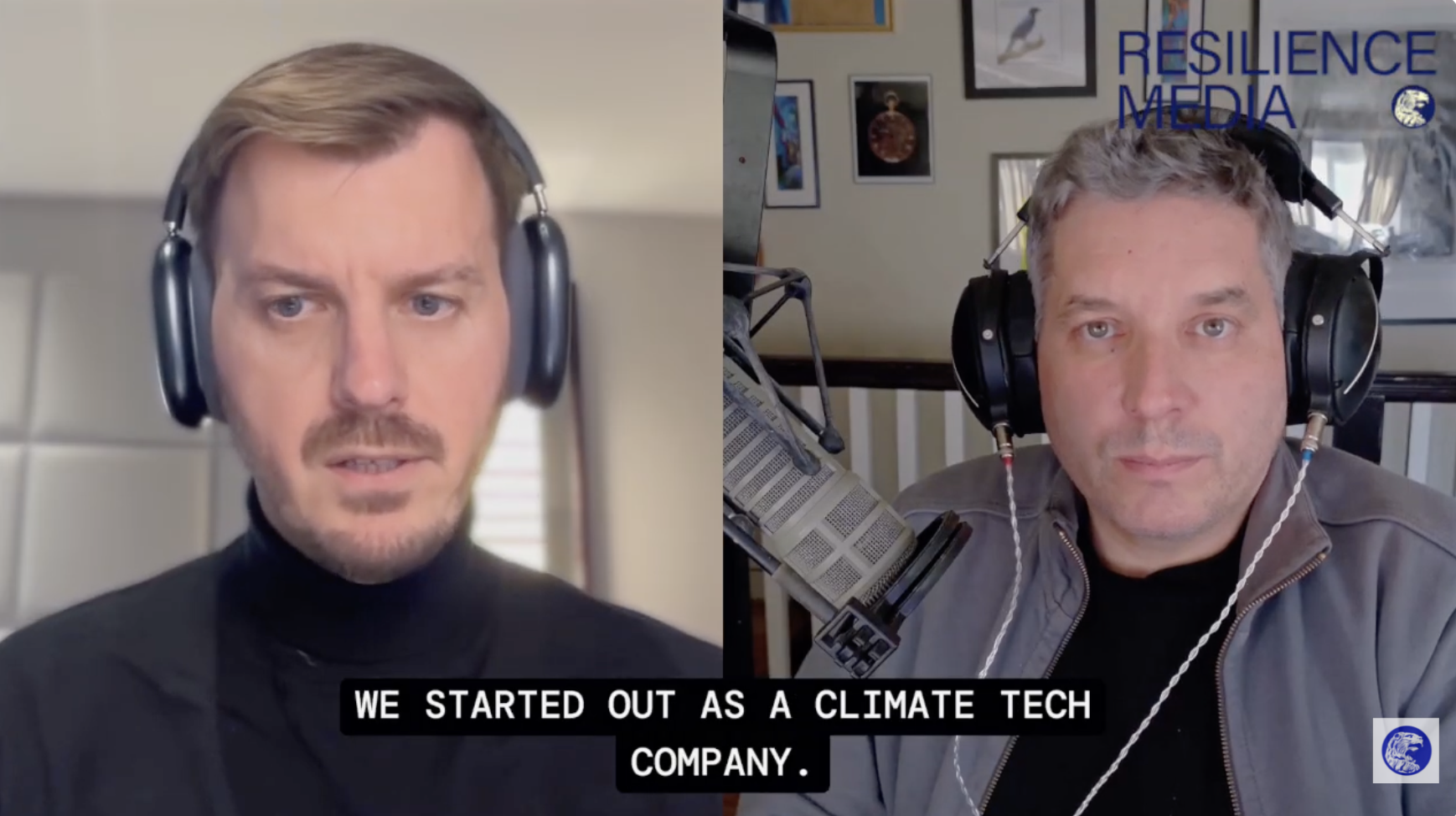
Ineratec is a German synthetic fuels company that sits at the intersection of climate tech, defense logistics, and energy resilience. The company was founded roughly a decade ago and is now one of the few firms operating a commercial e-fuel production plant. According to CEO Tim Böltken, his company is not a pilot or a demo but a working industrial facility producing certified fuel today.

Ineratec began life as a climate technology company focused on fossil-free fuels made from hydrogen and captured carbon dioxide. Böltken said that his focus is now on providing alternative fuels for a single reason: the war in Ukraine has pulled synthetic fuels into the spotlight as Europes enemies use energy and fuel as a lever in global control. Interestingly, Böltken is avoiding the errors of the past by focusing on the simplification of refining alternative fuels.

At a technical level, Ineratec produces drop-in synthetic fuels that are compatible with existing engines and infrastructure. They produce jet fuel, diesel, and related products that meet existing ASTM standards. The company’s jet fuel is certified to ASTM D7566, meaning it can be used in current aircraft without modifying turbines, fuel systems, or storage. In short, they can pour their fuel into nearly any vehicle.

The real differentiation is how and where the fuel is produced. Instead of building large, centralized refineries, Ineratec has developed compact, modular systems that convert gaseous feedstocks into liquid fuel on site. These systems can run on clean hydrogen and captured CO₂, or on synthesis gas derived from biomass. The approach flips the traditional refinery model. Rather than moving fuel across long, vulnerable supply chains, the fuel is produced close to where it is needed.

“What we do differently is we are not building out big refineries because if you build out refineries, it becomes part of the critical infrastructure. So if drones get hit you, they will be aimed at the big refineries,” said Böltken. “We have developed and commercialized an ultra compact and very efficient system.”

That logic underpins the company’s collaboration with Rheinmetall. Ineratec is a member of the GigaPTX Consortium, which aims to deploy distributed power-to-liquid systems across Europe. Individual plants are expected to operate in the 20 to 50 megawatt range, small by refinery standards, but large enough to support local military and civilian demand. The stated target is to supply on the order of 20 to 40 liters of fuel per NATO soldier per day, produced domestically rather than imported.

The historical irony is that the underlying chemistry is not new. Synthetic fuel production dates back more than a century. Germany used coal-to-liquid processes during World War II. South Africa relied on similar methods during apartheid. Qatar uses gas-to-liquid at massive scale today. What changed is the feedstock. Renewable hydrogen and biogenic carbon are not concentrated in one place, which makes centralized plants inefficient. Ineratec’s response was to rethink chemical engineering as a modular, standardized system, closer in spirit to fuel cells or electrolyzers than to traditional refineries.

Beyond defense, Ineratec is also positioning itself in civilian markets. Data centers are one example. Backup power systems today rely heavily on fossil diesel or biofuels, the latter of which degrade over time and are not well suited for long-term storage. Synthetic fuels do not have that problem. Ineratec is working with Rolls-Royce on backup power solutions for data centers, where fuel stability and storage life matter as much as emissions.

The company is expanding geographically. Europe remains the core market, driven by regulation, energy dependency, and defense interest. New projects are underway in Chile, with additional activity planned in Southeast Asia, East Asia, and the United States. The long-term ambition is not to replace fossil fuels overnight, but to incrementally increase the share of synthetic fuels as systems scale and costs fall. Because the fuel is drop-in compatible, adoption does not require coordinated infrastructure overhauls.

Tags: fuelineratecinterview
Previous Post

Poland’s energy networks hit by ‘digital arson’ after basic firewall failures, report finds

Next Post

UK startup Refute secures £5M to take AI fight to disinformation campaigns

John Biggs

John Biggs

John Biggs is an entrepreneur, consultant, writer, and maker. He spent fifteen years as an editor for Gizmodo, CrunchGear, and TechCrunch and has a deep background in hardware startups, 3D printing, and blockchain. His work has also appeared in Men’s Health, Wired, and the New York Times. He has written nine books including the best book on blogging, Bloggers Boot Camp, and a book about the most expensive timepiece ever made, Marie Antoinette’s Watch. He lives in Brooklyn, New York. He runs the Keep Going podcast, a podcast about failure. His goal is to share how even the most confident and successful people had to face adversity.

Related News

German–Ukrainian venture delivers first drone as Zelenskyy visits Munich facility

German–Ukrainian venture delivers first drone as Zelenskyy visits Munich facility

byJohn Biggs
February 13, 2026

On the eve of the Munich Security Conference, Ukraine and Germany marked a solid step in defense industrial cooperation. President...

Dronamics partners with HENSOLDT to build a heavy defence drone with 24-hour endurance

Dronamics partners with HENSOLDT to build a heavy defence drone with 24-hour endurance

byJohn Biggs
February 12, 2026

This week, Sofia-based Dronamics announced the launch of its Detect and Defend version of the Black Swan, a long range...

Stanhope AI raises $8M for new approach of AI for physical applications

Stanhope AI raises $8M for new approach of AI for physical applications

byIngrid Lunden
February 12, 2026

A startup spun out of UCL research into how the brain works is building a new kind of AI model...

Monitoring the next theater: Acua Ocean and the case for persistent naval drones

Monitoring the next theater: Acua Ocean and the case for persistent naval drones

byJohn Biggs
February 11, 2026

Mike Tinmouth, co-founder and COO of Acua Ocean, argues that the open ocean is becoming the next operational frontier. His...

Occam raises €3M to advance autonomous drone systems

Occam raises €3M to advance autonomous drone systems

byJohn Biggs
February 11, 2026

Occam Industries has completed an operational assessment with Ukraine’s defense innovation platform Brave1 and raised a €3 million pre-seed round...

aerial view of city buildings during sunset

European defence, security and resilience startups raised a record $8.7B in 2025

byIngrid Lunden
February 10, 2026

Ahead of the big Munich Security Conference later this week, the analysts at Dealroom teamed up with the NATO Innovation...

Inside the future of aviation with the CEO of Grid Aero

Inside the future of aviation with the CEO of Grid Aero

byJohn Biggs
February 6, 2026

Aerospace engineer Arthur Dubois, Grid Aero’s CEO, argues that autonomy in the air coming faster than autonomy on our roads....

a factory with a lot of machines in it

Uplift360 will turn old helicopter wings into new drone arms

byIngrid Lunden
February 5, 2026

The race to build better defences is also a race to secure the right building blocks — including the costly...

Load More
Next Post
UK startup Refute secures £5M to take AI fight to disinformation campaigns

UK startup Refute secures £5M to take AI fight to disinformation campaigns

Stark inks Virtus deal with NATO member in Northern Europe, one week after expanding to Sweden

Stark inks Virtus deal with NATO member in Northern Europe, one week after expanding to Sweden

Most viewed

InVeris announces fats Drone, an integrated, multi-party drone flight simulator

Twentyfour Industries emerges from stealth with $11.8M for mass-produced drones

Harmattan AI raises $200M at a $1.4B valuation from Dassault

Senai exits stealth to help governments harness online video intelligence

Palantir and Ukraine’s Brave1 have built a new AI “Dataroom”

Frankenburg has raised up to $50M at a $400M valuation, say sources

Resilience Media is an independent publication covering the future of defence, security, and resilience. Our reporting focuses on emerging technologies, strategic threats, and the growing role of startups and investors in the defence of democracy.

  • About
  • News
  • Resilence Conference
    • Resilience Conference Copenhagen 2026
    • Resilience Conference Warsaw 2026
    • Resilience Conference 2026
  • Guest Posts
  • Subscribe
  • Privacy Policy
  • Terms & Conditions

© 2026 Resilience Media

No Result
View All Result
  • About
  • News
  • Resilence Conference
    • Resilience Conference Copenhagen 2026
    • Resilience Conference Warsaw 2026
    • Resilience Conference 2026
  • Guest Posts
  • Subscribe
  • Privacy Policy
  • Terms & Conditions

© 2026 Resilience Media

This website uses cookies. By continuing to use this website you are giving consent to cookies being used. Visit our Privacy and Cookie Policy.