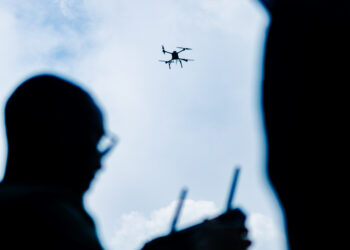
Operating drones offshore has long been constrained by one glaring issue: the landing surface refuses to stay still. Vessels move unpredictably in open water, making it difficult to safely recover unmanned aerial vehicles (UAVs) without experienced pilots or tightly controlled conditions.
Waiv Robotics, a UK-based maritime robotics company, is emerging from stealth with a system designed to address this with an autonomous platform for operating vertical take-off and landing (VTOL) drones from moving vessels.
The company is also disclosing that it has raised $7.5 million in seed funding from an undisclosed roster of private investors, a round completed prior to its public launch.
A moving target
Drones are already being deployed at sea for tasks such as offshore infrastructure inspection, maritime surveillance, and responding to environmental emergencies such as oil spills, where they can cover large areas faster and with less risk than crewed aircraft. But operating drones from vessels introduces a different level of complexity: the aircraft must match the motion of a deck that is constantly shifting, while maintaining precise control during its final approach.
Until now, that instability has limited UAV deployment at sea. Most systems require calm conditions or highly trained operators to manually guide drones onto deck, increasing both cost and risk. Smaller vessels, in particular, have struggled to deploy drones consistently.
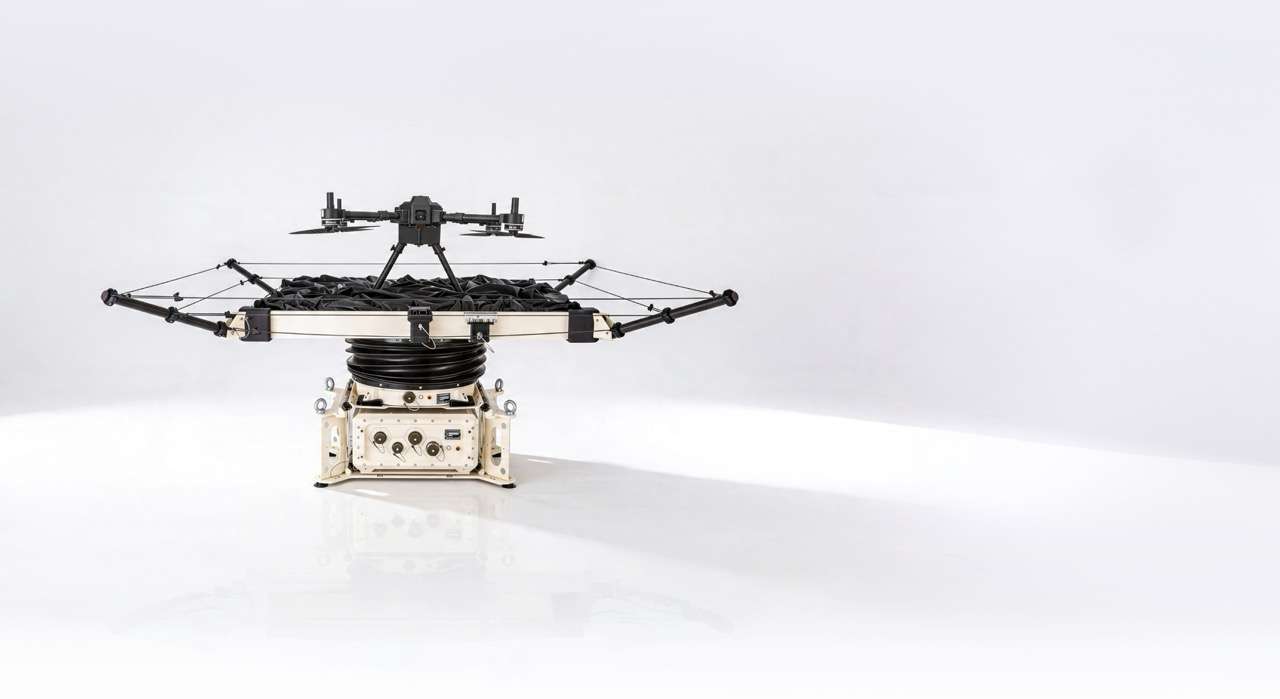
Waiv’s approach centres on stabilising that final interaction between drone and vessel. The system combines hardware and software, built around a “gyro-stabilised” landing platform paired with AI-driven control software that guides the drone during its final approach.
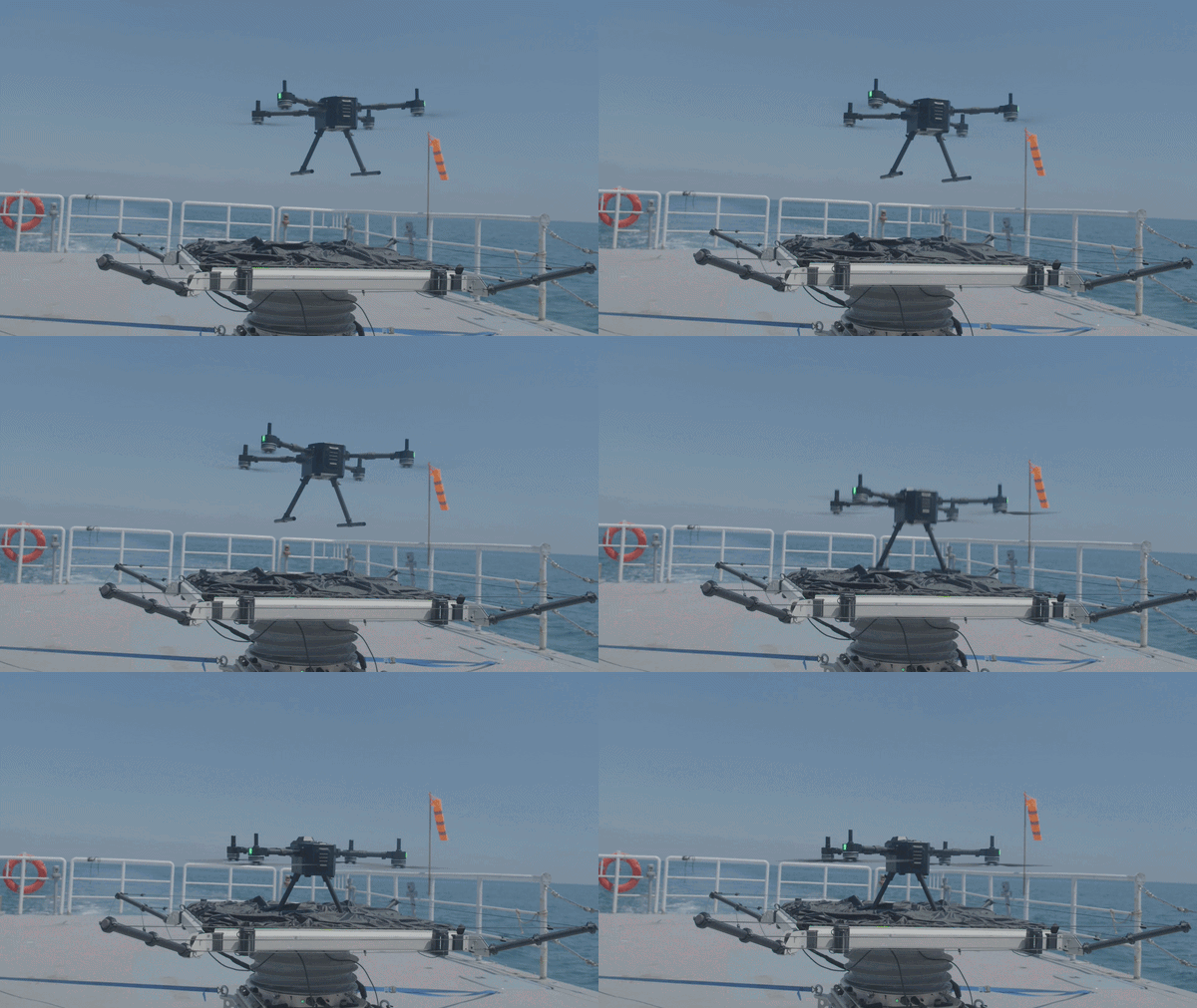
Rather than requiring changes to the UAV itself, the platform interfaces with the drone’s existing controls, effectively taking over the landing process. The company says it uses predictive algorithms to anticipate deck movement, aligning the drone’s descent with the motion of the boat. On contact, an impact-absorbing landing pad and mechanical capture system lock the drone in place, preventing it from bouncing or sliding across the deck.
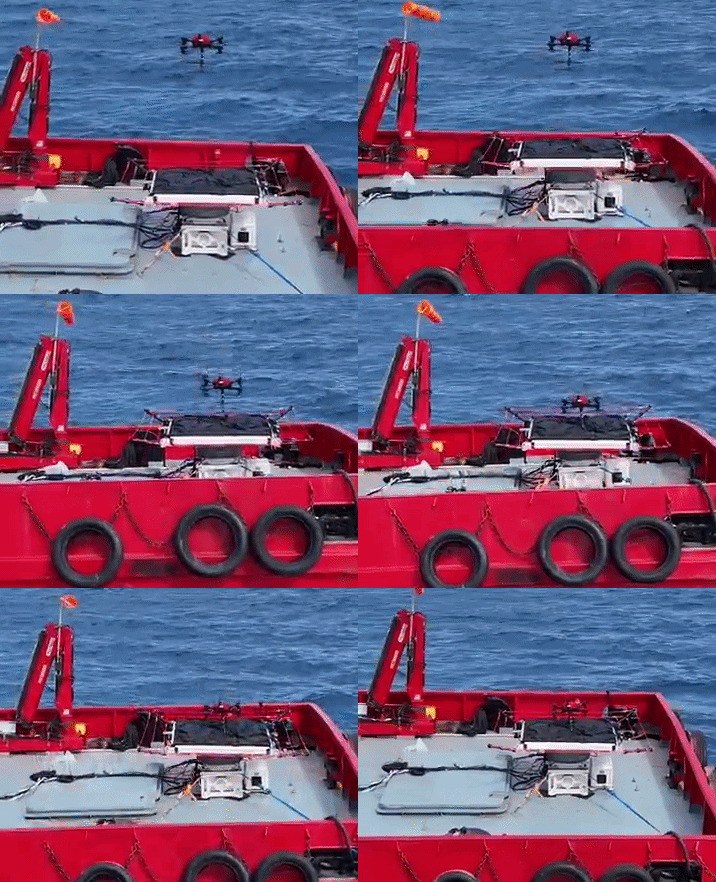
The platform can operate from vessels as small as 10 metres and supports a range of VTOL UAV types, including multicopters and fixed-wing systems. The current system is designed for drones up to 15kg, with plans to expand that range.
Waiv founder and CEO Johnny Carni said the technology was developed under an R&D entity called Dronelander, conducting “extensive in-house testing and validation to refine its system under real-world maritime conditions,” Carni explained to Resilience Media over email.
Carni brings experience across engineering, electro-optical, and aerospace fields, including roles in business development and marketing across Asia-Pacific markets, working with companies involved in airborne sensing and drone systems. He said the idea for Waiv emerged while working with a coast guard on maritime observation systems, where a request exposed a broader gap in existing technology.
“They asked for my help to procure a UAV drone capable of landing on their vessels,” Carni explained. “After extensive research, I realized no viable solution exists. Thanks to my background in aviation and maritime landings, I immediately understood exactly why the industry hadn’t succeeded yet.”
He described “two defining moments”: first recognising the scale of that gap, and later confirming through academic input that the underlying problem could be solved.
“The moment I knew the ‘impossible’ part was actually solvable, we set out to build Waiv,” Carni added.
While Carni said that his new company wasn’t at the point of disclosing any specific names of early partners or customers, it’s already in discussions across multiple sectors.
“The platform is production-ready and available for deployment, and Waiv is actively engaging with partners across defense, offshore, and commercial maritime sectors,” Carni said.
Infrastructure as the ‘missing piece’
Waiv’s pitch, ultimately, is that the barrier to wider drone use at sea isn’t the aircraft itself, but the surrounding infrastructure. By handling takeoff and recovery autonomously, vessels could operate as mobile drone hubs without relying on specialist pilots.
Even the Royal Navy has been testing how drones can be deployed at sea, recently carrying out its first ship-to-ship delivery of supplies using a drone.
But such deployments still rely on controlled conditions and specialist handling, underscoring the challenge of making drone operations routine on moving vessels.
“For drones to become a reliable part of offshore operations, the missing piece isn’t the aircraft, it’s the infrastructure around it,” Carni said. “Our system was designed to remove traditional deployment constraints, allowing fleets to operate as mobile launch and recovery hubs that ensure reliable UAV operations. Without a dependable way to launch and recover at sea, large-scale deployment simply doesn’t work. Our goal is to remove that constraint and make drone operations viable from virtually any vessel.”