
Saturday 15 August, 2026
[email protected]
Resilience Media
  • News
    • Events
    • Interview
    • Startups
    • Venture
    • Weekly Digest
  • Resilience Conference
    • Resilience Conference London — Oct 2026
    • Resilience Conference Copenhagen — May 2026 (PAST)
    • Resilience Conference Warsaw — Apr 2026 (PAST)
  • Launch
  • About
  • Guest Posts
    • Author a Post
  • Subscribe
No Result
View All Result
  • News
    • Events
    • Interview
    • Startups
    • Venture
    • Weekly Digest
  • Resilience Conference
    • Resilience Conference London — Oct 2026
    • Resilience Conference Copenhagen — May 2026 (PAST)
    • Resilience Conference Warsaw — Apr 2026 (PAST)
  • Launch
  • About
  • Guest Posts
    • Author a Post
  • Subscribe
No Result
View All Result
Resilience Media
No Result
View All Result

UK MoD tests British-built anti-Shahed system in Jordan

John BiggsbyJohn Biggs
May 5, 2026
in Drones & UAS, News, Startups, UK Defence
Share on Linkedin

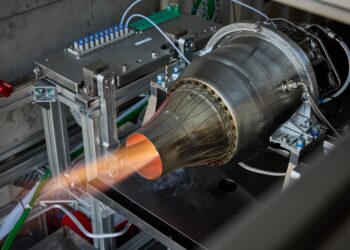
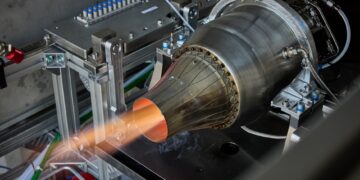
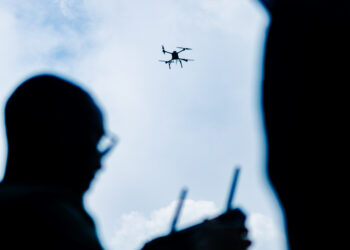
The UK Ministry of Defence has tested its British-built Skyhammer interceptor missile system in Jordan, a trial that demonstrates the increasing utility of European-made anti-Shahed weapons in global battlefields.

You Might Also Like

Fibre-optic drones: flying in the face of reason

Australia puts speed ahead of perfection in new defence technology strategy

Chinese tech in Royal Navy drones exposes UK defence supply chain dilemma

Cambridge Aerospace produced the system and received a “multi-million-pound” contract from the MoD. Cambridge Aerospace is a veteran-led startup that has thus far focused primarily on this new missile and launch system. The missile itself has a stated range of 30 kilometers and a top speed of about 700 kilometers per hour. It is designed to intercept Shahed-type attack drones.

The trial took place at a desert test facility in Jordan under operational conditions. UK officials present at the test framed it as part of a broader effort to adapt air defense systems to lessons drawn from Ukraine and the Middle East, where low-cost drones have stressed existing defenses. The test also coincided with a regional visit by UK Defence Minister Luke Pollard, who met officials in Kuwait and Jordan. Discussions focused on regional security, including recent Iranian missile and drone attacks prior to the current ceasefire. UK personnel have been involved in defensive operations in the region, including the deployment of systems like Rapid Sentry and ORCUS to detect and respond to aerial threats.

“We are stepping up alongside UK industry to offer rapid support to our partners in the Middle East,” said Minister for Defence Readiness and Industry Luke Pollard MP. “My visit to Kuwait and Jordan shows that the UK is standing by our long-term partners and delivering on our promise to provide support.”

The Ministry of Defence estimates that the UK Armed Forces will receive the first Skyhammer interceptor systems in May with continued deliveries over the coming year.

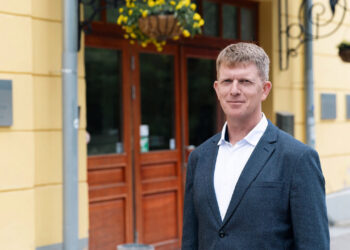
“We welcome the support of the UK Ministry of Defence as Cambridge Aerospace looks to protect the UK and its partners with high-performance, rapidly deployable air defence systems,” said Steven Barrett, CEO of Cambridge Aerospace, in a release.

 

Tags: jordanshahedskyhammerUK
Previous Post

Launching drones at sea has a landing problem. Waiv Robotics thinks it’s solved it.

Next Post

Europe greenlights defence tech funding in new Brave1 partnership

John Biggs

John Biggs

John Biggs is an entrepreneur, consultant, writer, and maker. He spent fifteen years as an editor for Gizmodo, CrunchGear, and TechCrunch and has a deep background in hardware startups, 3D printing, and blockchain. His work has also appeared in Men’s Health, Wired, and the New York Times. He has written nine books including the best book on blogging, Bloggers Boot Camp, and a book about the most expensive timepiece ever made, Marie Antoinette’s Watch. He lives in Brooklyn, New York. He runs the Keep Going podcast, a podcast about failure. His goal is to share how even the most confident and successful people had to face adversity.

Related News

Fibre-optic drones: flying in the face of reason

Fibre-optic drones: flying in the face of reason

byJohn Biggs
August 14, 2026

  The image is arresting: a once-pristine Ukrainian forest is now strung with plastic fibre-optic cable, gossamer lines spanning trees...

A helicopter flying next to a flag flying in the sky

Australia puts speed ahead of perfection in new defence technology strategy

byCarly Page
August 13, 2026

Australia has unveiled a 10-year plan to overhaul how it develops and buys military technology, with AI, autonomous systems and...

Image credit: Kraken

Chinese tech in Royal Navy drones exposes UK defence supply chain dilemma

byCarly Page
August 12, 2026

Britain’s push for cheaper, faster military technology comes with a catch: somewhere inside that shiny new British-built drone, there may...

grey concrete wall

Material issue: the sovereign supply chain Europe is trying to build

byPaul Sawers
August 11, 2026

Drones need carbon fibre, buildings need cement, and shells need TNT -- meet the startups helping Europe to make its...

Confirmed: Cambridge Aerospace raised $300M at a $3.4B valuation

Confirmed: Cambridge Aerospace raised $300M at a $3.4B valuation

byIngrid Lunden
August 10, 2026

You read it here first, and now the company has finally confirmed it: Cambridge Aerospace — the startup aiming to...

Welcome to Resilience Media

One year in: What we’ve learned about the Resilience Media audience

byAnna Escherand1 others
August 5, 2026

In the last 12 months, Resilience Media expanded its newsroom and shifted from a Substack newsletter to a standalone website...

UK-based OLIX raises $312 million Series B to build better AI infrastructure

UK-based OLIX raises $312 million Series B to build better AI infrastructure

byJohn Biggs
August 4, 2026

London-based OLIX has raised a $312 million Series B at a $3.3 billion valuation, one of the largest in the...

Ore Energy raises $43m to scale iron-air batteries for Europe’s AI boom

Ore Energy raises $43m to scale iron-air batteries for Europe’s AI boom

byCarly Page
August 4, 2026

Amsterdam-based Ore Energy has raised $43 million (£32 million) in Series A funding to commercialise its iron-air battery technology, betting...

Load More
Next Post
blue and yellow striped country flag

Europe greenlights defence tech funding in new Brave1 partnership

Two Critical Frontiers: Maritime and Air Defence at Resilience Conference Copenhagen

Two Critical Frontiers: Maritime and Air Defence at Resilience Conference Copenhagen

Top stories

Confirmed: Cambridge Aerospace raised $300M at a $3.4B valuation
Drones & UAS

Confirmed: Cambridge Aerospace raised $300M at a $3.4B valuation

August 10, 2026
Image credit: Kraken
News

Chinese tech in Royal Navy drones exposes UK defence supply chain dilemma

August 12, 2026
grey concrete wall
NATO

Material issue: the sovereign supply chain Europe is trying to build

August 11, 2026
UK MoD tests British-built anti-Shahed system in Jordan
News

SCOOP: Cambridge Aerospace is closing in on $300M at a $3.4B valuation

July 15, 2026

Resilience Media is an independent publication covering the future of defence, security, and resilience. Our reporting focuses on emerging technologies, strategic threats, and the growing role of startups and investors in the defence of democracy.

  • About
  • News
  • Resilence Conference
    • Resilience Conference Copenhagen 2026
    • Resilience Conference Warsaw 2026
    • Resilience Conference 2026
  • Guest Posts
  • Subscribe
  • Privacy Policy
  • Terms & Conditions
  • Mission Statement & Code of Practice
  • Press

© 2026 Resilience Media

No Result
View All Result
  • Home
  • About
  • Subscribe
  • Events
  • Guest Posts
  • Interview
  • News
  • Resilience Conference London 2026
  • Resilience Conference Copenhagen 2026
  • Resilience Conference Warsaw 2026

© 2026 Resilience Media

This website uses cookies. By continuing to use this website you are giving consent to cookies being used. Visit our Privacy and Cookie Policy.