Saturday 14 February, 2026
[email protected]
Resilience Media
  • About
  • News
  • Resilience Conference
    • Resilience Conference Warsaw 2026
    • Resilience Conference Copenhagen 2026
    • Resilience Conference London 2026
  • Guest Posts
    • Author a Post
  • Subscribe
No Result
View All Result
  • About
  • News
  • Resilience Conference
    • Resilience Conference Warsaw 2026
    • Resilience Conference Copenhagen 2026
    • Resilience Conference London 2026
  • Guest Posts
    • Author a Post
  • Subscribe
No Result
View All Result
Resilience Media
No Result
View All Result

UK startup Refute secures £5M to take AI fight to disinformation campaigns

Backed by NSSIF and leading VCs, Refute is pitching AI-driven automation as the missing link in defending against modern influence operations

Carly PagebyCarly Page
February 3, 2026
in News
Share on Linkedin

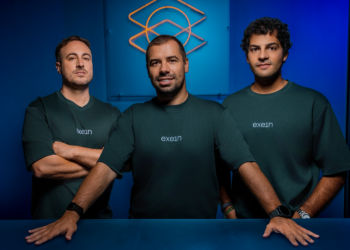
UK-based counter-disinformation startup Refute has raised £5 million in seed funding as it bets that automated defence, rather than human-led fact-checking, can turn the hunt for disinformation from a worthy cause into a viable business.

You Might Also Like

German–Ukrainian venture delivers first drone as Zelenskyy visits Munich facility

Auterion and Airlogix ink deal to mass-produce AI-guided aerial systems

Taiwan gets serious about tech at sea

The round was led by Amadeus Capital Partners, with participation from Playfair, Episode 1, Osney Capital, and the National Security Strategic Investment Fund (NSSIF), the UK government’s dual-use venture fund focused on national security and defence technologies.

Refute emerged from stealth last year and positions itself as a defence tech response to what its founders describe as a surge in “hybrid warfare” tactics that blend online influence operations, bot networks, agentic AI, and human amplification.

Disinformation tools have come and gone over the years, many of them built for trying to fight the issue on social media platforms, particularly in the wake of the Brexit referendum and elections that many deemed had been influenced nefariously by “fake news.” Unlike those earlier efforts, Refute has a different focus. The startup is selling directly to governments and commercial organisations facing what it believes are urgent, high-value reputational and operational threats.

“Refute is fundamentally rethinking the business model for disinformation defence,” Tom Garnett, CEO and co-founder of Refute, told Resilience Media in an interview. “Earlier approaches mainly relied on fact-checking for social media platforms, managed by strategic comms firms and external analysts, whereas we are focused on using an AI solution to directly protect governments and commercial organisations from urgent, high-value threats.” 

Garnett said the retreat by major platforms such as Meta and X from active content policing has exposed the limits of the old model. Refute’s approach, he said, uses “advanced generative AI to automate detection and response,” allowing the company to scale without the labour-intensive processes that made earlier disinformation efforts expensive and difficult to sustain.

“This direct-to-organisation, product-led approach, combined with growing demand from both public and private sectors due to the geopolitical situation we find ourselves in, has allowed us to build a resilient and sustainable business where others might have struggled,” he said.

We highlighted earlier this year how we think that disinformation will be a key issue in Europe for 2026, not least because of the ongoing war in Ukraine, but also because of elections.

It looks like we are not the only ones. The investor lineup underscores how little separation there is now between national security and commercial targets. With NSSIF on the table, Refute joins a growing group of UK defence-leaning startups selling the same core technology to both government and enterprise customers.

“The types of threat actors currently proliferating do not distinguish between government and commercial targets,” Garnett said. “In fact, their tactics and the risks they pose are often identical.”

Refute says its technology is already deployed across both sectors, with customers including the UK government and organisations in industries such as mining and legal services. The company declined to disclose customer numbers but said it focuses on critical infrastructure and high-value commercial sectors where disinformation can directly affect safety, markets, or operations.

The scale of the problem is illustrated by recent work cited by the company. During European elections, including Romania’s, Refute identified tens of thousands of inauthentic TikTok videos used to artificially amplify extremist candidates among expatriate communities. 

Over the past year, Garnett said, government-focused disinformation campaigns have become more frequent and more sophisticated. “Election interference and attempts to erode public trust are especially prevalent, with activity intensifying in the lead-up to major elections across Europe and beyond,” he said, adding that similar campaigns are expected elsewhere.

The new funding will be used primarily to expand Refute’s engineering team across Europe and to further develop its automated detection and response capabilities.

Garnett said the company is also focused on building a diverse workforce, noting that several team members have firsthand experience of living through conflict and disinformation campaigns.

“There is definitely an arms race underway,” he said, referring to the use of generative AI and automation by both attackers and defenders. “Our approach is designed to make advanced disinformation defence accessible not just to large states and well-funded companies, but also to medium and smaller organisations.”

From the investor side, Amadeus framed Refute as part of a broader portfolio tackling complex, systemic risks.

Nick Kingsbury, partner at Amadeus Capital Partners, told Resilience Media that the firm sees disinformation as a global problem with clear national security implications. “It’s an example of a global problem that certainly has potential national security and defence customers”, he said. “[Refute] has taken a novel approach to solving that problem.”

Whether Refute can succeed where earlier disinformation ventures failed will depend on whether organisations are willing to treat information warfare as an operational risk rather than a PR headache. For now, with government backing, VC support, and a worsening geopolitical backdrop, the company believes timing is firmly on its side.


Tags: DisinformationfundingNSSIFrefuteuk government
Previous Post

The future of fuel: A conversation with Tim Böltken of Ineratec

Next Post

Stark inks Virtus deal with NATO member in Northern Europe, one week after expanding to Sweden

Carly Page

Carly Page

Carly Page is a freelance journalist and copywriter with 10+ years of experience covering the technology industry, and was formerly a senior cybersecurity reporter at TechCrunch. Bylines include Forbes, IT Pro, LeadDev, The Register, TechCrunch, TechFinitive, TechRadar, TES, The Telegraph, TIME, Uswitch, WIRED, & more.

Related News

German–Ukrainian venture delivers first drone as Zelenskyy visits Munich facility

German–Ukrainian venture delivers first drone as Zelenskyy visits Munich facility

byJohn Biggs
February 13, 2026

On the eve of the Munich Security Conference, Ukraine and Germany marked a solid step in defense industrial cooperation. President...

green wheat field under blue sky during daytime

Auterion and Airlogix ink deal to mass-produce AI-guided aerial systems

byIngrid Lunden
February 13, 2026

The latest chapter in Ukrainian defence tech startups getting more active outside of the country’s borders was unveiled today. Airlogix,...

a small boat floating on top of a large body of water

Taiwan gets serious about tech at sea

byPaddy Stephens
February 13, 2026

Among the lessons the world has drawn from the Ukraine war, the utility of aerial drones in asymmetric warfare is...

Wrecking-ball politics and the end of mutually-assured stability

Europe recommits to itself as US uncertainty looms over Munich Security Conference

byLeslie Hitchcock
February 12, 2026

This is a copy of our Weekly Digest newsletter, a free newsletter sent once per week from Resilience Media. Subscribe...

Dronamics partners with HENSOLDT to build a heavy defence drone with 24-hour endurance

Dronamics partners with HENSOLDT to build a heavy defence drone with 24-hour endurance

byJohn Biggs
February 12, 2026

This week, Sofia-based Dronamics announced the launch of its Detect and Defend version of the Black Swan, a long range...

an aerial view of a snowy city at night

Estonia needs to stay on guard, says Estonian Foreign Intelligence Service

byFiona Alston
February 12, 2026

The Estonian Foreign Intelligence Service produced their 2026 public report this week. Main takeaways suggest Estonia is safe from a...

Stark inks Virtus deal with NATO member in Northern Europe, one week after expanding to Sweden

Germany awards Stark and Helsing contracts to deliver next-generation strike drones

byCarly Page
February 12, 2026

Germany is preparing to introduce loitering strike drones into frontline service after awarding contracts to two venture-backed defence startups linked...

Stanhope AI raises $8M for new approach of AI for physical applications

Stanhope AI raises $8M for new approach of AI for physical applications

byIngrid Lunden
February 12, 2026

A startup spun out of UCL research into how the brain works is building a new kind of AI model...

Load More
Next Post
Stark inks Virtus deal with NATO member in Northern Europe, one week after expanding to Sweden

Stark inks Virtus deal with NATO member in Northern Europe, one week after expanding to Sweden

Senai CEO David Allouche-Levinsky (middle) flanked by CTO Thomas Pariente (left) and Liam Weberman

Senai exits stealth to help governments harness online video intelligence

Most viewed

InVeris announces fats Drone, an integrated, multi-party drone flight simulator

Twentyfour Industries emerges from stealth with $11.8M for mass-produced drones

Harmattan AI raises $200M at a $1.4B valuation from Dassault

Senai exits stealth to help governments harness online video intelligence

Palantir and Ukraine’s Brave1 have built a new AI “Dataroom”

Frankenburg has raised up to $50M at a $400M valuation, say sources

Resilience Media is an independent publication covering the future of defence, security, and resilience. Our reporting focuses on emerging technologies, strategic threats, and the growing role of startups and investors in the defence of democracy.

  • About
  • News
  • Resilence Conference
    • Resilience Conference Copenhagen 2026
    • Resilience Conference Warsaw 2026
    • Resilience Conference 2026
  • Guest Posts
  • Subscribe
  • Privacy Policy
  • Terms & Conditions

© 2026 Resilience Media

No Result
View All Result
  • About
  • News
  • Resilence Conference
    • Resilience Conference Copenhagen 2026
    • Resilience Conference Warsaw 2026
    • Resilience Conference 2026
  • Guest Posts
  • Subscribe
  • Privacy Policy
  • Terms & Conditions

© 2026 Resilience Media

This website uses cookies. By continuing to use this website you are giving consent to cookies being used. Visit our Privacy and Cookie Policy.