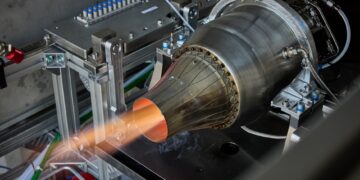
Last week, Berlin-based defence tech startup Stark announced a milestone moment in its expansion: a new operation in Stockholm, Sweden. Today comes more news that may well build on that foundation in the region. Stark said that it has secured a new contract to supply its Virtus loitering munitions system to a NATO Member State, a key signal of how the startup is growing.
We understand that the contract is with a country in Northern Europe, although Stark would not say more. The timing of opening one office in the region ahead of a deal near to it lines up. Sweden is attractive for multiple reasons such as talent and tech ecosystem.
The contract, Stark noted, was signed in the last few days. It will begin delivering the first systems later this month and plans to complete the order by August.
Stark did not provide any specifics on numbers of units or pricing. The news however comes at the crossroads of a few currents in geopolitics and defence tech.
On the geopolitical front, countries in Northern Europe are quickly sharpening their defence profiles. Russia remains an ongoing threat across all of Europe, but perhaps most immediately (as we noted here) to the Eastern Flank and countries that share borders with it such as Finland, Norway, Latvia, Estonia and Lithuania. Sweden does not share a land border with Russia, but it has a maritime boundary in the Baltic Sea. That boundary could become a sensitive area, given reports that Russia wants to move its sea borders.
Continuing with Sweden as one example, the country (similar to others) has recorded multiple suspicious drone sightings, including at its main airport and in an archipelago in the east of the country. This, coupled with the general trend of military aggression as played out in Ukraine, led the country to announce in January at least 5.3 billion Swedish kroner (around $326 million) to enhance its drone and space capabilities.
“Unmanned systems and space situation awareness are crucial in modern warfare,” Minister for Defence Pål Jonson said in a statement last month. That may well be another reason for Stark choosing Stockholm as a new operations centre.
Meanwhile, on the defence tech front, startups in the space have been raising hundreds of millions of euros in funding over the last couple of years. Stark is among them, backed by the likes of Sequoia, the NATO Innovation Fund, In-Q-Tel and Project A most recently at a $500 million valuation.
Those companies are now in pretty tight competition with each other to build out their businesses both to fill out their large valuations and establish business moats.
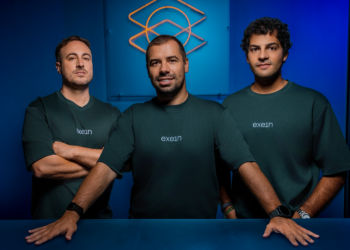
For Stark, that has included operations expansions (alongside Sweden there was a souped-up opening in England in November), some interesting M&A, as well as indications of wins, including this latest deal in Northern Europe. It also noted last week that it was breaking ground as ‘first’ to establish a presence in Sweden among German defence tech startups. (Others include Helsing — considered to be the biggest defence tech in Europe currently — as well as ARX Robotics, Twentyfour Industries and Quantum Systems.)
Yet that’s not the full story. There have been plenty of negative stories circulating about how well these startups’ tech stacks and hardware actually work (see here and here).
And that’s before one considers another important issue in defence tech, highlighted earlier in the week by General Catalyst’s Robin Dechant in this article. Many startups will be in for a tough time when it comes to scaling, he noted, because of the challenges of manufacturing cutting-edge hardware.
Again, Stark doesn’t disclose the number of drone systems it will be supplying in this latest announcement, but the message it’s trying to convey is clear: an unspecified country in Northern Europe is relying on us; we are reliable.
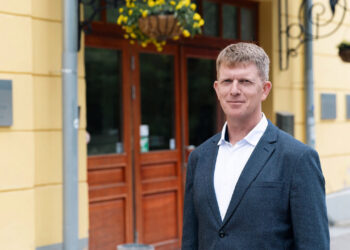
“Our ambition is to become a long-term trusted partner for allied armed forces,” noted Jan-Patrick Helmsen, Chief Sales Officer at Stark, in a statement. “In light of the current security landscape, speed, reliability and a deep understanding of operational realities are crucial. The contract award is a clear sign of confidence in our technology and our ability to turn operational demands into capabilities quickly.”
That is a message we’re likely to be hearing from others in the field.