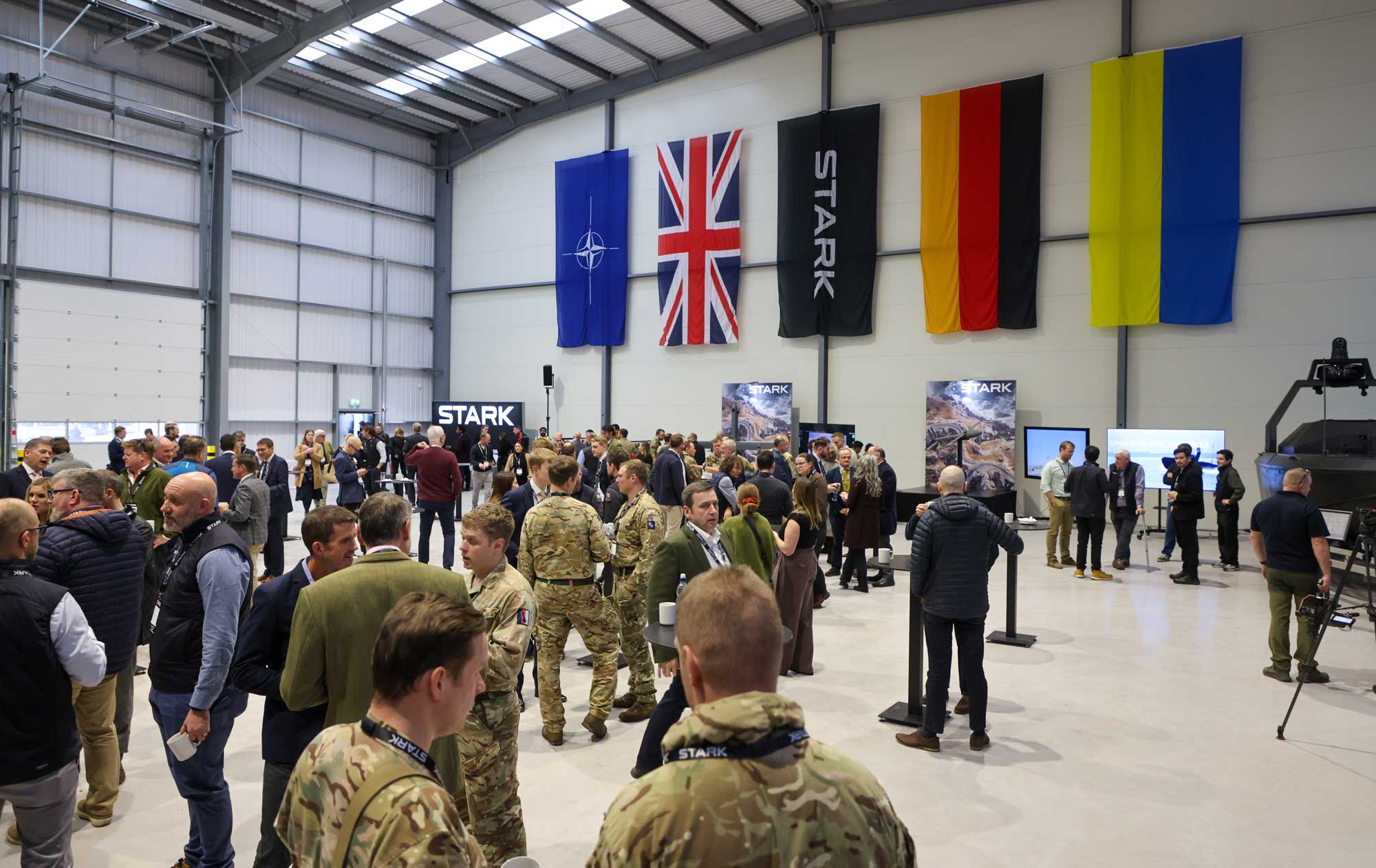
Three weeks after its drone demo for the UK military ended in a crash, German startup Stark is marching onward. On Thursday, the company — backed by $100 million from investors that include Sequoia and NATO — opened its first production facility in the UK, in the town of Swindon in England.
Swindon has an iconic place in the history of UK defence: it was central to the development and manufacturing of the Spitfire fighter plane. Now, a new kind of aircraft will be built there. Stark will focus initially on building its flagship Virtus loitering munition, as well as a newer one-way effector that Stark did not name.
While a lot of defence startups out of the UK and Europe are looking further East and West as they grow, the focus for high-tech Stark remains squarely in the Old World. The 40,000-square foot space opened this week is Stark’s third factory overall, after a primary facility in Germany and second in an undisclosed location in Ukraine — like the UK, both also customers of the company. Stark is expected to create at least 100 jobs in the area through the Swindon facility, the company said.
The opening is coming at a key moment in UK defence.
It was just yesterday that Helsing, another German startup, also opened its first factory in the UK.
That facility, in Plymouth, will focus on maritime hardware and software, specifically a underwater glider that Helsing is building with BlueOcean, a startup it acquired this year. Helsing is a direct competitor to Stark, and it doesn’t feel like a coincidence that the two held events just 24 hours apart broadcasting their physical stake in UK ground.
But there is possibly bigger significance in the timing of the two events that is more important than schoolyard rivalry. The UK is working to ramp up its defence profile, which will include inking procurement deals with a wider array of suppliers beyond the big primes, which will include the likes of Stark and Helsing; spinning up new factories and operations, such as the 13 new “factories of the future” that were designated yesterday to produce munitions and energetics; and other efforts to improve the rest of the UK’s defence infrastructure in the event it will need to tap it for more than just being prepared. All of that work, effectively, is dual-use: it’s about defence, but it is also boosting the wider UK economy.
“This supports our armed forces and strengthens our national security, but more than that, it boosts the wider economy through investment, jobs, and the creation of dual-use technologies,” Rupert Pearce, the new National Armaments Director, said at the Stark event on Thursday, his first public appearance since taking on the new role. “This is what we call the defence dividend,” he added, adopting phrasing — a play on the concept of the peace dividend that was popularised after the fall of the USSR — that is becoming very common among politicians and the defence sector.
The UK heartily welcoming Stark has a dual use of another kind, too. While the UK is focusing on how to rebuild its own capabilities, it’s also looking further afield. The country has become a major supplier of support to Ukraine in its war with Russia, and getting the new wave of defence tech companies set up in the UK — even if they are not British companies in their origins, as is the case with German Stark and Helsing — can be considered potentially in aid of both of those efforts.
(Stark did not specify how much of its work for the UK government feeds directly into UK efforts, and how much goes to Ukraine, but Phil Lockwood, Stark’s MD for international, said in an interview with Resilience Media that it did both.)
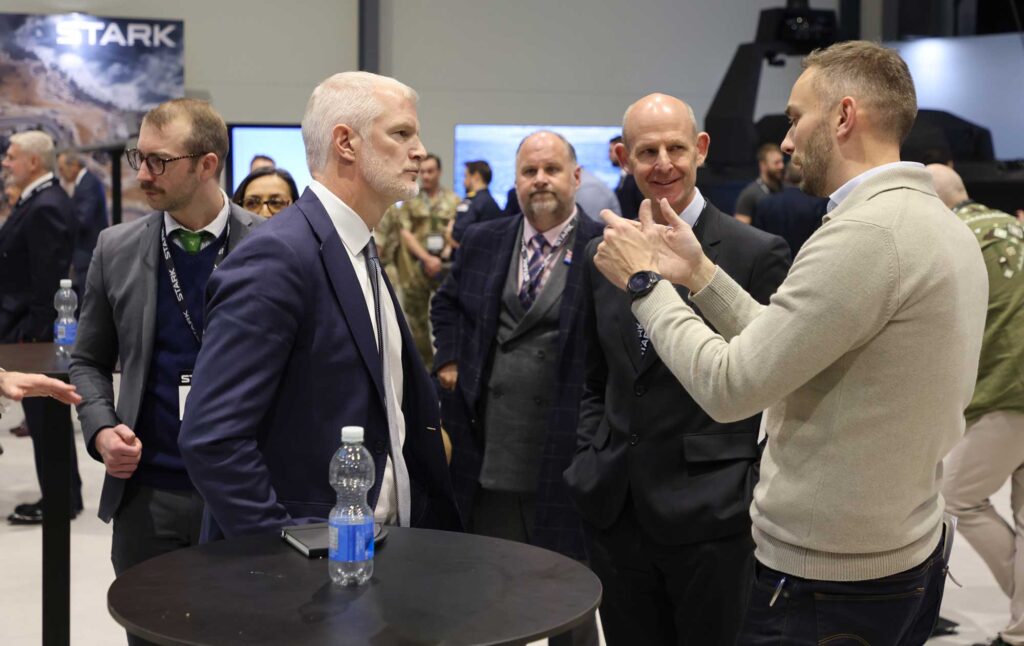
If Stark faced a hit to its public image when its drones crashed in Kenya in the demo three weeks ago, the Thursday event in Swindon appeared to be aimed at rehabilitating that.
The programme prominently included an off-the-record debrief on the Kenya incident, where a senior official for the company talked through the details of what exactly happened — complete with pictures and graphics — to a room full of hundreds of people, a majority of them serving military.
Attention was rapt, and the company leaned in, making a point of owning what happened and if anything, taking a page from how military has developed over the years, and how startups work, and highlighting the process of iteration.
The Kenya incident, in fact, made multiple appearances at the even. In his remarks on stage, Stark’s new CEO Uwe Horstmann said that he question that people have been asking him most of all lately is “Why did two of your drones crash?” His answer, he said, was to correct them. “We didn’t crash two drones,” he said happily. “We’ve crashed hundreds of drones in the past few months!”
Be that as it may, it’s a cost that the highly-capitalised Stark is willing to bear, at least for now. One military person attending the event told me that this was almost more important than the outcome itself of the Kenya trail, given that everyone has crashes. When that happens with primes, however, “they charge you” to fix the problems, he said pointedly.
Still, the UK still has a fairly tall order ahead of it. The Strategic Defence Review, published earlier this year by the MoD, set out a long list of priorities for the UK, but with the Ministry facing budget challenges, many continue to question how it will finance this new age of defence.
More partnerships with a wider list of deep-pocketed startups and other companies could be one way to approach that. In the words of Al Carns, MP and Minister for the Armed Forces, Stark’s factory opening is one example of SDR fulfilment “in action.”