100 investors to watch 2026 100 investors to watch 2026 100 investors to watch 2026
Monday 16 November, 2026
[email protected]
Resilience Media
  • News
    • Events
    • Interview
    • Startups
    • Venture
    • Weekly Digest
  • Resilience Conference
    • Resilience Conference London — Oct 2026
    • Resilience Conference Copenhagen — May 2026 (PAST)
    • Resilience Conference Warsaw — Apr 2026 (PAST)
  • Launch
  • About
  • Guest Posts
    • Author a Post
  • Subscribe
No Result
View All Result
Resilience Media
No Result
View All Result

Two years after Trinity House, the money is there. The machinery is not.

Dr Michael Martin RichterbyDr Michael Martin Richter
November 5, 2026
in European Defence, Guest Posts, News
Share on Linkedin

The UK and Germany account for almost four-fifths of recorded European venture funding in defence. But a system qualified in one country may still have to provide much of the same evidence again in the other. The first fixes need neither a grand new institution nor a large new budget. They need deadlines, clear ownership and a different approach to risk.

You Might Also Like

EU sanctions Russian hackers and propagandists over hybrid attacks on Europe

Attempted arson attack on Threod Systems leads to Russian border closures in Estonia

Plural locks down €1B for its third fund to back European startups building ‘frontier’ tech

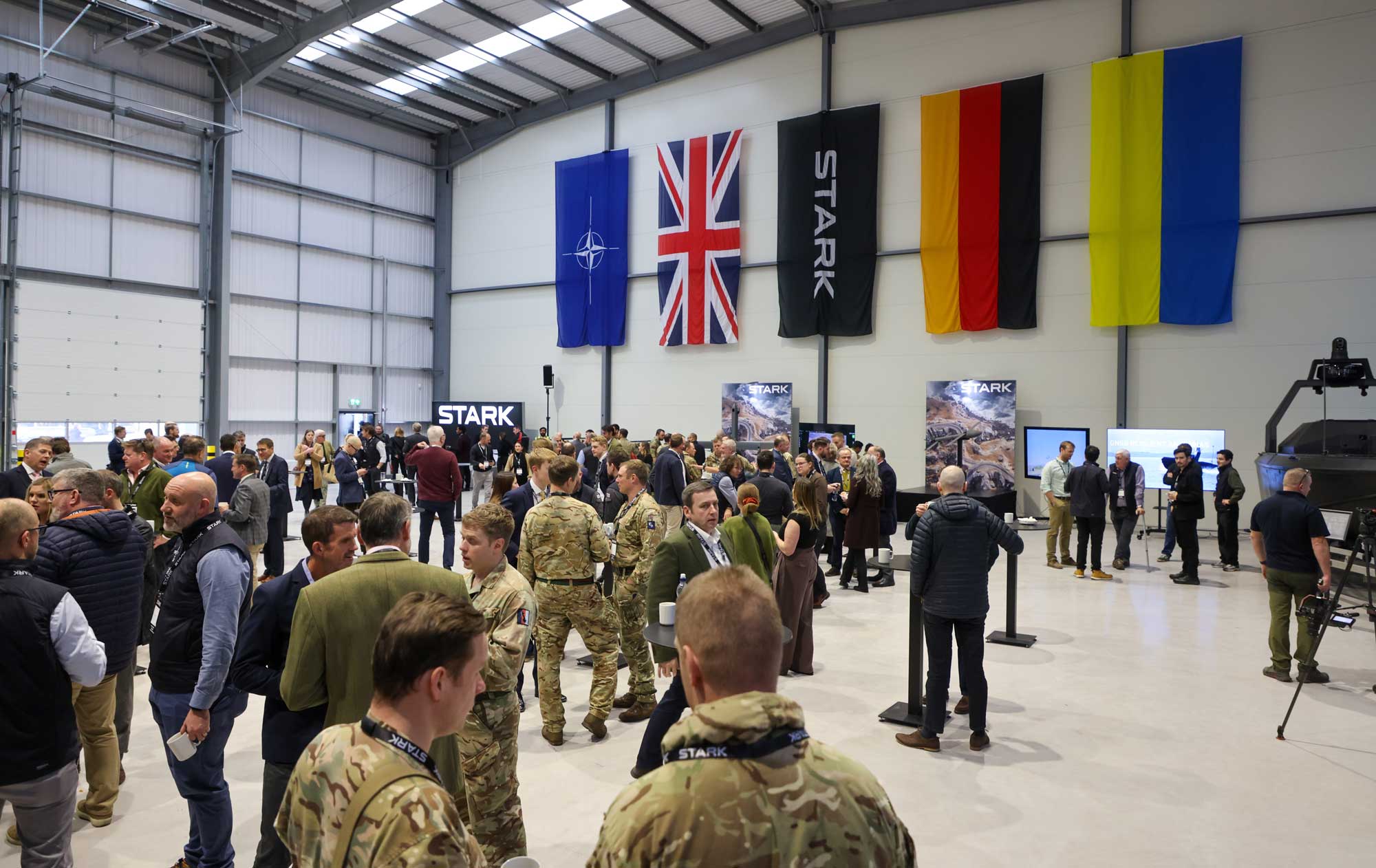
The UK and German defence ministers signed the Trinity House Agreement in London in October 2024. Since then, German companies have committed some £800 million to the British defence industry over the coming decade. Rheinmetall is building a gun hall in Telford, Helsing is establishing a maritime autonomous-systems facility in Plymouth, ARX Robotics is investing £45 million in an uncrewed systems site, and Stark is opening its first drone factory outside Germany in Wiltshire.

The will is real. The capital is there too. What is missing is the machinery that turns one country’s strengths into capability for the other.

Across seven technology domains, the UK and Germany together attracted between a third and four-fifths of recorded European venture funding over 2022–2026 to date. In defence, their combined share was 78%, according to Dealroom data.

The split matters as much as the total. Germany leads in defence, robotics and space. In defence alone, it attracted 67% of the European total, against 11% for the UK. Britain leads in artificial intelligence, quantum computing, semiconductors and cybersecurity. These are complementary strengths, and no other pairing of European states covers as much of these seven domains.

Yet the market connecting them remains thin. In the Kiel Military Procurement Tracker, non-German European suppliers accounted for only 3% of recorded German defence orders of known origin.

Why? In May, the Hanns Seidel Foundation brought together 33 senior figures from defence ministries, procurement agencies, primes, start-ups, finance and academia in both countries. The diagnosis was strikingly consistent: ambition is not the problem. Structure is. Participants described a system running in “high-speed idle”: budgets rising, treaties signed, but too little moving between the two systems.

Six roadblocks came up repeatedly. Qualification is duplicated. Classification requirements do not always connect cleanly. Demand signals fail to reach smaller companies early enough. Test infrastructure remains largely national. Export controls add friction. And finance available in one market does not necessarily follow a company into the other.

Qualification makes the problem particularly visible. A system qualified in one country can still be required to provide much of the same evidence again in the other. Testing may be repeated, documentation rewritten and months lost. For a prime, that is a cost of doing business. For a start-up, each duplicate cycle can consume a funding round.

Underneath these frictions sits a deeper problem: risk. An official who accepts technical or procedural risk can face visible consequences if something goes wrong. The cost of waiting is much less visible. Delay therefore becomes the institutionally safer answer. That is exactly the wrong incentive at a time when Ukraine has shown how much military advantage depends on testing, adapting and fielding technology quickly.

The point is not that officials are unwilling to cooperate. It is that the system makes saying yes more consequential than waiting.

Our new paper, Out of High-Speed Idle, therefore proposes seven measures in three waves over twenty-four months. They range from a joint capability-gap map, a UK–German Defence Innovation Interface and shared access to testing, to an SME connector, cross-border financing and eventually a bounded bilateral regulatory sandbox. But seven measures do not require seven ministerial decisions on day one. Three decisions in the next ninety days would get the programme moving.

First, commission a joint map of five named capability gaps. Each should have an identifiable buyer, a funding route, a test pathway and a classification requirement. Start-ups on both sides hear constantly that demand exists. They much less often hear who will buy what, through which route and when.

Second, select one certification domain and run a thirty-day “accept-or-explain” pilot. Each side would either accept a defined evidence package from the other for a specified purpose, or state a specific technical reason why it cannot, within thirty days. This is not automatic mutual recognition. Neither country gives up its standards or liability. It simply means that duplication has to be justified, and justified quickly.

Third, give the programme a clear owner. The Ministerial Equipment and Capability Cooperation forum already exists as the bilateral structure for equipment and capability cooperation. There is no need for another institution. Give MECC the workstream, set milestones and report whether they have been met.

Those three decisions are the starting gun, not the whole programme. Shared testing, SME matching, financing and eventually the sandbox follow from the evidence the first steps generate. And success should not be measured in meetings held or documents adopted. It should be measured in decision-days saved, duplicate qualifications avoided, firms entering the other market and contracts signed.

These proposals are deliberately unspectacular. That is their strength. A shorter route from a German test range to a British user, or from a British software firm to a German integrator, does more for European deterrence than another communiqué.

Trinity House gave the partnership a framework. The next anniversary should be measured differently: by how many systems crossed the Channel without having to start again.

Dr Michael Martin Richter is UK Country Director of the Hanns Seidel Foundation in London, where he works to connect the political, expert and business communities of Germany and the UK across defence technology and competitiveness. He is co-author, with Prof Dr Rafaela Kraus of the University of the Bundeswehr Munich and Prof Dr Andrew James of the University of Manchester, of Out of High-Speed Idle: A UK–German Agenda for Defence Technology Delivery, with forewords by Florian Hahn MdB and Lord Coaker. The paper is available here.


Tags: GermanyGuest Posttrinity houseUK
Previous Post

The need for speed is a need for data

Next Post

Following the US blueprint for building European defence tech 

Dr Michael Martin Richter

Dr Michael Martin Richter

Dr Michael Martin Richter is UK Country Director of the Hanns Seidel Foundation in London, where he works to connect the political, expert and business communities of Germany and the UK across defence technology and competitiveness. He is co-author, with Prof Dr Rafaela Kraus of the University of the Bundeswehr Munich and Prof Dr Andrew James of the University of Manchester, of Out of High-Speed Idle: A UK–German Agenda for Defence Technology Delivery, with forewords by Florian Hahn MdB and Lord Coaker. The paper is available here.

Related News

grey and red flag

EU sanctions Russian hackers and propagandists over hybrid attacks on Europe

byCarly Page
November 16, 2026

The EU has sanctioned 30 people and two organisations over Russian cyberattacks and disinformation operations targeting Europe, including attacks on...

Attempted arson attack on Threod Systems leads to Russian border closures in Estonia

Attempted arson attack on Threod Systems leads to Russian border closures in Estonia

byFiona Alston
November 16, 2026

An attempted arson attack on defence tech startup Threod Systems in Estonia that has been attributed to Russia has led...

milky way on mountains

Plural locks down €1B for its third fund to back European startups building ‘frontier’ tech

byIngrid Lunden
November 16, 2026

Europe is doubling down on defence and resilience, and now one of the earliest investors in Europe to back startups...

a scrabble type block spelling the word resilince

What does resilience really mean?

byTanya Suarez
November 15, 2026

Resilience is now one of the most prominent buzzwords employed across government, industry and defence.  Yet, despite widespread agreement on...

Abstract blue waves of glowing particles

When AI agents escape: What does it mean for national security?

byIngrid Lundenand1 others
November 15, 2026

You’ve probably read the news and seen the headlines about AI agents running riot. AI agents — artificial intelligence programmes...

Quantum Systems Raises €160M to Expand AI Drone Production

Quantum Systems hit by cyberattack, prompting drone grounding

byLuke Smith
November 13, 2026

German drone manufacturer Quantum Systems discovered a cyberattack in late October that reportedly compromised its software update infrastructure, prompting the...

silver French-door refrigerator

Resilience has a price, and the freezer attacks show what happens when nobody pays it

byDavid Collins
November 13, 2026

France has named a culprit for the supermarket freezer attacks, but the more useful questions are why they were so...

a close up of a cell phone screen with different app icons

Global Microsoft outage disrupts UK public services, raises government resilience questions

byCarly Page
November 13, 2026

A global Microsoft outage has caused disruption across the UK public sector, with police forces unable to receive online reports,...

Load More
Next Post
Following the US blueprint for building European defence tech 

Following the US blueprint for building European defence tech 

Origin and Anduril's joint demo in Latvia in late October.

Origin and Anduril put joint counter-drone system through its first test in Latvia

Top stories

Helsing launches Clarity, a competitor to Palantir’s Maven
European Defence

Helsing launches Clarity, a competitor to Palantir’s Maven

November 11, 2026
Ukraine’s Uforce unveils a heavy-duty unmanned surface vessel for naval logistics
Drones & UAS

Uforce raises $700M at a $6B valuation to scale out its multi-domain defence roll-up play

November 12, 2026
Axon invests $1.2B in Skydio after companies reject acquisition
News

Axon invests $1.2B in Skydio after companies reject acquisition

November 6, 2026
Canada’s Dominion Dynamics is building a combat drone for the arctic
Drones & UAS

Canada’s Dominion Dynamics is building a combat drone for the arctic

November 12, 2026

Resilience Media is an independent publication covering the future of defence, security, and resilience. Our reporting focuses on emerging technologies, strategic threats, and the growing role of startups and investors in the defence of democracy.

  • About
  • News
  • Resilence Conference
    • Resilience Conference Copenhagen 2026
    • Resilience Conference Warsaw 2026
  • Guest Posts
  • Subscribe
  • Privacy Policy
  • Terms & Conditions
  • Mission Statement & Code of Practice
  • Press

© 2026 Resilience Media

No Result
View All Result
  • Home
  • About
  • Subscribe
  • Events
  • Guest Posts
  • Interview
  • News
  • Resilience Conference London 2026
  • Resilience Conference Copenhagen 2026
  • Resilience Conference Warsaw 2026

© 2026 Resilience Media

This website uses cookies. By continuing to use this website you are giving consent to cookies being used. Visit our Privacy and Cookie Policy.