Editors’ note: NATO has been closely coordinating with Member States to support Ukraine along a number of pathways, from funding critical defence equipment through to non-lethal aid for a variety of programmes. One of the key vectors has been in the area of innovation, which — as readers of Resilience Media know all too well — is especially important as the battlefield modernises, with outcomes increasingly defined by the technology being brought to bear. In October, DIANA doubled down on its role in that effort, signing an agreement to increase how the accelerator and Ukraine collaborate. In this guest column, Izabela Albrycht, a DIANA lead for Poland, lays out a way to improve advances even more: with the establishment of an AI data lab, to sit within NATO’s DIANA Accelerator, to connect military data holders from across the Alliance and Ukraine with those working on new technology.
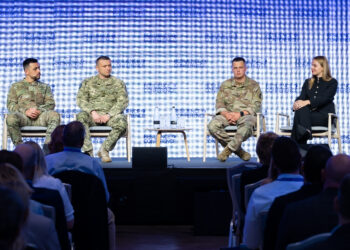
At Resilience Conference in London on 5 October, NATO’s Deputy Assistant Secretary General James Appathurai described NATO’s need to deliver available AI and data capabilities to warfighters immediately while building a more sovereign and resilient architecture for the future. That same urgency should apply to data flowing in the opposite direction: from the battlefield to innovators, in the form of curated datasets ready for AI training, fine-tuning, and independent validation.
These two priorities form a continuous learning cycle informed by Ukraine’s warfighting experience. Military end-users need effective technology today; innovators need operational evidence to improve the capabilities delivered tomorrow. Usable data connects battlefield experience with technological adaptation and improved operational capability.
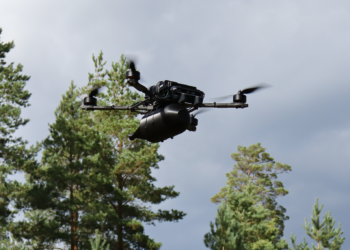
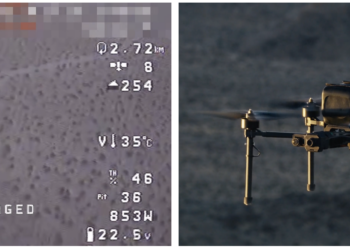
Ukraine has recognised that battlefield data is both a foundation for innovation and a strategic asset in its relationships with international partners. Its battlefields generate vast quantities of data from drones, satellites, and other sensor-equipped systems, providing insights grounded in real combat conditions that simulations and theoretical models alone cannot offer.
Access to this data attracts technology companies seeking to develop, test and refine their solutions. It also gives Ukraine a valuable currency of exchange in partnerships that combine its operational experience with allied technology, expertise, and investment.
By making battlefield data available through mutually beneficial partnerships, Ukraine is also pursuing longer-term ambitions: to become a global technology R&D hub and develop a domestic defence-tech industry capable of turning wartime experience into distinctive products for international markets.
Ukraine’s approach reflects a broader shift in technological competition: as AI capabilities become more widely available, the quality and relevance of the data used to train and refine them become an increasingly important source of advantage. High-quality, relevant datasets are essential to developing intelligent, adaptive and scalable solutions that improve through repeated testing and refinement—and to preparing the next generation of equipment and AI systems for future conflicts.
Ukraine’s recent cooperation with Germany offers a concrete example. On 14 April 2026, Defence Ministers Mykhailo Fedorov and Boris Pistorius signed a memorandum on defence data exchange in the presence of Ukrainian President Volodymyr Zelenskyy and German Chancellor Friedrich Merz (underscoring the strategic importance of the agreement). Ukraine’s official announcement envisages joint projects analysing the use of German weapons and access to combat data from DELTA and other digital systems to train and improve AI models and develop analytical solutions. This points towards a partnership in which operational knowledge becomes an input into future capabilities.
The United Kingdom and Ukraine took a related step on 24 August 2026. The British government announced an AI partnership intended to enable access to Ukraine’s Avengers AI Labs database. It describes battlefield data collected by daylight cameras and infrared sensors as material for training AI models, with British innovators and researchers participating alongside Ukrainian expertise.
The accompanying declaration connects government cooperation, industry and research, including secure data and compute pathways and joint assurance.
These initiatives offer a model for wider cooperation across NATO, with particular urgency for dual-use innovation ecosystems on its eastern flank, where proximity to Russia and the war in Ukraine makes shortening the cycle from battlefield lessons to deployable capabilities a pressing security priority. The next step is to turn bilateral access commitments into practical mechanisms through which eligible innovators can obtain suitable datasets under agreed conditions. This requires clear decisions on who qualifies, which data can be accessed, how quickly access can be granted and how the data can be used in development and validation.
For dual-use innovation ecosystems across NATO, usable data should be treated as a core resource alongside capital, computing capacity, testing facilities and rapid procurement. A startup can have talented engineers and a promising model yet lack the data needed to evaluate it under realistic operational conditions. The defence innovation policy objective should be to make relevant operational evidence available early enough to shape and accelerate the development of AI-based military solutions.
Actioning this Need for Data
To take full advantage of data in the technological race, NATO could establish a data-driven acceleration process that systematically integrates operational evidence into the development, testing and refinement of AI-enabled deep-tech and dual-use solutions. A proposed DIANA Data Lab (DDL) could provide the infrastructure and specialist expertise needed to implement this process, connecting military data holders with innovators, researchers and testing organisations.
The lab’s data sources could extend beyond Ukraine through data donations from allied armed forces and industry partners. NATO Member States’ armed forces could contribute existing operational and training datasets, while instrumented military training ranges could generate additional data under conditions approximating combat. Companies with systems deployed in conflict zones could also act as data donors, subject to data ownership, security requirements and the necessary permissions for sharing and reuse.
The process should strengthen NATO’s ability to obtain and prepare relevant battlefield data for innovation, working with trusted university partners equipped with the secure infrastructure and specialist expertise needed to support this work. Preparation should include selection, cleaning, deduplication, reliable annotation and documentation of provenance and operational context, with anonymisation or masking applied where appropriate. Approved DIANA innovators should be able to access these datasets rapidly, securely and at scale, with training data kept separate from independent validation and test sets.
Regular dataset updates should allow innovators to respond to changing requirements. This is how access to data can support a continuous ‘observe–adapt–deploy’ cycle, with feedback shaping improvements throughout development.
Such infrastructure should provide a practical route for smaller firms as well as established suppliers. Clear eligibility criteria, predictable approval times and proportionate requirements would help make access usable. Data annotation support and access to computing resources should accompany dataset access where necessary. Success should be measured by the time needed to obtain a usable dataset, the quality of validation and the delivery of improvements that military users can assess.
Security should be built into the access model. Depending on sensitivity, options could include anonymisation or masking, restricted datasets and controlled computing environments in which approved developers work without exporting raw records. Permissions, audit trails and clear rules for reuse should be established from the outset. The lab could build on bilateral initiatives, with access and reuse governed by the relevant permissions and agreements.
Beyond supporting individual innovators, this approach would build a lasting foundation for experimentation and learning. And in case of further escalation, it could evolve into a digital war lab for the future, helping NATO address immediate operational needs by enabling the rapid development of technologies tailored to evolving challenges.
The German and British initiatives suggest a broader opportunity: to build partnerships that combine Ukraine’s operational experience with allied research, engineering and industrial capacity. Their value will depend on turning access commitments into sustained collaboration and deployable results. NATO’s urgent delivery agenda should therefore include both directions of the learning cycle: better AI and data for warfighters, and better battlefield datasets for innovators. Modern capability depends on keeping that cycle moving.
The topic was also discussed at the NATO Innovation Fund executive round table at Warsaw Security Forum.