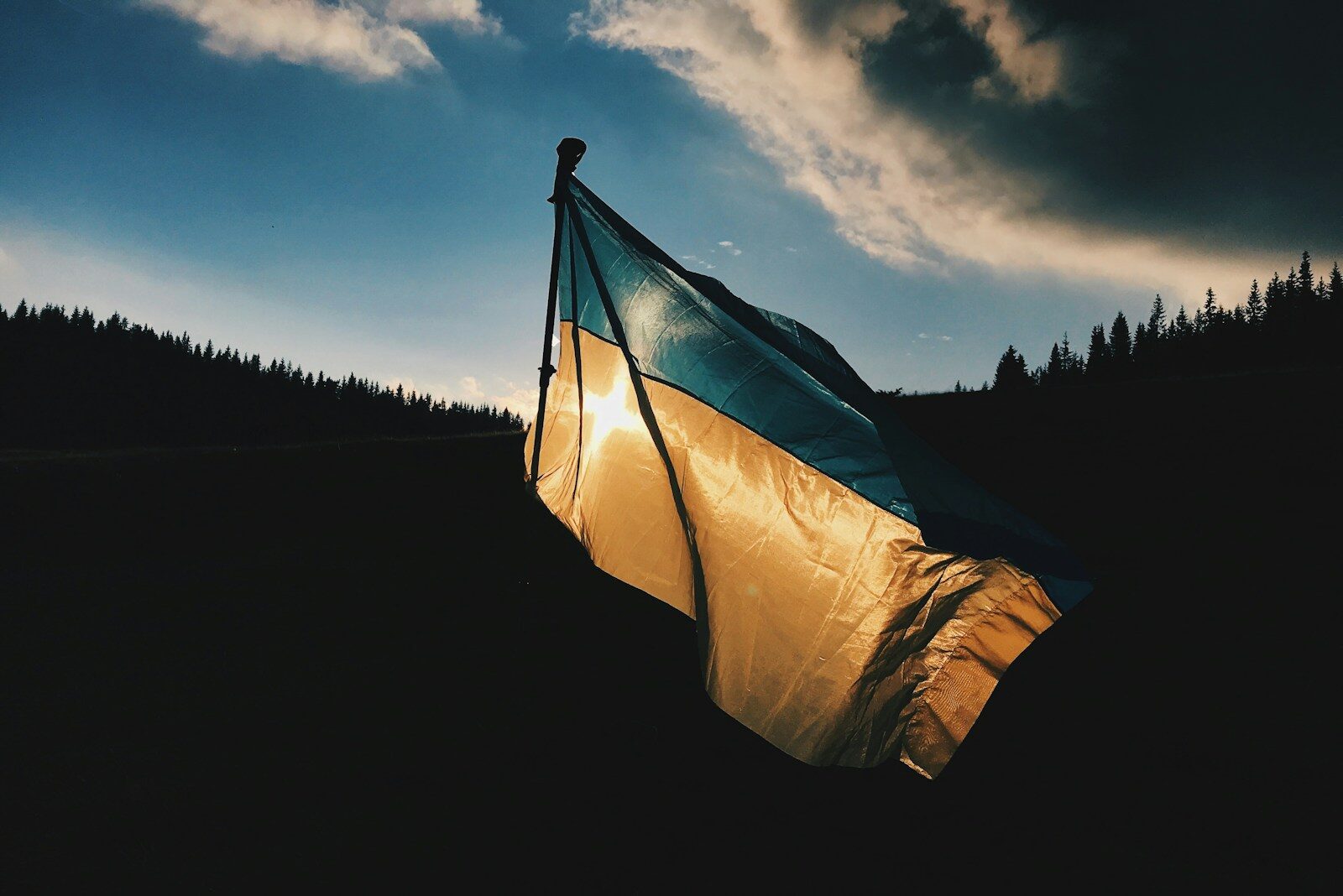
Four years after the Russian full-scale invasion, Ukraine has built a formidable defence industry, with unparalleled battlefield experience and a technological edge. European countries are now stepping up to help build Ukraine’s industrial capacity, with an eye also to technology transfer, testing and business opportunities.
Among them are France and Norway. Independently, both nations announced on Tuesday significant funding for their companies’ endeavours at NATO’s Eastern doorstep.
France’s BPI public investment bank signed an agreement with the European Commission to roll out a program promoting French investment in Ukraine, which includes €50 million for VC funds and French companies making direct investments in the country, plus €200 million of guarantees for French companies investing in Ukraine and €229 million in loans to Ukrainian companies.
France, whose juggernaut homegrown industry is the world’s second largest defence exporter, wants in on the benefits coming from Ukrainian joint ventures. Alice Rufo, France’s Minister Delegate to the Armed Forces, called strengthening industrial partnerships with Ukraine a “strategic priority” for France.
BPI’s plan is wide-ranging. It envisions “30 partnerships between French companies and startups in Ukraine’s defence and dual-use technology ecosystem,” in a three year timeframe. Ukraine has already been an important lesson for France’s incumbent defence industry when it comes to the extend of what it exports. Despite being home to global prime contractors such as Safran, Airbus and Thales, France has found itself behind some of its European counterparts in terms of its presence in Ukraine.
As a point of comparison, Germany, also home to a number of primes but also some of Europe’s largest new defence techs, has over the past year announced multiple high-profile joint ventures with Ukrainian partners. These include Quantum Systems teaming up with Frontline and (just last month) Firepoint, as well as Auterion joining forces with Airlogix.
BPI’s European affairs director Christian Dubarry told Resilience Media that BPI has no preference in supporting French primes over startups in pursuing their Ukrainian ambitions.
“There is a need for established companies to introduce innovation through partnering with Ukrainians,” he said, but added that startups’ agility could make them more open to joining forces with their Ukrainian counterparts.
There is a caveat to all of this: since the program is part of the European Commission’s Ukraine Facility, it only allows for dual-use investment. That leaves a big question mark hanging over using the funds to finance interceptor production, which Ukraine desperately needs. Dubarry said that it’s the European Commission that signs off on all investment.
“I hope we have an answer soon,” he remarked about the interceptors’ alignment with the program.
While the only timeline announced for now is that the program will roll out over the next three years, Dubarry indicated that the first deal will likely be announced by the end of the year, in the manufacturing domain.
Nordic light
Meanwhile, in Norway, private capital defence firms got a boost as the Norwegian government announced that it is setting aside NOK 1 billion (€96 million) for investments in Ukraine.
These investments will be made in partnership with the Norwegian business sector with the intent ‘to help mobilise further Norwegian private capital for investments in the Ukrainian defence industry,’ the government said in its statement. Distribution will go to funds operating in Norway and investing in the Ukrainian defence industry. Norway’s state-owned investment company Investinor — which is wholly owned by the Norwegian government but not connected to the country’s giant sovereign wealth fund — will manage the scheme.
“It is crucial that we help to develop the Ukrainian defence industry. Even after a ceasefire has been reached, these efforts will enhance deterrence. This initiative will also help to further develop cooperation between the Norwegian and Ukrainian defence industries,” said Norway’s Minister of Defence Tore O. Sandvik in a statement.
“This is not only important for Ukraine,” he continued, “it is also in the interests of Norwegian security. If Russia succeeds in Ukraine by means of military force, it is more likely to use military force against other countries as well. This is why an investment in the Ukrainian defence industry is also an investment in European and Norwegian security.”
Similar to France, the time frame for the investment is also a three-year period. The financing for the scheme will be taken from the Nansen Support Programme for Ukraine, a long term programme for military and citizen support focused on the war-torn country.
Additional reporting Fiona Alston