100 investors to watch 2026 100 investors to watch 2026 100 investors to watch 2026
Wednesday 18 November, 2026
[email protected]
Resilience Media
  • News
    • Events
    • Interview
    • Startups
    • Venture
    • Weekly Digest
  • Resilience Conference
    • Resilience Conference London — Oct 2026
    • Resilience Conference Copenhagen — May 2026 (PAST)
    • Resilience Conference Warsaw — Apr 2026 (PAST)
  • Launch
  • About
  • Guest Posts
    • Author a Post
  • Subscribe
No Result
View All Result
Resilience Media
No Result
View All Result

Gallium Defense raises €7.1M to develop lower-cost drone detection radar

The French startup is developing a drone detection radar at a fraction of the cost of existing systems, with military customers driving unexpectedly strong demand

Carly PagebyCarly Page
November 2, 2026
in News
Share on Linkedin

French defence technology startup Gallium Defense has raised €7.1 million to develop a drone detection radar that it says could cost as little as €500,000, potentially bringing sophisticated air surveillance capabilities within reach of more military operators.

You Might Also Like

Atmos and MBDA want to give Europe the ability to strike from space

‘We are using it all’: minister talks about how Ukraine is offsetting Starlink dependency

An ‘optimistic’ Alexander Stubb talks war and peace at Slush

The Paris-based company, formally established in April 2026 following development work dating back to 2024, has emerged from stealth with a seed funding round led by Keen Venture Partners and 360 Capital, with participation from Omnes Capital and Polytechnique Ventures.

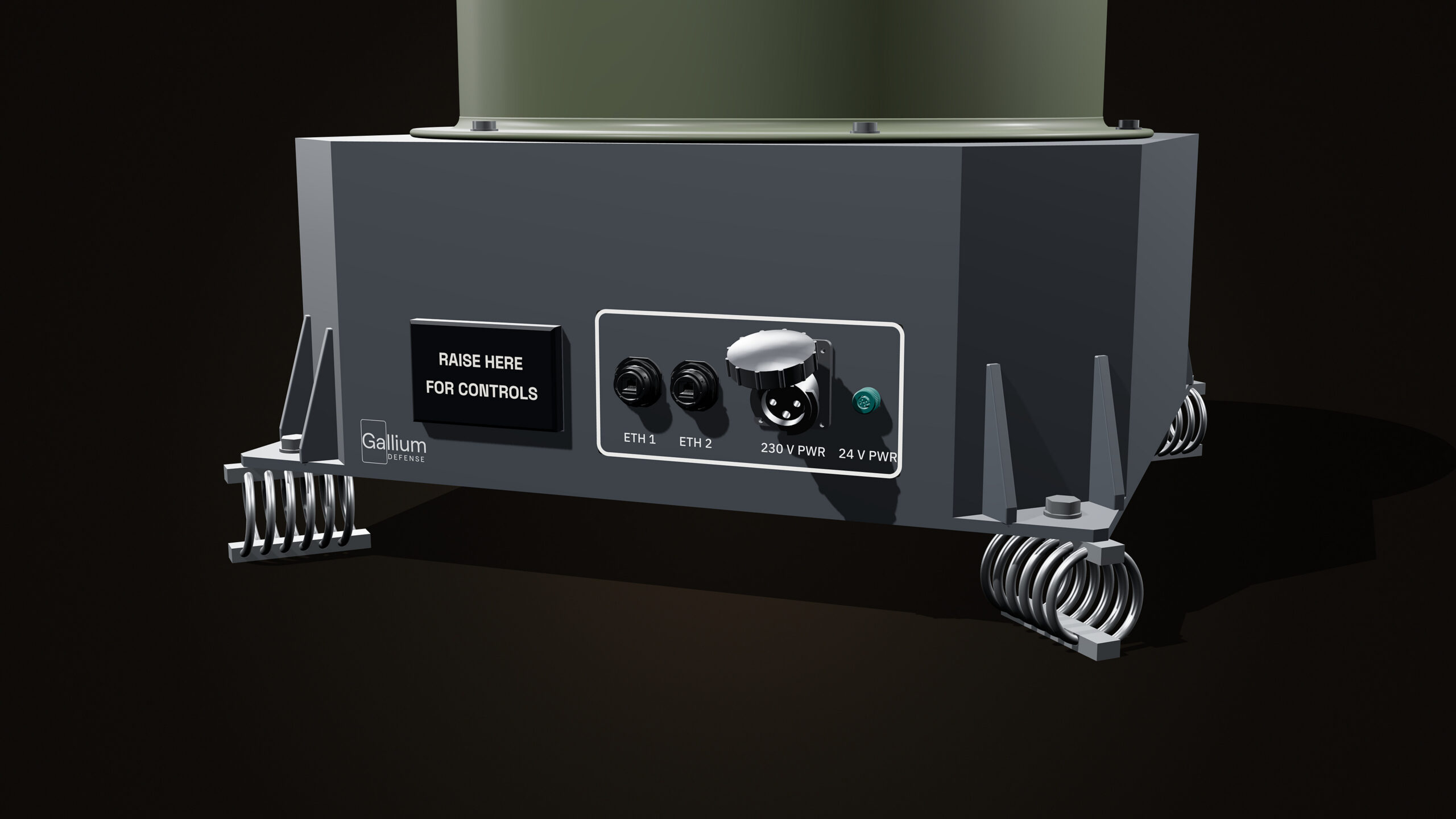
The investment will support development and industrialisation of its first product, the GDS-10, an AI-enabled radar designed to detect small drones at distances of up to 10 kilometres, including first-person-view (FPV) drones increasingly used in modern warfare.

Gallium Defense co-founder and CEO Eric Fournier told Resilience Media that the company hopes to sell the GDS-10 for around €500,000, a fraction of the €2 million to €5 million he says comparable radars typically cost. The final price won’t be settled until April 2027, once further testing is complete.

Much of the cost reduction comes from borrowing technology developed for other industries rather than relying entirely on traditional defence components.

Gallium’s radar uses components originally developed for 5G telecommunications networks, including gallium nitride amplifiers that Fournier said can be thousands of times cheaper than their radar-specific equivalents.

“We said, okay, let’s build a radar antenna, not with radar component, but with 5G telecom component,” Fournier explained. “So that was super hard. It took us time, you know, to make it fly.”

The company has also incorporated Nvidia computing hardware to process radar signals, claiming more than 100 times the computing power of conventional systems.

Fournier said using components from other industries has cut the cost of the antenna by more than 90%, although getting the different technologies to work together has proved tricky.

The GDS-10 can cover a full 360 degrees and is designed to track several drones at once, including swarms. Gallium is working on two versions of the radar, one for the military and another for operators protecting critical infrastructure.

However, Fournier revealed that demand has been considerably stronger from the military than he originally anticipated.

“I was convinced when I started that I would have all the big energy players and data center players coming to us,” he said. “It’s two out of 48 prospects right now. So most of the guys are indeed the armed forces, which was not our entry point.”

The company is now adapting its commercial strategy to reflect that demand, while retaining its ambition to make drone detection affordable for critical infrastructure operators.

Gallium also wants to change how radar systems are deployed. Rather than relying on a small number of expensive installations, Gallium aims to build networks of lower-cost radars that can be deployed in greater numbers and repositioned as operational requirements change.

The company currently has two operational prototypes and is undertaking regular outdoor trials to train and refine the system’s detection capabilities under different conditions.

“Every month we go for two days to five days outside, full day, and we track and we learn in various situations,” Fournier said. “So we expect some fixes that will have an impact on our bill of material.”

Orders are expected to open in the first quarter of 2027, with final pricing targeted for April and the first deliveries potentially beginning in June.

The funding will also support recruitment and further demonstrations as Gallium works towards commercial production.


 

Tags: gallium defenseKeen Venture Partnersradar
Previous Post

Pelagon comes out of stealth to help secure maritime infrastructure from underwater threats

Next Post

Hypersonica raises €100M more to speed up and build out its hypersonic ambitions

Carly Page

Carly Page

Carly Page is a freelance journalist and copywriter with 10+ years of experience covering the technology industry, and was formerly a senior cybersecurity reporter at TechCrunch. Bylines include Forbes, IT Pro, LeadDev, The Register, TechCrunch, TechFinitive, TechRadar, TES, The Telegraph, TIME, Uswitch, WIRED, & more.

Related News

Atmos space cargo visual

Atmos and MBDA want to give Europe the ability to strike from space

byPaul Sawers
November 18, 2026

The ability to transport payloads into orbit and return them to precise locations on Earth could give European armed forces...

‘We are using it all’: minister talks about how Ukraine is offsetting Starlink dependency

‘We are using it all’: minister talks about how Ukraine is offsetting Starlink dependency

byIngrid Lunden
November 18, 2026

This week, NATO’s Communications and Information Agency announced during the NATO Edge conference that it was unlocking procurement totalling a...

An ‘optimistic’ Alexander Stubb talks war and peace at Slush

An ‘optimistic’ Alexander Stubb talks war and peace at Slush

byFiona Alston
November 18, 2026

Finland's President Alexander Stubb opened the Slush tech conference in Helsinki by touching on AI, European sovereignty, and a bleak...

Tekever raises $580M at a $6.8B valuation to give flight to more drones

Tekever’s €200 million France plan: new factory, contract with French army

byStanislaw Naklicki
November 17, 2026

In the 1960s and 1970s, Portugal’s workers would migrate to France for manufacturing jobs. Half a century later, the Portuguese...

Satellites become a growing target for grey-zone warfare

ICEYE lights a rocket under its satellite business, offers €2.05B for launcher company Avio

byLuke Smithand1 others
November 17, 2026

Some consolidation is taking place in the space race. Finland-based satellite maker/operator ICEYE has made an offer to buy Avio,...

OpenAI, facing a cybersecurity lawsuit in the US, is working with NATO… on cybersecurity

OpenAI, facing a cybersecurity lawsuit in the US, is working with NATO… on cybersecurity

byIngrid Lunden
November 17, 2026

OpenAI's allegedly lacklustre approach to security and safeguarding across has just landed the AI giant a major lawsuit in California,...

Ex-SmartCap CEO Sille Pettai joins Keen’s €200M defence fund as partner

Ex-SmartCap CEO Sille Pettai joins Keen’s €200M defence fund as partner

byFiona Alston
November 17, 2026

European venture capital firm Keen Venture Partners has appointed Sille Pettai, former CEO of Estonia’s state-backed venture investor SmartCap, as...

Finland’s Kelluu delivers an airborne passive radar system for NATO’s Eastern flank

Finland’s Kelluu delivers an airborne passive radar system for NATO’s Eastern flank

byJohn Biggs
November 16, 2026

Finnish defence technology company Kelluu has introduced HALO, a passive radar system built into an airship that was designed to...

Load More
Next Post
Hypersonica raises €23.3M to develop hypersonic missiles for Europe

Hypersonica raises €100M more to speed up and build out its hypersonic ambitions

Hand holding a smartphone inside a car

Ukraine and Russia hit by emergency alert app hacks spreading false nuclear warnings

Top stories

Helsing launches Clarity, a competitor to Palantir’s Maven
European Defence

Helsing launches Clarity, a competitor to Palantir’s Maven

November 11, 2026
Ukraine’s Uforce unveils a heavy-duty unmanned surface vessel for naval logistics
Drones & UAS

Uforce raises $700M at a $6B valuation to scale out its multi-domain defence roll-up play

November 12, 2026
Canada’s Dominion Dynamics is building a combat drone for the arctic
Drones & UAS

Canada’s Dominion Dynamics is building a combat drone for the arctic

November 12, 2026
Tiberius says it’s successfully tested Sceptre munitions that behave like more costly missiles
European Defence

Tiberius, the munitions startup, becomes the latest defence tech unicorn, raising $85M at a $1B valuation

November 16, 2026

Resilience Media is an independent publication covering the future of defence, security, and resilience. Our reporting focuses on emerging technologies, strategic threats, and the growing role of startups and investors in the defence of democracy.

  • About
  • News
  • Resilence Conference
    • Resilience Conference Copenhagen 2026
    • Resilience Conference Warsaw 2026
  • Guest Posts
  • Subscribe
  • Privacy Policy
  • Terms & Conditions
  • Mission Statement & Code of Practice
  • Press

© 2026 Resilience Media

No Result
View All Result
  • Home
  • About
  • Subscribe
  • Events
  • Guest Posts
  • Interview
  • News
  • Resilience Conference London 2026
  • Resilience Conference Copenhagen 2026
  • Resilience Conference Warsaw 2026

© 2026 Resilience Media

This website uses cookies. By continuing to use this website you are giving consent to cookies being used. Visit our Privacy and Cookie Policy.