Jet-powered propulsion for drones has been the single-most destructive development that Russia has introduced into its attacks against Ukraine, and one of the biggest asks right now for defence is more and better interceptors to counter these new systems. Now Helsing, one of the suppliers working to help Ukraine defend itself, is preparing its response.
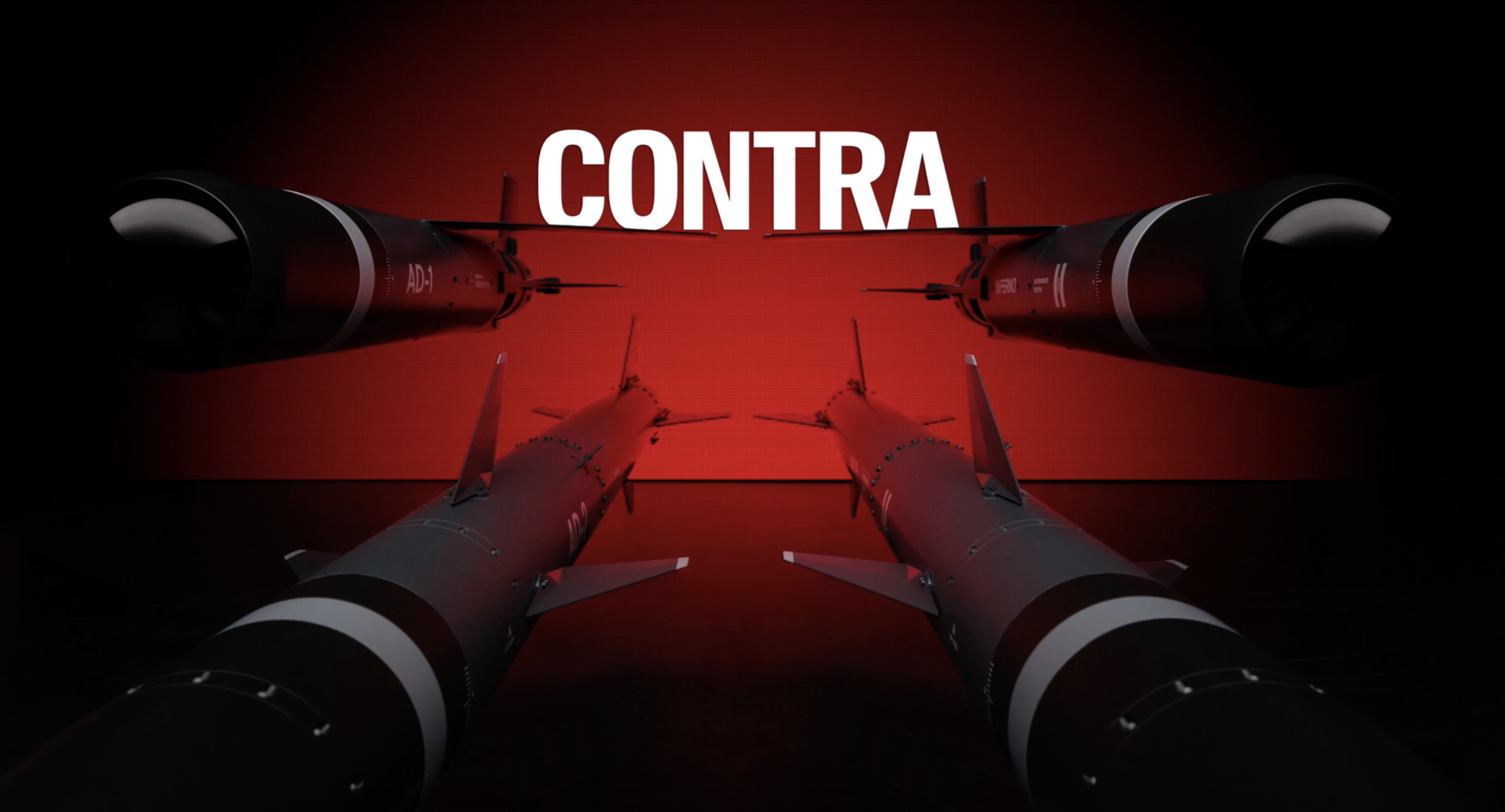
The company on Monday announced a new air defence system called Contra, along with the AD-1 ‘Inferno’ and AD-2 ‘Ambush’, two autonomous interceptors respectively powered by jet and a rocket motor. At an event in Germany, the company also video-linked to a secret R&D facility elsewhere to show off and talk about the work it’s been doing.
The system and interceptors are currently in development, but the plan is to have them available for orders and shipping only by the second half of 2027 at the soonest.
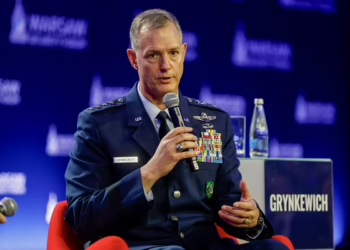
Helsing is active in several markets already, with its other products such as its unmanned autonomous air and marine systems deployed in Ukraine, Germany, the UK and France. Speaking at the event today, Dr. Gundbert Scherf, Helsing’s co-founder and co-CEO, confirmed the company is talking to customers in Europe for deals involving the new interceptors. He would not disclose details of who those are but said the company is seeing “high demand.” With the war in Ukraine now stretching into its fifth year, technology continues to define the rules of engagement.
“People are now looking to solve the next generation of problems,” Scherf said.
Even in these early days, price and component supply are two key factors in how these will be produced going forward.
Scherf confirmed that the AD-1 and AD-2 would be priced in the “tens of thousands of euros” each and produced with an ITAR-free supply chain.
For context, this would put Helsing’s new interceptors well above the price of electric, propeller-based drones from Ukrainian companies like Skyfall or Wild Hornets, which are making systems for less than $5,000 each right now.
Yet they also would be priced well below the Patriot interceptors that have been getting used against jet-based drones. These so-called “exquisite” systems are restricted in how they can be procured (they are made by the US-based Lockheed Martin), but also have a huge price barrier, with the least expensive models still costing around $4 million each. (Lockheed has been working on less costly versions.)
In terms of the supply chain, this appears to be an evolving story when it comes to sovereignty in the supply chain, a big priority at the moment to increase European resilience.
“We have made sure we don’t have components from restricted countries but not all [components are] from Europe,” said Maxwell Adams, senior director of product at Helsing, speaking at the event. “We are working on increasing the paths to have [components] strictly from Europe.”
In terms of the supply chain for jet propulsion components, including the need for producers of solid rocket fuel, Scherf acknowledged that there is currently “limited capacity to produce in Europe” but that Helsing is already working on addressing this by way of investments — and possible M&A it seems, tapping the billions it has raised in funding? — as it approaches a stage of being ready for scaled production.
“It’s sensitive so we won’t go into the details but we have invested in something to produce thousands [of solid rocket fuel cells] per month when necessary,” he said. “There are lots of new companies building these products [and] we’ve made investments to ensure solid rocket and turbo jet supply.”
Helsing today showed off only models of its two new interceptors, even giving away hand-sized maquettes to journalists in attendance at the event. It said it was not yet at the point of having produced a live prototype that can be shown to would-be customers, and that as a whole the process would not be iterative in the same way that drones have been, where the design and operation have been worked out in real time, essentially in a field.
Helsing describes the AD-1 as a “jet-powered interceptor capable of aerial loitering, swarming, and repeated re-engagements” and the AD-2 as a solid-rocket-motor (SRM) missile “for rapid intercepts,” at the highest speed end of what the adversary may launch.
The AD-1 has a maximum speed of 700 km/h and the AD-2 has a range of more than 20 kilometres and a speed of Mach 2.5. Both are container-launched — meaning they can work from the ground directly rather than be launched from the air — and are (of course) natively integrated into the company’s ground stations and Contra radar system. This might mean that they are less dependent on satellite connections for guidance. (We have asked.) They are designed with autonomy meant to work even when connections are jammed or lost.
‘This is our product’ (not Destinus’s)
Helsing’s announcement is coming just one week after the company — currently the largest defence tech startup in Europe, valued at $18 billion as of this summer — confirmed it would be entering a commercial partnership and taking a stake in the Dutch defence tech Destinus that would reportedly value the latter at above $6 billion.
Destinus has been one of the companies working on hypersonic missiles in Europe, but today Helsing said that the AD-1 and AD-2 were independent of that.
“What we are showing you is our product,” Scherf said. “This is our system and design.”
The urgency of the need in Europe — not just Ukraine — for better defences against jet systems is significant. Russia is estimated to be ramping up its production and use of Geran jet-powered drones and cruise missiles, with the 4 and 5 versions of the Geran model now being produced at a rate of 4,000 units per month, Helsing said, quoting intelligence reports.