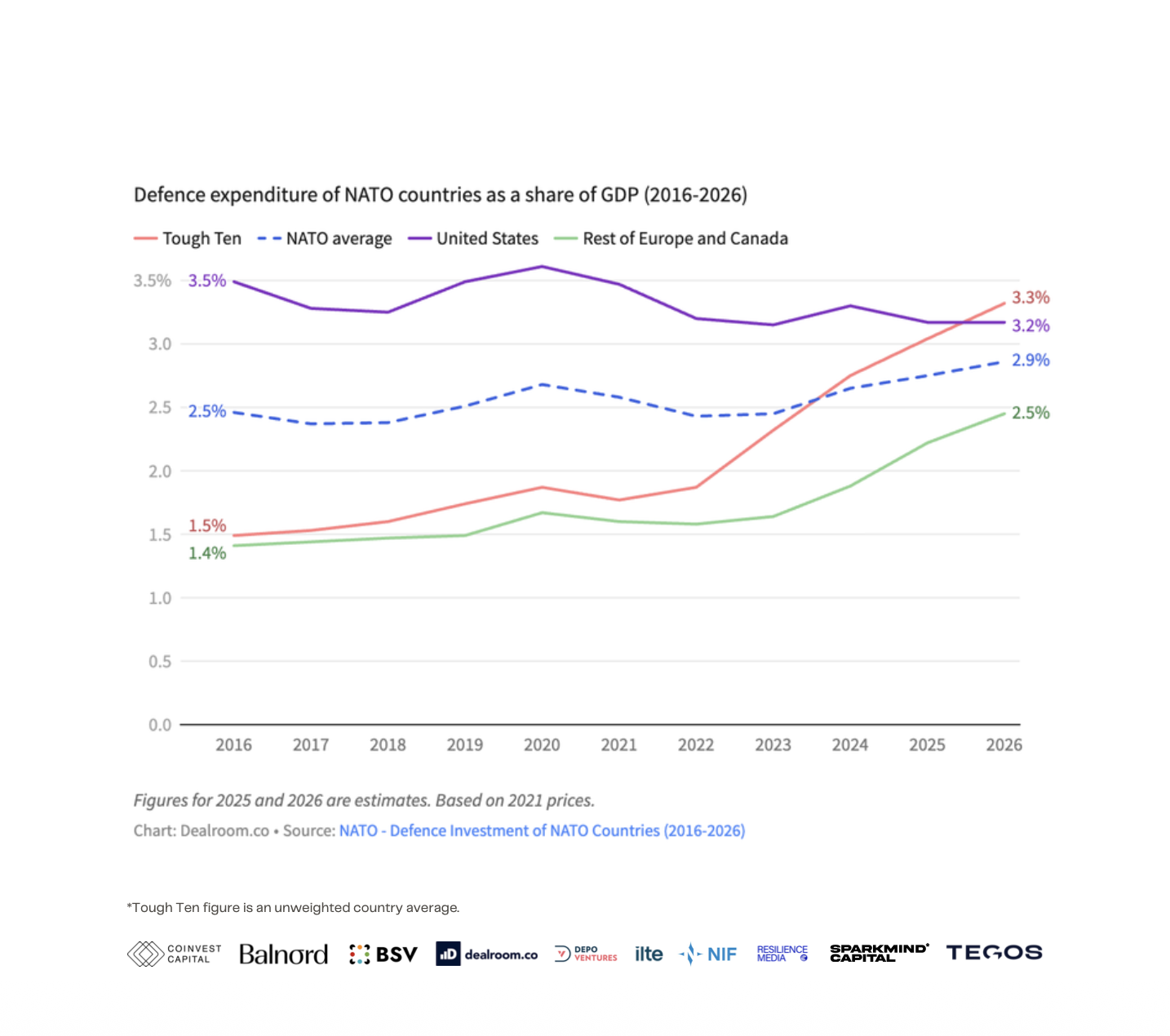
The second edition of Tough Tech by the Tough Ten has just been released and it shows that Europe’s Eastern Flank now invests more in defence than the United States, and the NATO average, led by investments in space and counter-drone technologies.
The report — bringing together analysis from Dealroom, Resilience Media and eight venture capital firms — maps the companies, capital and partners behind tough tech, a term that represents defence, security and resilience innovation addressing NATO‘s priority capability needs. The regional focus of the “tough ten” meanwhile is the Eastern Flank: Finland, Estonia, Latvia, Lithuania, Poland, Czechia, Slovakia, Romania, Hungary and Bulgaria.
“Founders across the Eastern Flank are rising to the challenge of a turbulent geopolitical moment, building and scaling technologies that respond directly to today’s most urgent security needs. Their geography gives them real-time insight from end users that few others can match,” said Patrick Schneider-Sikorsky, a partner at the NATO Innovation Fund.
Viktorija Trimbel, managing director of Lithuania’s sovereign VC fund Coinvest Capital, presented this report’s key findings at Resilience Conference London in October. The report tracked 170 venture-backed tough tech startups across the ten countries, with a combined enterprise value of about $21.8 billion.
VC moves on tough tech but leaves gaps
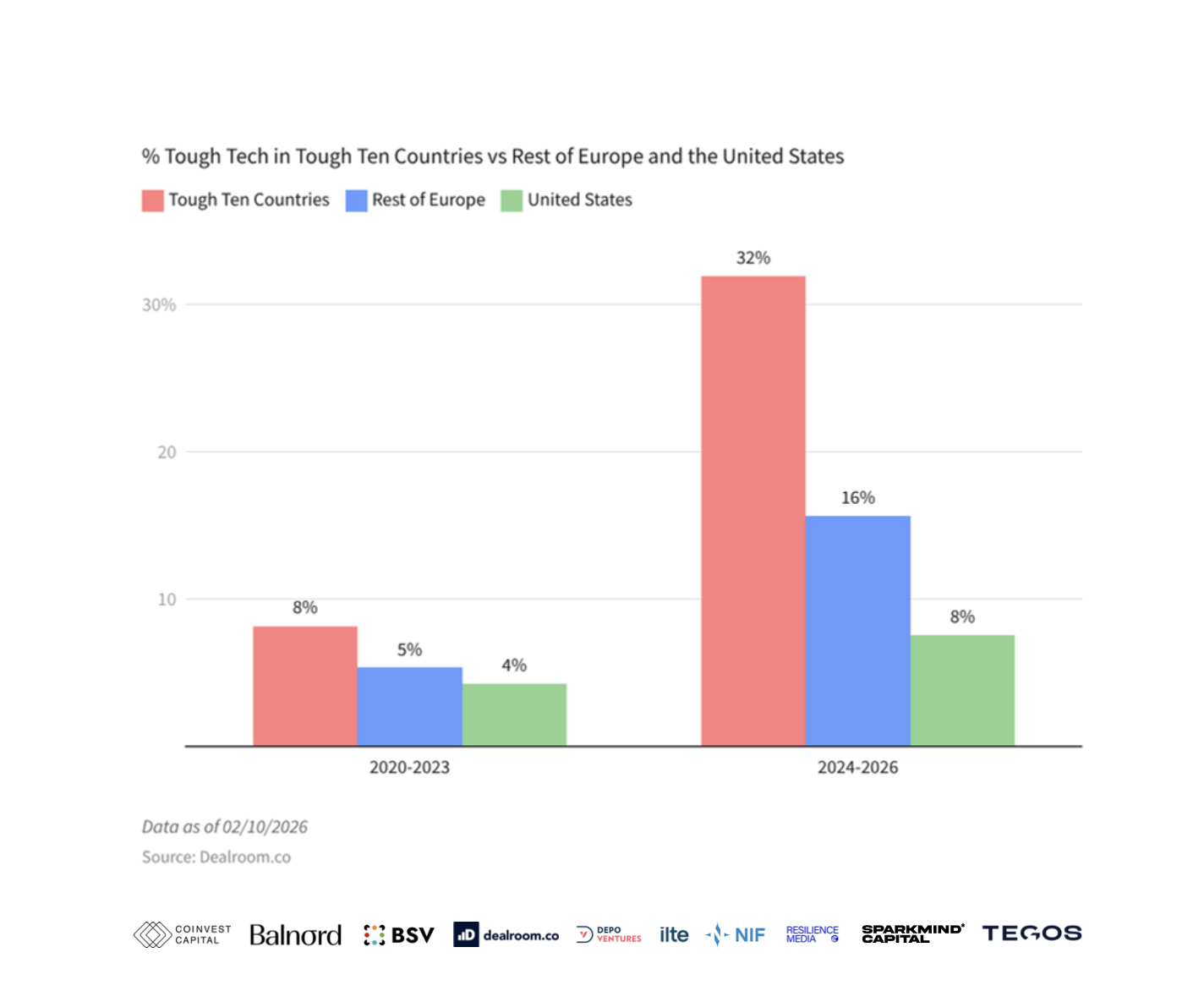
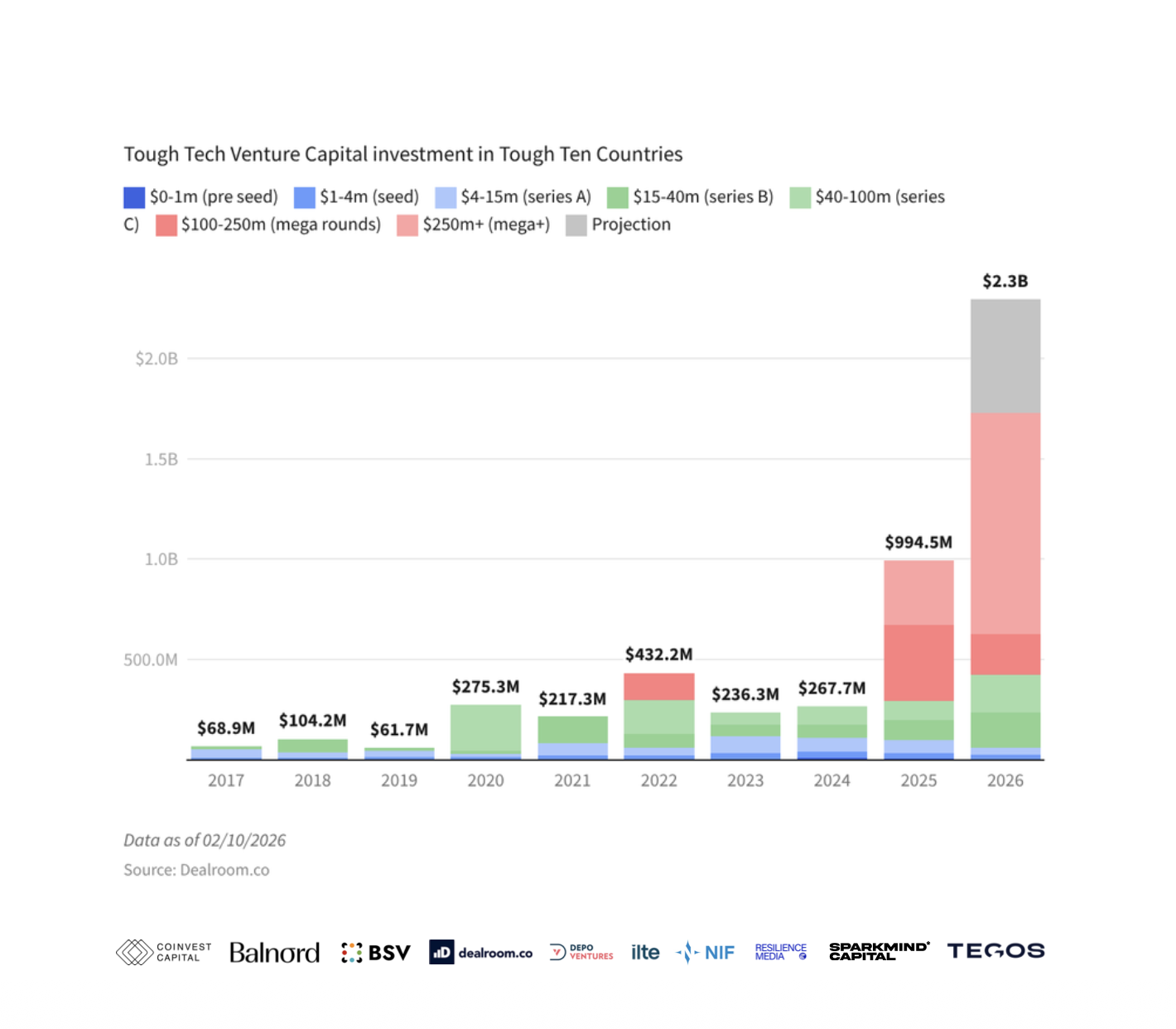
The report found that between the start of 2024 to September 2026, 32% of all venture capital in the region has gone to tough tech, twice the share compared to the rest of Europe, and four times the 8% invested in tough tech in the United States.
Venture investment into tough tech in the region already reached around $1.7 billion in early October with projections of it reaching $2.3 billion by the end of the year. That would equate as double the 2025 figure of $994.5 million.
While early-stage, small-ticket cheques continue to be the most common transactions — which is to be expected, since there are more and more tough-tech companies being founded every month at the moment — larger, later stage and growth investments are slowly creeping up as more startups mature.
Series B and Series C funding rounds accounted for close to nine out of every ten dollars invested, with the region, in the first nine months of 2026, surpassing its 2025 total capital invested without a single mega-deal outside of space and quantum. Estonia has nearly tripled its funding and Slovakia has raised more this year than in all previous years combined.
It appears that there is some room at the table for new lead investors. The region has raised around four times its 2022 total in 2026 from half as many investors (57 versus 113), with domestic investors now providing half of all tough-tech funding.
The report exposes some technology gaps, such as in robotics. Ground robotics has raised just $8 million since 2020 and there were no maritime robotics rounds recorded — surprising, given uncrewed systems on land and at sea are reshaping warfare in Ukraine, and several of the “tough ten” border the critical Baltic Sea.
“The question for investors is no longer whether to back this region, but whether they can keep pace with it. What Europe’s defence entrepreneurs need now is steady circulation, not occasional transfusions. Don’t stockpile: frequent, smaller orders, with training, support and upgrades built into the contract, keep pace with how fast the battlefield changes. Continuous procurement creates investable demand, and investable demand turns startups into the industrial base Europe needs,” said Trimbel.
GDP spending
The Eastern Flank outspends the NATO average as well as the US as a share of the GDP in defence. Lithuania leads the Alliance at 5.4%, and Estonia, Latvia and Poland are close to or above NATO’s 5% target for 2035. In total the Tough Ten countries commit an average of 3.3% of GDP to defence in 2026, double the figures from a decade ago.
Counter-drone and Ukraine sales
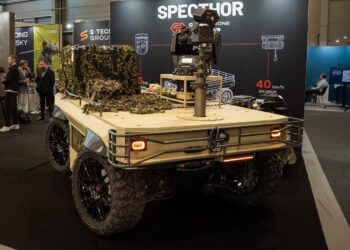
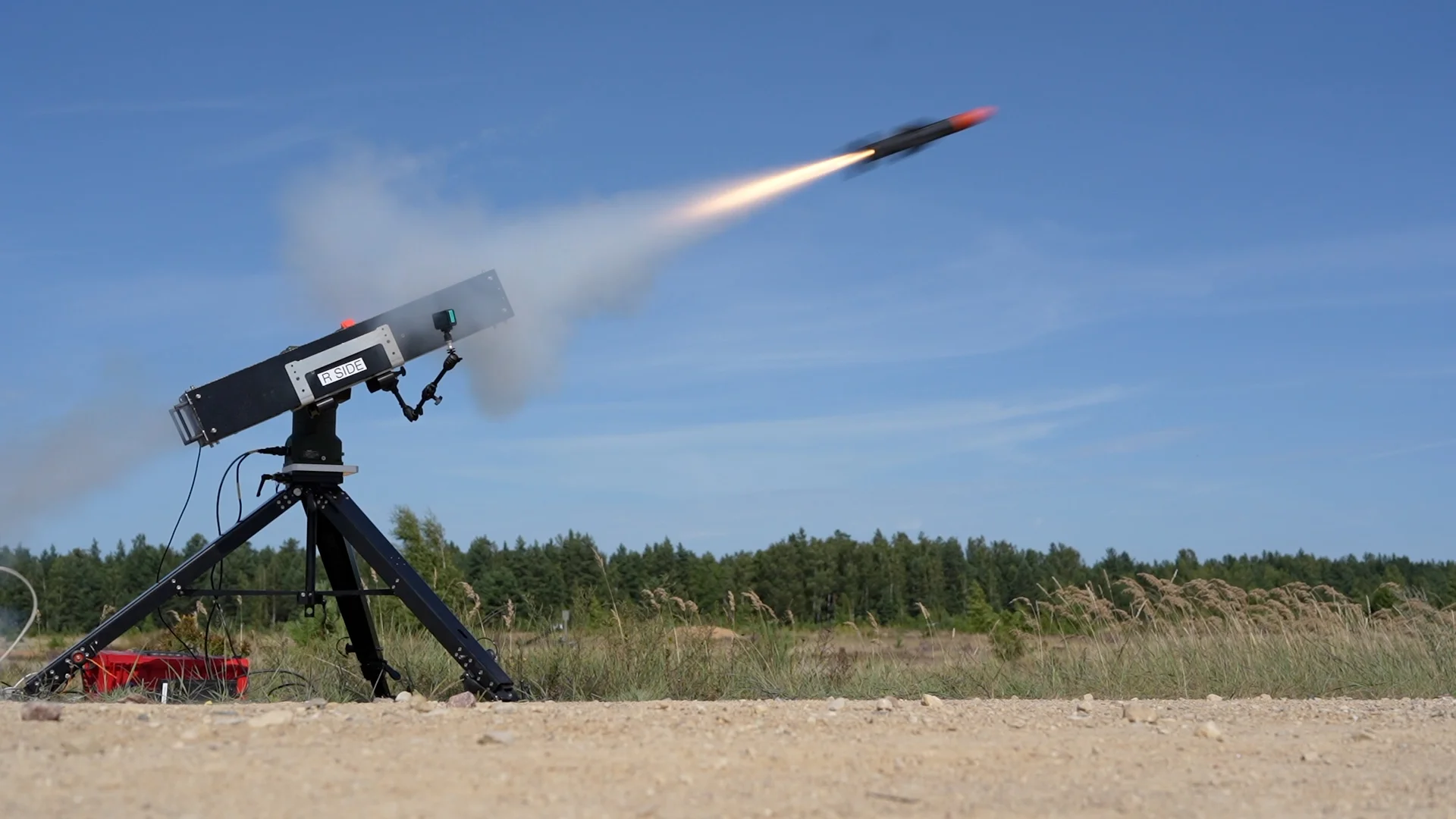
Space and counter-drone are the sectors doing well in this report, with the latter seen as 2026’s breakout segment. Companies developing counter-drone technologies have raised $895 million so far this year, a huge 93% of everything the segment has raised since 2020. The active threat, due to drone incursions into European airspace has put a rush on procurement priority.
Space is having its moment in the spotlight too, as it has raised more in 2026 than in the previous six years combined. This rise can only be set to continue as the discourse over finding a European alternative to Starlink/Starshield continues.
Providing technology that can be used on the battlefield now has seen Tough Ten companies not only test products in Ukraine but win procurement deals. According to the report Latvian companies have won orders for 17,000 drones, Ukrainian designs are entering production in Finland and Romania, and Poland plans to build 10,000 interceptors a year. Finland’s ICEYE, now valued above €10 billion, delivered Poland’s sovereign radar satellites in under twelve months.
“Europe does not have a shortage of exceptional technology. What we still lack is the speed and capital to turn it into companies of global scale. The next challenge is not proving that they work – it is moving faster from validation to procurement,” said Sandra Golbreich, General Partner at BSV Ventures.
The Tough Tech by the Tough Ten 2026 report was initiated by Coinvest Capital, together with BSV Ventures, Balnord, DEPO Ventures, the NATO Innovation Fund and Sparkmind Capital, in partnership with TEGOS, Dealroom, ILTE and Resilience Media. It is co-funded by the European Union.