There is a growing need for more and better interceptors against faster drones — a challenge that has been hitting Ukraine especially hard in the last several weeks. Now, startups building next-generation C-UAS are attracting attention from investors. North Vector Dynamics (NVD), a Canada-based startup working on counter-UAS that can head off jet-powered drones, as well as other advanced systems like hypersonics, has secured Series A funding of over $20 million, according to a press release issued on Monday.
Czech VC fund Tech Horizons is leading the round, which values NVD at “more than $90 million.” This is one of the biggest funding rounds for a startup in Canada’s fledgling defence tech industry.
Other backers of the startup include ONE9, Garage Capital, Ripple Ventures, Feld Ventures, and Conconi Growth Partners. Notably, the Czechoslovak Group (CSG) — the biggest prime in the country — also joined this Series A as a “strategic investor,” Matej Luhovy, a partner at Tech Horizons, told Resilience Media.
NVD has yet to ship any product — its founders have estimated that its first interceptors will roll out in 2027 — but the investment announcement comes a week after other important news: CSG and North Vector Dynamics signed a memorandum of understanding, according to which “the two companies will explore European manufacturing and supply chain opportunities for NVD products, and the integration of NVD’s CM-70 counter-UAS interceptor into CSG systems.”
The startup is getting a lot of attention in its home country of Canada in part because the country is very intent on kick-starting its domestic defence industry, not least because of increasing tensions and concerns around its vast arctic borders and the United States’ changing, and sometimes unpredictable, agenda when it comes to NATO and other defence alliances.
This has meant that the company’s efforts get a lot of attention, as evidenced by a recent drone event in Calgary that attracted the Ukraine President and Canada’s Prime Minister:
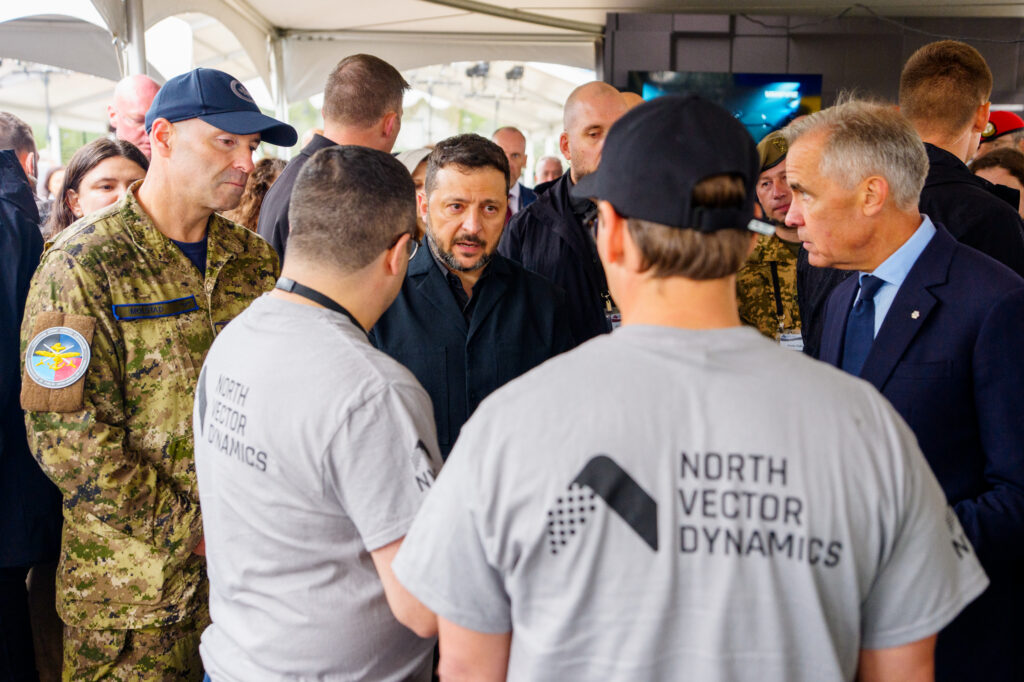
Le premier ministre Mark Carney et le président de l’Ukraine, Volodymyr Zelenskyy, participent à une présentation sur les drones au SAIT, à Calgary, en Alberta, le 10 septembre 2026.
NVD is working amid some significant themes in defence tech right now.
“Modularity” — providing products that can work alongside those from other vendors — has been a strong theme among startups. The reasons are twofold. Most obviously, startups are looking for routes into larger procurement cycles that are largely dominated by primes.
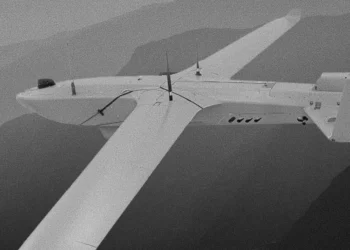
But also, end users (militaries) are seeking targeted suppliers of more modern systems designed for the biggest challenges on the battlefield and in defence today. One of those challenges is the rapid iteration of jet-based drones and the need for better defences against them.
President Volodymyr Zelensky recently noted that the technological advances of Russian drones have rendered overall Ukrainian air defence less effective: only 57% of jet-powered drones are being intercepted, he said, and those that get through are often targeted towards civilian areas, causing major damage to Ukrainian cities and economy. Thus, the interest in interceptors like those made by NVD as well as others in the same category such as Cambridge Aerospace, Frankenburg Technologies, and Alta Ares.
North Vector Dynamics is working on a range of advanced interceptors, including a hypersonic missile that is also still in development.
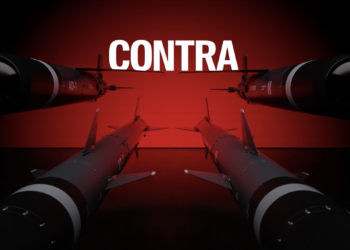
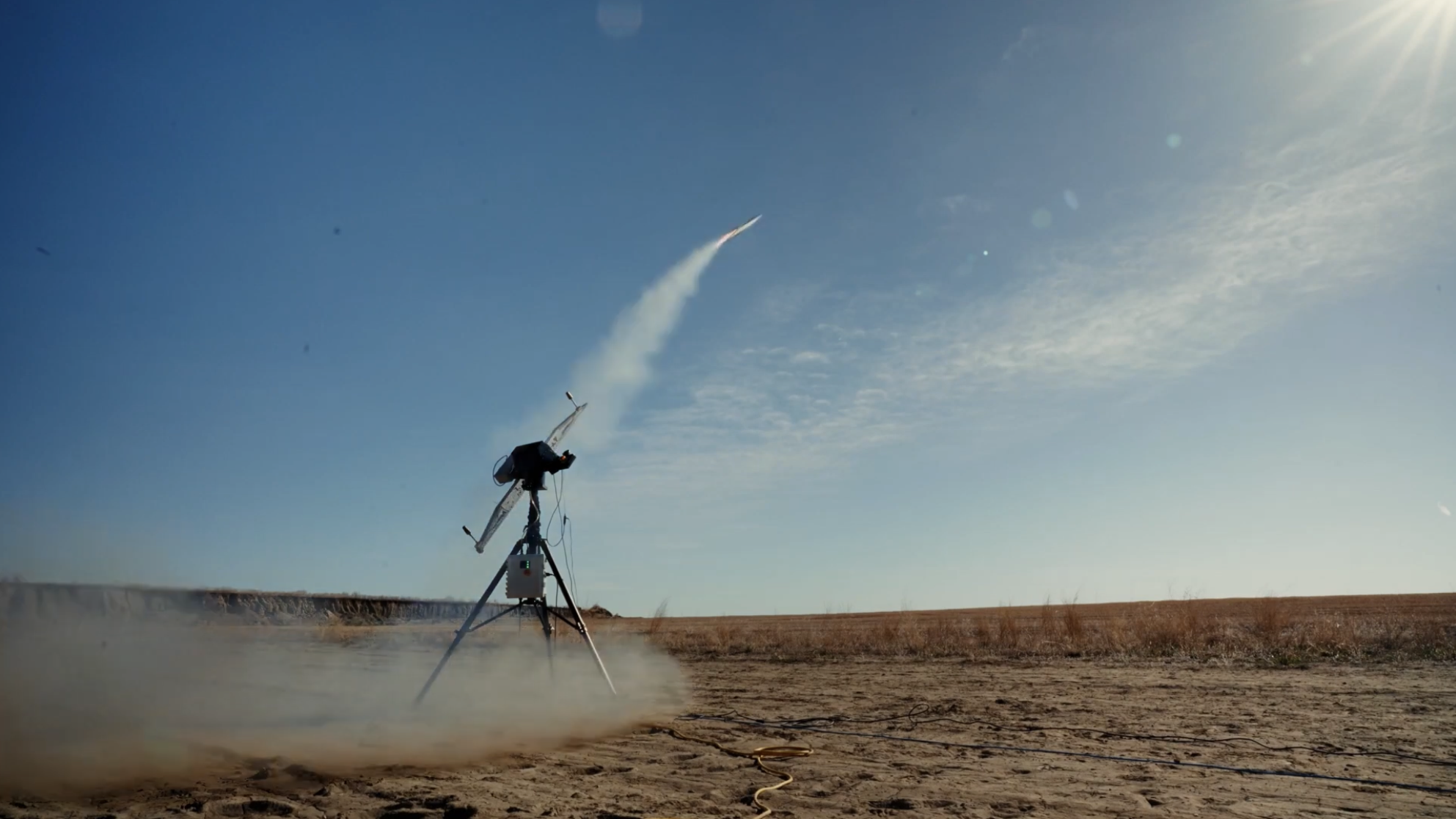
But its flagship product is the CM-70, a small interceptor missile that weighs barely three kilograms and measures 90 centimetres, a size that the company says makes it easy to integrate with “existing layered air defence architectures.” Propelled by a small rocket, CM-70 is laser-guided, which means it works in GPS-deprived environments.
Most importantly, NVD targets faster UAVs flying at higher altitudes, meaning they can work against the new generation of Russian drones.
Luhovy said Russia’s current offensive, led by new, jet propulsion-powered Geran 4 and 5 drones, presents the perfect prey for CM-70.
Luhovy pointed to “strong customer feedback” and “clear drive to get a working product out fast and sell it to Europe, Ukraine and other allies,” as reasons for his fund’s investment into North Vector Dynamics, with Europe as a “key market” for the company.
Tech Horizons and CSG involvement with North Vector Dynamics is a sign of Canada’s growing collaboration with Europe when it comes to defence strategy.
That has also included the development of a potentially significant defence funding mechanism, the Defence, Security and Resilience Bank.
This partnership — started by Canada and joined by several European countries, including Ukraine (but not the UK) and supported by a number of international banks — aims to “mobilise public and private capital to help governments and defence industries meet growing security requirements, including through sovereign financing, industrial expansion, critical supply chains and eligible procurement.”