We’re less than a week out from the upcoming IPO of SpaceX, and today one of its big customers in Europe announced a huge funding round to boost its own growth.
Iceye, the satellite startup from Finland that has made major inroads into equipping countries with space systems to bolster their national security, has closed just over €1 billion in growth funding. The round is led by General Atlantic with fellow Finnish company and industrial comms giant Nokia as an additional investor, among others. The round, a Series F, values Iceye at €10 billion and makes it one of the biggest tech startups in Europe.
The deal is coming on the heels of a very strong run for Iceye, and for space tech in general as part of larger communications and national defence strategies.
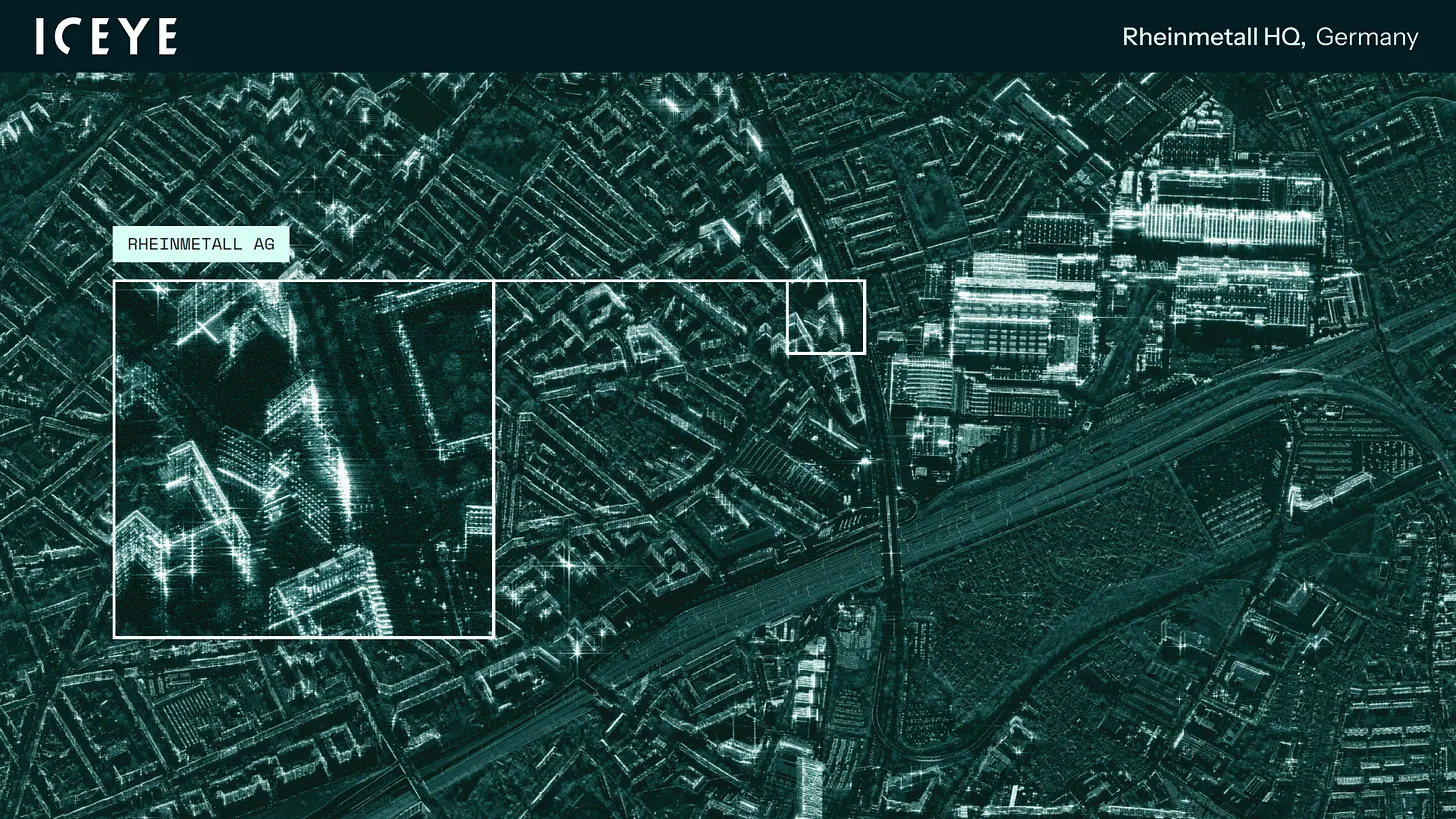
Iceye, based out of Helsinki, has been around since 2014 and in its early years it focused primarily on environmental monitoring, business a business model around fleets of smaller satellites running its own data capturing platform. Its satellite tech is based on SAR (synthetic aperture radar), which is a system that uses microwave pulses that make it more effective in dark, cloudy and other conditions that would be more challenging (or impossible) for optical camera-based systems. (Infrared is another variant on how satellites capture imagery.) The company’s intelligence, surveillance and reconnaissance software stack is called ISR Cell, and it’s set up to work with ground stations and other Earth-based systems.
As with other satellite startups in that space, the war in Ukraine pulled Iceye more squarely into defence use cases. That is because satellite is an important component of building more resilient communications systems, but it’s also essential in helping to operate the new wave of defence tech that relies on GPS and other navigational tooling to work.
In Ukraine, Iceye says it has been used for strike planning and battlefield decisions on the frontlines of its war with Russia.
But the startup also has been seeing a lot of business coming out of that shift beyond Ukraine, as countries in Europe and elsewhere look to refresh their own defence posture and add more modern tooling into the mix. Satellite communications and intelligence have become cornerstones of defence systems, complementing and powering the data used by earth-based systems.
In line with that, countries across Europe and elsewhere have started to dedicate more investment to space. Germany, for example, in September 2025 announced it would pump €35 billion into space-based systems to bolster its military intelligence and reconnaissance Iceye has been one of the companies to benefit from Germany’s push.
Iceye’s pitch is that it gives countries the ability to build federated, sovereign communications — an especially hot topic these days as nations look for more resilient systems that are not inherently linked to and reliant on infrastructure and technology providers in other countries. The recent Tech Sovereignty Package is another example of how Europe specifically wants to address that in technology.
In all, Iceye says that it has contracts with seven countries in Europe to deliver space intelligence systems, alongside major alliances like NATO, which it also counts as a customer. The most recent of its country contracts is with Poland. The country made a strategic investment in the startup last year and its armed forces are now using an Iceye system for communications. Iceye said the Polish model is being “replicated” elsewhere. It claims to have a contracted backlog of more than €1.5 billion in business.
Part of the funding will be used to accelerate the pace to meet that demand. Today, the company says it can produce 50 satellites annually, and it’s working to double that to 100 by 2028. Alongside that, it’s also working to boost its launch cadence but didn’t disclose its launch rate today. SpaceX is the company’s primary launch partner at the moment.
The company said it crossed €250 million in revenue and €100 million in Ebitda in FY2025.
Iceye’s growth underscores both the increasing focus on space as a defence and communications domain, and the company’s own development of hardware and software to meet that demand.
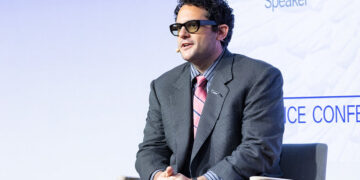
“Sovereign intelligence from space is entering a new era and the window to build it is now. Iceye has built the world’s most advanced, proven capability to meet that demand,” said Rafal Modrzewski, co-founder and CEO of Iceye, in a statement. “This funding enables us to accelerate the delivery of new capabilities to governments and customers faster than ever before.”
The investment is a mix of primary and secondary money. In addition to General Atlantic leading the €450 million primary tranche and Nokia participating, other investors in the Series F include Solidium, Tesi, Varma, Ilmarinen, Lifeline Ventures, the Qatar Investment Authority (QIA) and TCV.
Iceye did not disclose which investors are selling secondary shares and who is buying and what the exact value of the secondary amount is, noting the total exceeds €1 billion. We’ll update as and when we learn more.
Notably this is a big leap in the company’s valuation, which was a more modest €2.5 billion just six months ago when General Catalyst led a €200 million round in the startup. It has now raised close to €2 billion to-date.
“Iceye has fundamentally redefined Earth observation,” said Sascha Günther an MD at General Atlantic who led the investment for the firm. “The company pioneered the shift to next-generation, agile satellite fleets that deliver greater strategic capability with far greater cost efficiency – and today operates the world’s largest and most advanced SAR constellation on a vertically integrated platform. Rafal and the team are taking breakthrough technology from innovation to commercial and operational success at scale, and we believe global structural demand for ICEYE’s intelligence will continue to accelerate. We are proud to back remarkable builders like ICEYE as they push the boundaries of what’s possible.”
It’s interesting to see Nokia in this round. The iconic Finnish mobile giant has had a lot of ups and downs in its history, once a trailblazer in the mobile phone revolution and these days still an important infrastructure player. This satellite investment likely will see the two collaborating closely down the line. (Iceye already has a number of other industrial partners including the likes of Rheinmetall.)
“Modern defense increasingly depends on combining trusted connectivity with real-time visibility,” said Justin Hotard, president and CEO of Nokia, in a statement. “Nokia and Iceye bring complementary strengths that can help advance Europe’s defence, resilience and technological sovereignty. This combination will become increasingly important as governments and industries look to build more secure, aware and adaptable critical systems.”
Update: Completely independent of this story, I’ve just found out that Modrzewski will also be speaking at Resilience Conference in London later this year. You can read more about that here.