
One year after emerging from stealth with €100 million to develop AI for autonomous systems, command centres and other military uses, the Finnish startup NestAI has been nesting. Across the Nordics and Baltics, it’s setting up shop to build its profile, most recently opening an office in Tallinn, Estonia.
The company — backed by Finland’s iconic Nokia and Tesi, the country’s sovereign wealth fund — is riding on momentum from the huge surge of AI across the world, especially AI’s firm move into the world of defence and how sovereignty will play into that.
NestAI has plans for a wide-ranging software vision. Its flagship product is an operating system called NestOS, and it encompasses training capabilities using operational data, synthetic data and analytics; command centre technology fusing data from sources in the field to help people manage campaigns, with AI to support in decision making; and edge software run on autonomous systems, among other tools.
None of these, it appears, have yet to be implemented beyond the pilot stage. But the startup has grown rapidly in the last 12 months as it works towards more scale.
NestAI now employs 230, with the Estonian expansion set to add at least 25 more, alongside bulking up from expansions into Sweden and Latvia that were announced earlier this year. These new offices are about sourcing talent but also business development, and that too seems to be starting to bear fruit: it is already working with the defence forces in Finland and Estonia, after signing a joint Letter of Intent with both in June 2026, and NestAI said earlier this year that they are piloting NestAI’s first models.
“In a sense you could say we are putting forward a European version of both Palantir and Anduril,” NestAI founder Peter Sarlin told Resilience Media.
AI and defence tech both indeed seem all the rage right now, and financiers are here for it, with companies like Helsing, the AI-based defence tech out of Germany, now valued at $18 billion. Yet NestAI might rightly say that it was here first, with themes of sovereignty and the power of artificial intelligence occupying the work of NestAI’s co-founder going back more than a decade.
Economical beginnings
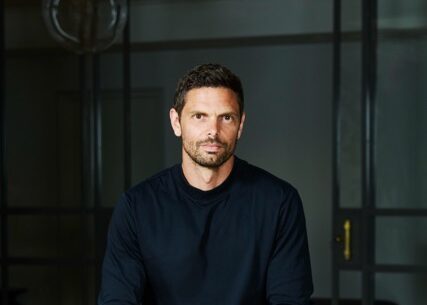
Somewhat unusual for a founder in defence tech, Peter Sarlin doesn’t have a military background, nor is he a computer scientist by initial training.
He actually started his academic life focusing on economics, which eventually took a turn towards information systems and applying machine learning to financial and social science modelling.
It was while he was a professor at the Finnish economics institute Hanken that he made his first forays into being an entrepreneur. In 2017, machine learning was starting to gain ground in enterprise and consumer services, and he saw an opportunity to expand what he had been working on beyond economics. This also set the pace for how he engaged with AI: it was about the close connection between academia and industry.
“I’ve always been at the intersection of both,” he said in an interview with Resilience Media.
While still working at the Hanken, in 2017 he began the project that turned into Silo AI. His idea was both simple and ambitious: build an AI lab that could take on AI work for any industry and by association, build a sovereign and independent AI research lab based out of Europe. Both, he believed, would become essential for the future.
But establishing Silo AI before the current AI wave that we are in right now was as out there as its name implied.
“There aren’t actually many AI companies today that have been founded in 2017, or [even] before 2020,” he said, and that came with its own technological as well as business challenges. “It was very different. The technology wasn’t mature, enterprises were not mature and the market overall wasn’t really mature.”
Europe had an especially patchy record at that time when it came to funding deep tech and moonshots. Sarlin leaned into that and probably ended up giving the startup firmer financial grounding as a result: Silo AI was bootstrapped until 2022, meaning that it grew its own business only when it made money.
“We had to find the pockets in the market where we could create value,” he recalled.
Self driving was a huge R&D focus across industry in those early years, so that is where Silo AI started. “Then we moved from one segment to another,” he said.
In 2022, when Silo AI did raise outside funding, the startup was being described by itself and others as Europe’s largest private AI lab.
Then ChatGPT launched and the world went AI-bananas.
By the time the chipmaker AMD acquired Silo AI in 2024 for $665 million, the startup employed 300 AI scientists and counted Allianz, Philips, Rolls-Royce and Unilever among its customers.
One of Silo AI’s specialities was very European, when you think about it: it was building and operating multilingual large language models to extend the opportunity beyond the US and its lingua franca. As Sarlin describes it, Silo AI had been using AMD GPUs in its work. The acquisition gave AMD the opportunity to bring that research in house, to better target how it would develop AMD products in the future.
Which brings us to NestAI and where Sarlin is today.
It started with inbound calls about AI in defence
At the start of 2026, Sarlin stepped away from Silo AI to concentrate on “building again.” But as with the overlap between his time at the Hanken and founding Silo AI, the seeds for NestAI germinated when he was still at his first startup.
In 2024, autonomous drones were already a well-established facet of the Ukraine war with Russia, and Sarlin started to get calls from players in the world of European defence.
“They were asking for my advice on how to build AI capability in defence,” he said. “[But] I looked at how both the defence forces and defence industry were approaching AI, and not much really made sense.”
That insight was rooted in his experience with Silo AI’s earliest customer engagements, around self-driving vehicles.
“Self-driving is just an extremely difficult problem because there’s no general-purpose AI that is able to cover any environment,” he said. “The world has still not seen full self-driving, even though there’s been promises of it for more than ten years.” Now with self-driving, the industry is putting all of its efforts (and money) into making the problem more digestible. “The world is solving it one city at a time, and by constantly adapting to a changing environment,” he said.
There is a paradigm here that can be applied to autonomy in defence, but in the latter, Sarlin sees the problem as even greater. Not only are you trying to build autonomous systems that work as you intend, but on the battlefield you are up against an adversary, whose primary task is to disrupt the environment so that your AI doesn’t work at all.
Impossibility is, of course, like catnip for technologists. NestAI’s approach to fixing the difficulty is, in part, something it describes as “adaptive intelligence,” which it packages into its flagship NestOS operating system, designed for battlefield environments.
The startup is also trying to address how systems can work in AI-hostile and communication-hostile environments. The partnership with Nokia brings with it 5G connectivity among other support. This underpins how the OS works and how models and implementations can be changed on a near-constant basis.
There is a lot of work that goes into training and simulations, partly to improve the models, but also to bake changeability into the fabric of the OS itself.
Or as Sarlin describes it: “to build AI that allows you to update models on a daily basis, which is heavily reliant on simulating or building simulation worlds and virtual worlds of the battlefield, creating synthetic data together with real-world data, allowing you to basically constantly update your models when the world is is changing.”
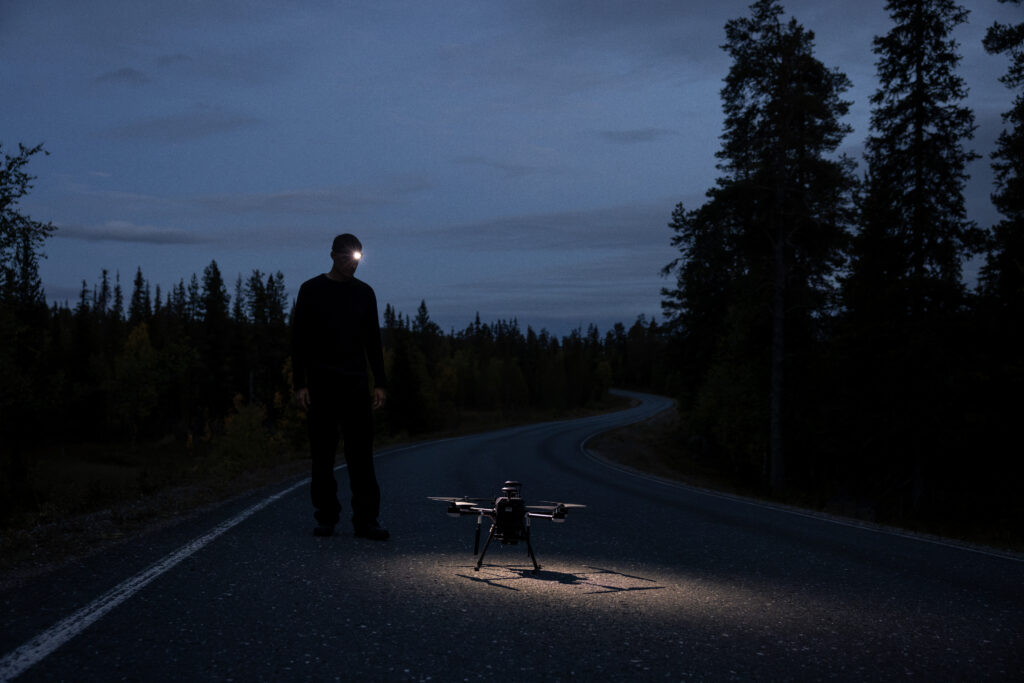 Caveat alert: It’s still a big bet to see how and if this will all work in practice – the only deployments so far are pilots, and the procurement bottleneck a persistent issue in defence tech. It’s also still unknown whether NestAI’s approach will work better than the AI-based command systems that others are building.
Those others include large, vertically integrated European defence tech companies like Helsing and Quantum Systems; smaller European startups focusing just on the OS, like ComandAI; and primes as well as many defence tech startups from the US and elsewhere outside of Europe.
PS, there is more
Sarlin is in the meantime spinning some other plates. In addition to holding a professorship at Aalto University, he has a founders office, PostScriptum, which he has described on LinkedIn as the “cradle” for his various projects.
This includes angel investing (his big portfolio includes ICEYE and Lovable), as well as funding professorships to improve Finland’s academic competitiveness.
And he’s also spinning up other ventures, such QuTwo, a quantum computing lab. This startup emerged from stealth only in February 2026 and was largely funded by PostScriptum, but it also tacked on an additional €25 million angel round to bring a number of very high-profile angels into the mix, among them Yuri Milner, Xavier Niel, Nico Rosberg, Niklas Zennström, Dieter Schwarz, Ilkka Paananen, Max Junestrand and Thomas Wolf.
Quantum computing remains in the realm of deep tech, with the world yet to see a working, scaled quantum computer. But the promise of what people will be able to do when these do come online is immense, and there is a very significant sovereignty question around who ultimately ‘controls’ that capability. This is partly why researchers and founders continue to work on the challenge and it continues to get funded, and this is where QuTwo fits into Sarlin’s startup thesis.
“It’s going to happen within ten years. Then you need to pick the right strategy and approach to ensure that you’re still relevant,” he said. “Quantum is not a science problem anymore, or even an engineering problem. We know that it works. The question is, how do we scale? We don’t know exactly how it’s going to play out, but you need to start now to build a category leader if you’re going to succeed to build one during the next paradigm.”
All this, however, remains separate from his biggest priority right now, which remains NestAI.
“With PostScriptum, we continue to do a number of activities to drive that and build competitive technology,” he said, “but ultimately, if there’s no security, then the rest doesn’t really matter.”