As we enter 2026, these are the key topics the Resilience Media editorial team will explore in our writing and at our events (though we also expect the unexpected).
We will be shining a light on the people and technology addressing these problems, raising the profile of the newcomers stepping up to protect our democracies and talking to established leaders. We will focus on the intersection of innovation, technology, investment, policy, and strategy; whilst this is mainly about defence and security, we will broaden out into resilience because warfare is no longer restricted to the battlefield.
We believe there is a risk that NATO is preparing for a war that is unlikely to happen whilst not recognising the war that is already underway. Whether the threat is Russia or another adversary, technology has opened a new front in how countries fight.
Along with interviews and profiles, news and comment, Resilience Media will build resilience through the networks we create between the military and national security community and the tech sectors across Europe and Ukraine. We will announce our program of events across Europe in the coming weeks.
Reflecting geopolitical realities, we are focussed on defending our elections, our information space, and our infrastructure as well as the role of deterrent in preventing conflict. If conflict comes, European NATO and its partners need to be able to win decisively and quickly. We need rapid innovation in defence, national security, and resilience to do that.
1. Europe’s elections will be contested battlegrounds for sabotage and disinformation
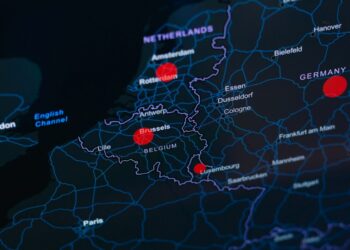
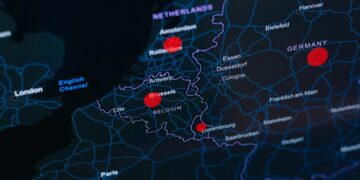
Hungary, Italy, France, Spain, Germany, Sweden and Denmark are among the many European countries preparing for local and national elections in 2026. Russia and other adversaries of open democracy will attack these elections with disinformation, cyber attacks, and sabotage. In 2024, Romania declared election results invalid due to Russian interference on social media, and this sets the tone for 2026. Whether it’s a specific election or longer-term efforts to foment national unrest, media has been weaponised by malicious actors.
Tangible assets also remain significant targets: disrupting power grids, airspace, communications networks and other infrastructure are not just enterprise concerns: they are taking aim at how people live their lives daily.
Our governments urgently need better tools and procedures to protect all of these as the greyzone continues to grow.
Some tech (and startups) we are watching: startups building cybersecurity, especially around a resilience thesis (e.g. Exein for IoT or Post-Quantum for post-quantum encryption), combatting disinformation (e.g. Refute, Reality Defender).
2. Defence startups will hone in on manufacturing, logistics and supply chains
As defence budgets soar, NATO and partner countries need to focus on scaling their defence industrial capacity. This includes logistics to get defence technologies to the Ukrainian frontline and the Eastern Flank, as well as producing advanced semiconductor materials for critical infrastructure. To that end, innovation to speed up manufacturing, streamline processes, and protect supply chains will be a large focus for the startup ecosystem.
Startups and tech we are watching: those innovating manufacturing and supply chains (e.g. Isembard, Divergent, PhysicX, iComat and Nominal), hardware makers building factory infrastructure themselves (e.g. Helsing, Stark, Anduril, Tekever) and hardware makers focusing on ground transport (e.g. ARX Robotics).
3. Europe will be forced to confront its counter-drone gap
Russian incursions into European air space will continue, and the region needs to be better prepared for it. It was shocking to see NATO countries use F35s and expensive missiles to shoot down balsa wood and polystyrene Russian drones over Poland, evidence that Europe has no real counter-UAV strategy. Our factories, infrastructure, and public buildings are not defended against drones. This needs to change, fast.
Examples of startups working in counter-drone and drone defence technology that we are watching: Vermeer, Frankenburg, Helsing, Origin Robotics and Cambridge Aerospace.
4. More investment, innovation, and disruption in the maritime sphere
2025 was a year of innovation in maritime warfare born out of necessity. In Europe, Russia shipped sanctioned oil, sent spy ships and submarines to hover over subsea cables in UK waters, and allegedly cut cables elsewhere. Further afield, Taiwan is seeing increasing activity from China.
As with Ukraine’s use of drones in the air, its adoption of maritime systems to fight in the Black Sea has focused attention on developing more nautical technology. 2026 will see more investment, innovation, and disruption in the maritime sphere.
Startups we are watching: those that are focusing primarily on maritime tech (e.g. Kraken, Saronic, Polar Mist, Lobster Robotics, and Uforce) and those moving more into maritime as they diversify (e.g. Helsing).
5. Space will shift from “hard tech” to necessity, with a focus on sovereignty
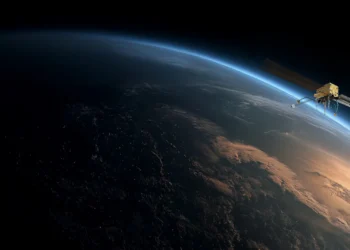
Space has long been seen as a heavy lift when it comes to startup investment – massive up-front costs, infrastructure and operational challenges, and unproven business models being some of the main reasons why. But hardware innovations, AI, and a growing number of launch seats to get to space has changed the calculus. Space is seen as critical to defence and to societal resilience and must be protected, and the race to space is on.
2025 saw big funding and valuations such as ICEYE’s €200M round that valued the company at €2.4 billion, as well as significant development partnerships like the ones between Helsing and Kongsberg, and ICEYE and Rheinmetall.
We believe there will be more investment made into space. European NATO will need to improve its communication satellite constellation and GPS security, space innovation will affect other technology areas, and there will be a focus on sovereignty.
Startups and technology we are watching: those building systems for collecting and analysing Earth observation data (e.g. ICEYE); those working on improving access to launch and operate in space (e.g. Isar Aerospace); those developing hardware and software to run operations in space (e.g. Loft Orbital, Impulse Space); those developing defence systems that incorporate space into how the platforms operate (e.g. Helsing).
6. Weapons and kinetics will move into the venture mainstream
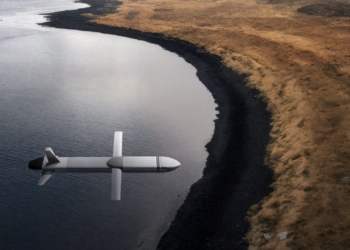
Defence-first investment and innovation really took off in 2025, with more investors entering the sector and a stronger sense of urgency. Kinetics and weapons – largely ruled out in the past as ‘tech’ investments – now are seen as essential deterrents, most immediately in Europe as a response to Russian threats along the Eastern Flank. Many incumbent VCs have not (yet?) shifted investment policies to cover weapons, there are new tech funds emerging that focus on this explicitly including Archangel, Darkstar, D3, and Expeditions, among others. We believe there will be more of these. Moreover, traditional VCs will follow the likes of A16Z, General Catalyst, and Lux Capital and move into the space in 2026 as geopolitics continue to destabilise.
In 2026 we will be watching the investors and companies bringing tech sector approaches to the core of defence, building missiles, shell factories, and integrating AI into defence technologies. This is the heart of a new arms race in which adversaries with no regard for the ethics of defence are racing ahead. If we cannot match the pace of innovation, we are exposed.
Startups we are watching: Tiberius, Fire Point, U-force, Firehawk, and Orqa, among others.
In conclusion…
We will be covering how quickly democracies react to conflict that is already underway, and how new technologies are leveraged as we prepare for the unknown. Europe’s 2026 elections will be attacked in the greyzone before the polls. Innovative defence technology in space, maritime, kinetics and weapons will move into the venture investing mainstream. Our focus is on the builders, policymakers, investors, and military leaders responding to this reality in real time. The coming year demands urgency. We intend to chronicle those rising to meet that moment.