
2025 was a high watermark for investment into startups working in defence and resilience, with some $48 billion getting pumped into the segment globally. An even greater amount — more than $200 billion by one estimate — went into AI startups. This week comes news of an acquisition that could be a signal of how some of that value might start to consolidate.
Accenture, the systems integrator and management consultancy, announced on Tuesday that it would acquire Faculty AI, a London-based startup that builds artificial intelligence-powered tools for a range of businesses and government organisations.
Notably, both do significant work for the defence industry, including as suppliers to the UK’s Ministry of Defence; and the acquisition throws light on some of the relationships that are fundamental to how ministries and defence more widely are evolving; and also the changing priorities for the suppliers themselves.
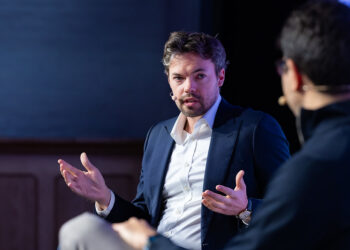
On the side of Faculty, for a startup in the very hot, highly funded field of AI with a prominent co-founder and CEO in Marc Warner, sought out for his AI expertise and insights into future technologies like quantum computing — Warner also sat on the UK government’s digital advisory and AI councils and was an outspoken voice on the fuzzy concept of “AI safety” — it didn’t really flash the cash as some others have.
Faculty’s growth challenge
Founded in 2014, Faculty raised a very modest $50 million over more than 10 years — backers included Apax Digital Growth, Mercuri (formerly GMG Ventures, part of the Guardian Media Group), and PhoenixCourt (formerly Local Globe) — with a paper valuation (from its last funding in 2020/2021) at a valuation of just under $300 million per PitchBook data. Faculty’s last financials as recorded at Companies House in 2025 indicated that the company grew turnover around 28% in the previous year with just over £53 million in revenues and unprofitable on a net income basis. (Financial terms of the acquisition have not been disclosed.)
Part of Faculty’s growth challenge might have been due to the perennial problems of scaling startups in the UK, but part might also be because of what Faculty focuses on: its business model was built not primarily on creating its own foundational models (valuable IP, but also big operational costs). Rather, its focus has been on using existing AI models and tools to build AI-based services for customers (the service is branded “Faculty Frontier”), and a fellowship program that trains STEM graduates to then go work elsewhere (Faculty making a fee through those placements, and establishing a network of business relationships in the process).
A strong strain of its work has been for the public sector and adjacent groups. This included analytics tools for the Vote Leave campaign to sway the Brexit masses, but also work for the NHS. And, more recently, for the defence vertical.
Faculty had its moment of military epiphany, its CEO Marc Warner wrote a year ago, when he went to a closed defence conference in the U.S. years back and heard government officials and officers worry aloud about how the West’s technological edge — a key part of its resilience and defence against adversaries — was slowly being eroded.
The war for business and the business of war
At the time, a lot of the technology world was viewing the world of defence with “deep skepticism,” he said, but that presented a serious issue, in his view. “If every company turned their backs, the defence industry wouldn’t have the support to provide the best protection,” he wrote. The company started to think about how it could use its tools to meet that need, and that, combined with a rapidly changed geopolitical situation made more stark by the war in Ukraine, was the start of a significant business for Faculty AI.
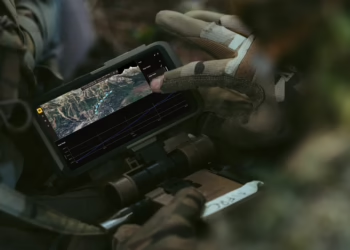
Propelled by government initiatives like the Defence AI Strategy from 2022, the company grew from information insights to provide AI tooling for a surprisingly wide range of defence operations and active use cases. They include threat reaction, Electronic Warfare, automation, decision-making alongside back office functions. To further expand, Faculty partnered with other defence-forward AI startups like Hadean, primes like Leonardo and also — important for targeting large enterprise clients like the MoD — system integration giants like Accenture.
Accenture, for its part, had been working with Faculty since 2023 as a chief integration partner for Faculty Frontier, and it too is a key partner in work for the defence industry, ranging from platforms for information warfare through to battle management systems and back office services. But like many companies in its area, its larger role as trusted tech partner is under threat.
Budgets are tight in public services, and in Accenture’s primary market of the U.S. there is major belt tightening underway, such as this $5.1 billion contract that US secretary of defence Pete Hegseth cancelled last year with Accenture and other system integrators.
Alongside that, there are more would-be competitors jostling for the same business as Accenture. Accenture may be a publicly-traded company with a current market cap of more than $165 billion on the New York Stock Exchange, but this week there are reports pegging OpenAI at a private valuation of $830 billion, with many more following behind with valuations in the hundreds of billions.
To justify those valuations, AI companies are building out services businesses to implement themselves the technology they are building. And in defence tech specifically, some like “Neo-prime” Anduril (last paper valuation: over $30 billion), straightforwardly describe themselves as systems integrators. The AI-native systems integrators — rather than those like Accenture that have grandfathered into the space — have ready customers: end users all want and need to embrace the future and use more AI to gain an advantage over adversaries using AI, too.
What Accenture gains
In that regard, acquiring Faculty is giving Accenture a smaller but important route into building more business relationships around AI services — in defence and elsewhere — along with a large team of people able to implement that work and embed Accenture deeper into the ecosystem of tech companies building more AI solutions. It also gives it a new internal leader to take the wider company, not just its defence services business, to the next level: Warner is stepping up to become Accenture’s global CTO.
“With Faculty, we will further accelerate our strategy to bring trusted, advanced AI to the heart of our clients’ businesses,” said Julie Sweet, chair and CEO, Accenture, in a statement.
Will that be enough to help Accenture in the coming battles and longer war for business, and the business of war? It will be worth watching, and also to see whether it leads to more M&A across the services sector.