Thursday 9 July, 2026
[email protected]
Resilience Media
  • News
    • Events
    • Interview
    • Startups
    • Venture
    • Weekly Digest
  • Resilience Conference
    • Resilience Conference Warsaw 2026
    • Resilience Conference Copenhagen 2026
    • Resilience Conference London 2026
  • About
  • Guest Posts
    • Author a Post
  • Subscribe
No Result
View All Result
  • News
    • Events
    • Interview
    • Startups
    • Venture
    • Weekly Digest
  • Resilience Conference
    • Resilience Conference Warsaw 2026
    • Resilience Conference Copenhagen 2026
    • Resilience Conference London 2026
  • About
  • Guest Posts
    • Author a Post
  • Subscribe
No Result
View All Result
Resilience Media
No Result
View All Result

Project Q unveils open source defence integration platform HYDRIS

The company says its open source orchestration platform will reduce integration effort, speed up capability deployment and strengthen Europe's defence technology ecosystem

Carly PagebyCarly Page
July 9, 2026
in News
Share on Linkedin

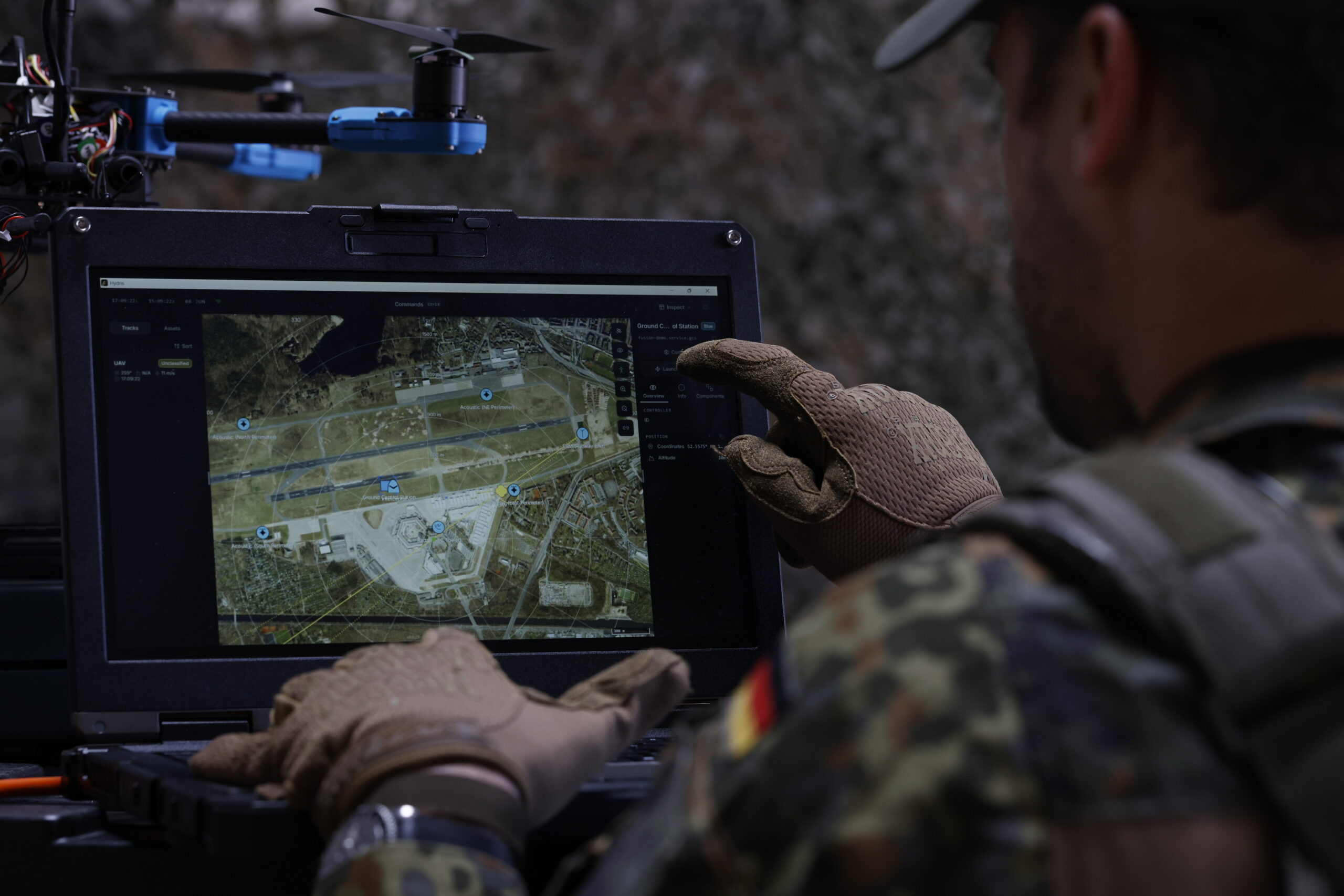
European defence technology company Project Q has launched HYDRIS, an open source integration and orchestration platform designed to connect sensors, drones, command-and-control systems, and other military capabilities from different vendors into a single operational environment.

You Might Also Like

Kraken becomes the UK’s newest defence tech unicorn with a fresh $175M raise

Danish-Ukrainian defence tech axis deepens as MITS Capital invests in Dropla Tech

Ukraine 2025 defence tech investment topped $57.2M, but the ‘funded market’ is $6.8B says PitchBook

The Munich- and Berlin-based company says the software is intended to tackle one of the biggest challenges facing modern armed forces: integrating new technologies into existing military systems quickly, securely, and without creating long-term dependence on a single supplier.

The launch builds on Project Q’s unveiling of its Unattended Ground Sensor (UGS) Mission Kit at Eurosatory last month. That passive surveillance system relies on HYDRIS to integrate seismic-acoustic sensors with existing command-and-control networks, giving the company an early example of how it expects the software to underpin future defence capabilities. 

HYDRIS is designed to work with what’s already there. Using open interfaces and plugins built around a Modular Open Systems Architecture (MOSA), Project Q says developers can connect new capabilities without rewriting integrations for every customer or mission system.

Project Q said the software combines data from connected systems into a common operational picture at the tactical edge and provides AI-assisted support to help operators prioritise information. It can also control manned and unmanned platforms through existing command-and-control systems or via the HYDRIS interface, although the company stressed that automation remains under human supervision.

“The future of defence lies not in replacing existing systems, but in connecting them,” said Leonard Wessendorff, CEO and co-founder of Project Q.

“Ukraine shows what matters today: continuous adaptability during ongoing operations – enabled by an open defence ecosystem. That is exactly what we built HYDRIS for.”

The company is positioning HYDRIS as part of a broader push towards European technological sovereignty. By making the integration layer open source while keeping sensitive operational data and export-controlled capabilities protected, Project Q says users retain control over their software, systems, and data without sacrificing security.

The platform is designed to run in containers on commercial off-the-shelf hardware within a customer’s own infrastructure and supports established NATO and industry standards. Project Q said interoperability has already been demonstrated during multinational exercises.

The company also argues the approach could lower barriers for smaller defence technology firms by allowing start-ups and SMEs to integrate their software through standardised interfaces rather than developing bespoke connections for every customer. If adopted more widely, that could make it easier for armed forces to introduce new capabilities without lengthy integration programmes or proprietary software lock-in.


Tags: open sourceproject q
Previous Post

Kraken becomes the UK’s newest defence tech unicorn with a fresh $175M raise

Next Post

UK-based Kraken and US-based Capewell successfully test rapid, repeated autonomous boat drops from a cargo aircraft

Carly Page

Carly Page

Carly Page is a freelance journalist and copywriter with 10+ years of experience covering the technology industry, and was formerly a senior cybersecurity reporter at TechCrunch. Bylines include Forbes, IT Pro, LeadDev, The Register, TechCrunch, TechFinitive, TechRadar, TES, The Telegraph, TIME, Uswitch, WIRED, & more.

Related News

Anduril taps UK’s Kraken to fast-track small USVs into US Navy hybrid fleet push

Kraken becomes the UK’s newest defence tech unicorn with a fresh $175M raise

byIngrid Lunden
July 9, 2026

Kraken has been one of the more visible UK defence tech startups to make waves around the world with its...

Danish-Ukrainian defence tech axis deepens as MITS Capital invests in Dropla Tech

Danish-Ukrainian defence tech axis deepens as MITS Capital invests in Dropla Tech

byLuke Smith
July 9, 2026

MITS Capital, the Kyiv-based defence tech VC, has made an investment in Dropla Tech. The Danish-Ukrainian startup develops edge-AI explosive...

blue and yellow striped country flag

Ukraine 2025 defence tech investment topped $57.2M, but the ‘funded market’ is $6.8B says PitchBook

byLuke Smith
July 8, 2026

Ukraine's defense tech sector has proven its products on the battlefield. But the question for investors is whether any of...

IQM becomes first European quantum computing company to list on NASDAQ

IQM becomes first European quantum computing company to list on NASDAQ

byJohn Biggs
July 7, 2026

Finland's IQM Quantum Computers, a manufacturer of quantum computers, went public on the NASDAQ on July 2 under the stock...

Proxima Fusion raises €411m to accelerate Europe’s fusion power ambitions

Proxima Fusion raises €411m to accelerate Europe’s fusion power ambitions

byCarly Page
July 7, 2026

Europe's bid to commercialise fusion energy received a major boost on Tuesday after German startup Proxima Fusion announced a €411...

Trinity Robotics raises more than €500,000 to expand production of autonomous combat vehicles

Trinity Robotics raises more than €500,000 to expand production of autonomous combat vehicles

byJohn Biggs
July 7, 2026

In Ukrainian, Konyk means “horse," and that's exactly what Kyiv-based Trinity Robotics has built: an autonomous pack vehicle to support...

Expeditions closes its latest fund at €197M, smashing through its original target

Expeditions closes its latest fund at €197M, smashing through its original target

byIngrid Lunden
July 7, 2026

The war in Ukraine has put a spotlight on innovation in defence, not just how it can be used to...

Nordic Air Defence demonstrates a super-fast, super-light drone designed to destroy other drones

Nordic Air Defence demonstrates a super-fast, super-light drone designed to destroy other drones

byJohn Biggs
July 6, 2026

Swedish aerospace startup Nordic Air Defence has publicly demonstrated its K100XR counter-drone interceptor for the first time, showing the system...

Load More
Next Post
UK-based Kraken and US-based Capewell successfully test rapid, repeated autonomous boat drops from a cargo aircraft

UK-based Kraken and US-based Capewell successfully test rapid, repeated autonomous boat drops from a cargo aircraft

Most viewed

InVeris announces fats Drone, an integrated, multi-party drone flight simulator

Uforce raises $50M at a $1B+ valuation to build defence tech for Ukraine

Auterion, the drone software startup, eyes raising $200M at a $1.2B+ valuation

Palantir and Ukraine’s Brave1 have built a new AI “Dataroom”

Twentyfour Industries emerges from stealth with $11.8M for mass-produced drones

Senai exits stealth to help governments harness online video intelligence

Resilience Media is an independent publication covering the future of defence, security, and resilience. Our reporting focuses on emerging technologies, strategic threats, and the growing role of startups and investors in the defence of democracy.

  • About
  • News
  • Resilence Conference
    • Resilience Conference Copenhagen 2026
    • Resilience Conference Warsaw 2026
    • Resilience Conference 2026
  • Guest Posts
  • Subscribe
  • Privacy Policy
  • Terms & Conditions
  • Mission Statement & Code of Practice
  • Press

© 2026 Resilience Media

No Result
View All Result
  • Home
  • About
  • Subscribe
  • Events
  • Guest Posts
  • Interview
  • News
  • Resilience Conference London 2026
  • Resilience Conference Copenhagen 2026
  • Resilience Conference Warsaw 2026

© 2026 Resilience Media

This website uses cookies. By continuing to use this website you are giving consent to cookies being used. Visit our Privacy and Cookie Policy.