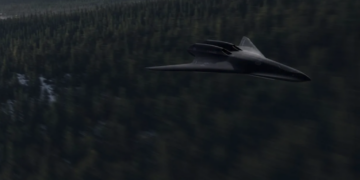
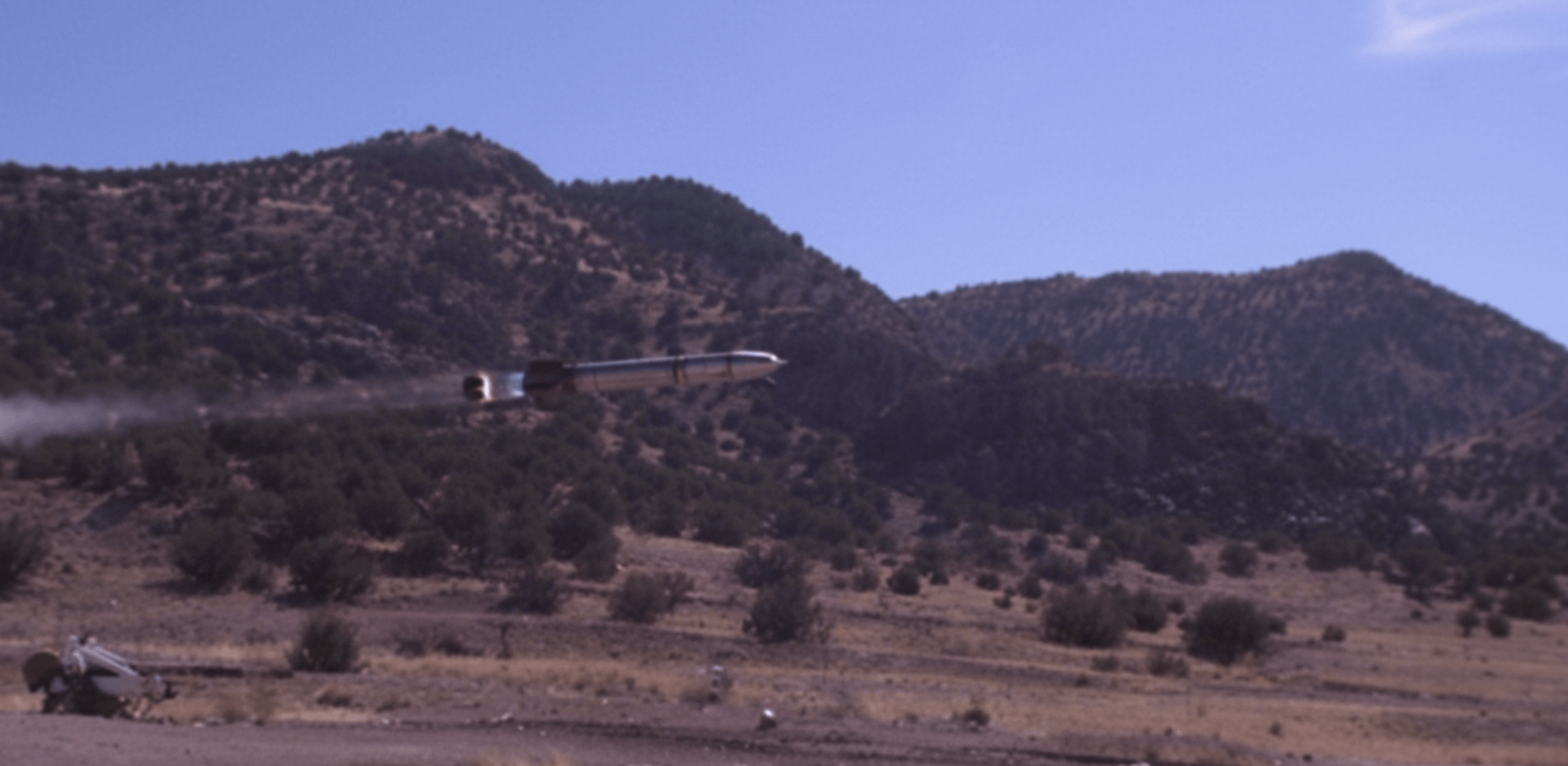
A startup building a munitions business on what its CEO calls “the Apple playbook” is the latest defence tech to reach a unicorn valuation.
Tiberius Aerospace, which uses AI to design munitions — launchers, missiles, and ramjet-powered artillery — and then works with vetted localised third parties to manufacture its products, has raised $85 million in Series A funding that values the company at over $1 billion post-money.
Lakestar, the high-profile European VC that raised a dedicated $300 million fund to back defence startups earlier this year — is co-leading the round with Rochefort Asset Management, a US firm that works in a close relationship with the US defence department’s Office of Strategic Capital. Others in the round include Dream Ventures, AeroX Ventures, Blacklake, Moonshots Capital, and UA1.
Chad Steelberg, the CEO and co-founder, explained in an interview that the round is relatively small compared to what other defence techs are raising because Tiberius doesn’t need as much capital because of its “defence-as-a-service” model. All the same, Rochefort is also providing Tiberius with a debt facility of an undisclosed amount.
Tiberius has emerged at a time of change in the world of defence.
The war in Ukraine has alerted the world to some sobering facts. First, defence has taken on a new, technological face. Unmanned weapons guided by AI, “exquisite” expensive missiles getting overtaken by cheaper drones, and iteration cycles that can be counted in days (and even hours) are now the norm.
Second, structure that many assumed was immutable is not: nations and allies need to consider sovereignty and their own ability to produce what they need, lest a channel breaks down, or an erstwhile partner has new priorities that might not include helping long-held allies.
Tiberius plays into both of these shifts: its pitch is that it is a modern munitions company, but it’s not aiming to own the whole supply chain making those munitions.
“We’re taking the Apple playbook,” Steelberg said. “We’re hiring the very best engineers. We design the systems, we test them, we integrate them. And then rather than going to mass manufacturing, which is a very different skill set.”
Tiberius — which counts two headquarters, in the US and Switzerland — believes that building a network of vetted manufacturers that can focus on building means the startup can focus more on improving design, but also it believes that this helps its customers build out their own defence and manufacturing sovereignty in the process.
“We’re arming our allies around the world… with the ability to make those weapons in-house so that they can scale their own industrial capabilities,” said Steelberg. “While we build exquisite, we’re also building infrastructure to enable the entire industry to move at a faster pace.”
It’s something that investors believe will also help Tiberius secure more deals down the line, given geopolitical postures at the moment.
“Europeans are not enamoured with the current US administration,” said Kyle Bass, the co-founder of Rochefort, in an interview. “They want to create their local champions. Tiberius allows local jobs to be created and they earn a royalty on the manufacturing. I love the model.”
Tiberius feels like it can refer to the Apple analogy with some credibility. Steelberg and his co-founder Andy Baynes are veterans of Silicon Valley. Steelberg sold one of his previous startups, dMarc Broadcasting, to Google and also founded the AI company Veritone. Baynes, Tiberius’s CSO, was a hardware engineer at Apple under Steve Jobs and then worked at the Apple-alum-filled Nest, which also got acquired by Google.
It was a strange turn of events that led them into defence tech. Baynes was in Ukraine doing an investigation into the country’s software and hardware ecosystems when Russia launched its full-scale invasion. He started to see first-hand how Ukraine was bringing technology to bear in its fight, but also what gaps continued to exist. At the same time, Steelberg was in France (where he had moved) also doing his part in the war effort, helping triage refugees fleeing the country.
It took a call from Baynes to Steelberg to seal the beginnings of a plan to figure out what else they could do to help. Thus Tiberius was born.
Fast forward four years, and Tiberius’s funding is coming on the heels of some business wins for the company.
The UK Ministry of Defence is described as an official customer for Sceptre, the company’s ramjet munition, which has been trialled and developed in partnership with the MoD. In October, Tiberius appeared to take that MoD relationship to the next level: it announced a $500 million manufacturing and licensing contract in the country with an undisclosed partner. In the US, the Defense Innovation Unit has also been involved in verifying and testing Tiberius products. In line with that, the startup has also inked a Cooperative Research and Development Agreement with the US Army, although it’s yet to announce and manufacturing deals to underpin any scaled procurement.
The longer cycle for sales is not an issue for investors that are used to how defence ministries do business and understand what Tiberius is bringing to the table.
“We know field artillery very well,” said Bass. He said that when he heard that Tiberius’s first weapons system Sceptre was fired out of a Howitzer 777 and firing at a significantly longer range than standard artillery — 160km versus the standard 24km — he was intrigued.
“I just loved hearing how two ex-engineers who ingested all the data had turned into weapons guys,” he exclaimed. “They used AI to create a weapon. This will redefine the battlefield.”