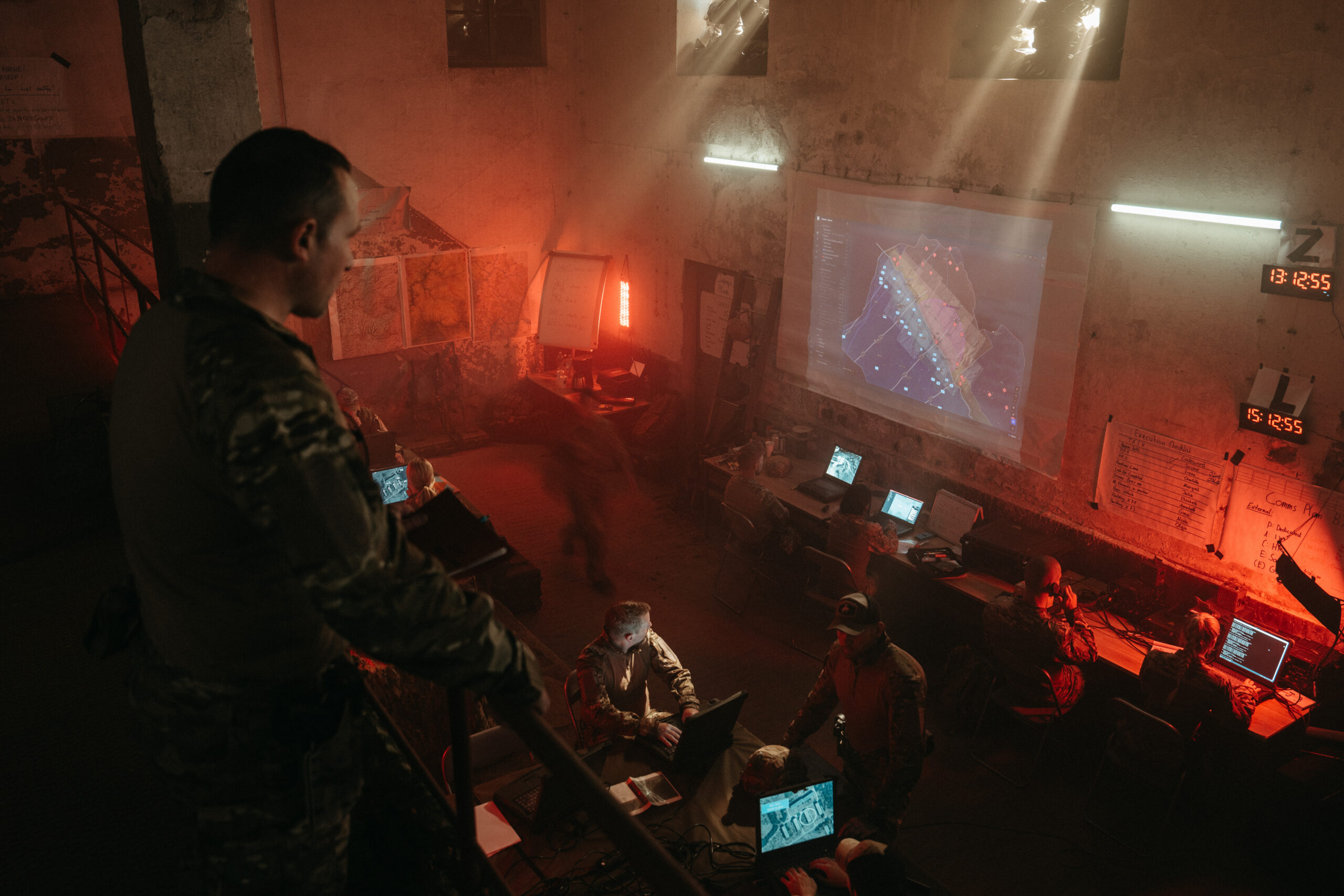
Palantir has Maven, Anduril has Lattice, and now Helsing has… Clarity. Today the $18 billion German defence tech giant best known for its drones and other unmanned systems unveiled a big new software play. Clarity, as the product is called, is an intelligence platform that Helsing says will use military-customised AI agents — the autonomous AI bots that are built to execute complex commands and do some decision making on their own — to help armed forces customers process data and execute actions using systems in the field. Clarity, Helsing said, will help end users “identify threats and counter them faster and more reliably.”
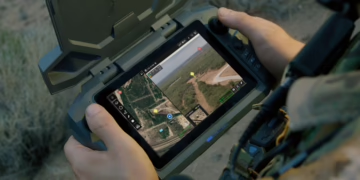
Helsing is pitching Clarity as a next-generation service: “AI-native by design” but built on the “modular open systems approach” and able to integrate whatever else the end user has already adopted and uses. Data sources that it ingests include satellites, sensors and drones, the company said.
Meanwhile, the actions Clarity can be used to direct include strikes using long-range missiles and multi-domain operations.
Helsing’s launch is coming at a time when a lot of defence tech companies are talking about the concept of “cognitive overload”.
Essentially, the plethora of new technology that is being used in the world of defence is also creating a problem: the humans who are using it all are unable to realistically manage and leverage the influx of data that is coming in from disparate systems. Clarity aims to give them… yes… more clarity to make decisions.
Yet it is also coming at a time when we are seeing a lot of alarming press around the whole concept of “AI agents.” Companies like OpenAI and Anthropic have both detailed incidents where AI agents have “jumped” out of their pre-set command structures and hacked into networks and created other kind of mayhem. It will be interesting to see how that cloud over AI agents impacts a new launch in the defence realm.
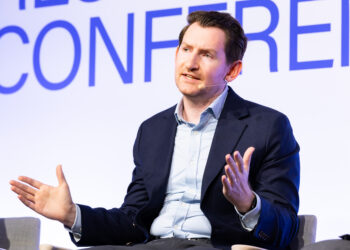
“With Clarity, we have built a sovereign AI-native agentic intelligence platform that allows armed forces to trust the speed that AI agents bring to intelligence,” Rob Fink, Chief Technology Officer at Helsing, said in a statement. “Clarity combines the power of state-of-the-art AI capabilities – from multi-modal sensor data understanding to advanced reasoning and planning – with the systematic benefits of coherent, modern software systems: strong data governance and access controls, traceability and provenance, and compliant handling of classified information.”
The launch is significant for a few other reasons:
Sovereign technology
One of the regular mantras that you will hear in Europe is that countries want to, and should, foster the growth of ‘champions’ building foundational technology locally to reduce reliance on companies from other countries but when they can’t, work with what does. That was some of the logic behind how NATO selected Palantir’s MAVEN. NATO is not the only one: the US company has seen nearly $1.5 billion in MAVEN contracts from European governments, attracting a lot of controversy in the process. Now, Helsing is wading into the ring. Its hope is that now that European users have seen the value of using tools like this, now they will opt for Clarity as a sovereign alternative.
“All armed forces need an intelligence capability that keeps pace with the fight. Autonomous systems play an increasingly important role. It is therefore important to connect what is seen to what is struck,” said Dr. Gundbert Scherf, co-CEO and co-Founder of Helsing, in a statement. “A capability this critical must be sovereign. With Clarity, European armed forces get software that is built in Europe, runs on their own infrastructure and stays under their control.”
A new concept of ‘Prime’?
Despite all the developments in defence tech and in defence tech businesses, outsized, older, incumbent contractors today still account for the lion’s share of defence spend from governments and militaries. With its $18 billion valuation, Helsing is actually bigger — at least on paper — than some of the existing so-called primes, with Babcock valued at around $5 billion; its partner Hensoldt valued at $9 billion; and CSG at around $13.5 billion. It’s just another funding round away from passing Dassault at $23 billion.
Of course, Helsing’s valuation is on paper, much of it yet to be proven out. And arguably, we may have passed the point in history where that kind of industrial powerhouse can or needs to be built. So, instead of trying to replicate the business model behind many of these incumbent primes, Helsing appears to be taking a very tech-forward approach to how to vertically integrate. That is where Clarity comes into play: it is the company’s platform play for running the whole show.
Data continues to be the ‘new oil’
A lot of the power of any software intelligence platform right now lies in how much data it processes. That goes not just for how many systems it is connected to and running, but also how much data has been fed into its system to build the AI that it now is using. So apart from the very big ask of building a system that is actually usable and effective, Helsing’s other major challenge will be the same as the one every other company will have in this area: making sure it has access to giant amounts of training data. Countries like Ukraine have become very aware of the value of that data, so expect to see more deals being made for accessing it.
Software still eats the world
Helsing has made a name for being an early mover among European tech companies to embrace the opportunity and mission of building a new generation of military technology, which has come in the form of autonomous systems for multiple domains covering air, land, and sea.
But hardware is hard! Not only is it a very capital-intensive business with huge overheads, but recent events in Ukraine show just how fast the iteration cycles work in defence hardware, compressed by urgency from years to months, weeks and even sometimes days, with very thin margins underpinning every successive generation of devices.
And that’s before you get to the P word. Procurement, by everyone’s account, is a nightmare right now. Budgets are very tight, and ministries — even as they embrace innovation and fostering startups in name — are often antsy about taking big bets on new companies. (Even Helsing’s huge, multi-billion-euro German Bundeswehr deal is a framework agreement: it will need many milestones to be met if it hopes to get the full whack of income from it.) All this translates to slower-than-comfortable business cycles, with little promise of reward at the end of it, on a very expensive cost base.
Enter software as a service! The opportunities for Helsing here to build once and deploy in many places as a service — even if it is hosted by the customers themselves — becomes a very attractive business line to offset the challenges of building out the other essential hardware business.