Consolidation in defence tech is happening in a big way, and today a group of investors put some significant money into a new player to take a lead on it.
Onodrim Industries, an Amsterdam startup that describes itself as a “European defence and industrial scale-up platform,” said it has raised $300 million — not to develop its own products per se but “to acquire established businesses across aerospace and defence, and industrial manufacturing,” similar to other aggregator plays such as Uforce and the new Army of Robots venture from the former defence minister of Ukraine, Mykhailo Fedorov.
Dual-use and single-purpose defence startups are both in Onodrim’s crosshairs, the company said.
The round really underscores how heated the defence tech industry is at the moment. Onodrim does not have any products or customers, but it has now secured the largest Series A to date in defence tech. The investment values Onodrim at $1.3 billion, the company said.
Lux Capital — one of the bigger investors in defence startups — is leading this investment, and others in the round include previous backers General Catalyst, Lakestar, Altimeter, Strike Capital, 137 Ventures, 8090 and Expeditions. This is coming on the back of a significant Seed round in February 2026: €40 million ($45 million) led by Founders Fund, Lakestar, and General Catalyst, with participation also from Iron Wolf Capital, Air Street Capital, and several European and US angel investors.
Given how many venture-backed defence startups are inevitably going to be making some hard choices about whether or sell up or try to scale and raise more money, that gives Onodrim an open door to a lot of potential deal flow.
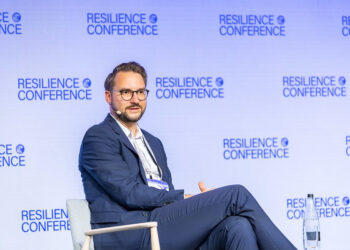
“Europe has no shortage of exceptional companies. The challenge has been access to the resources needed to help them grow at the scale and speed the moment demands,” said Aistis Šimaitis, co-founder and CEO of Onodrim, in a statement. “We are bringing permanent capital, technology and world-class operators to Europe’s best companies, giving them the resources to expand, compete and strengthen the continent’s defence industrial base.”
Onodrim is cut from a similar cloth a number of other defence techs backed by Founders Fund and some of these other investors.
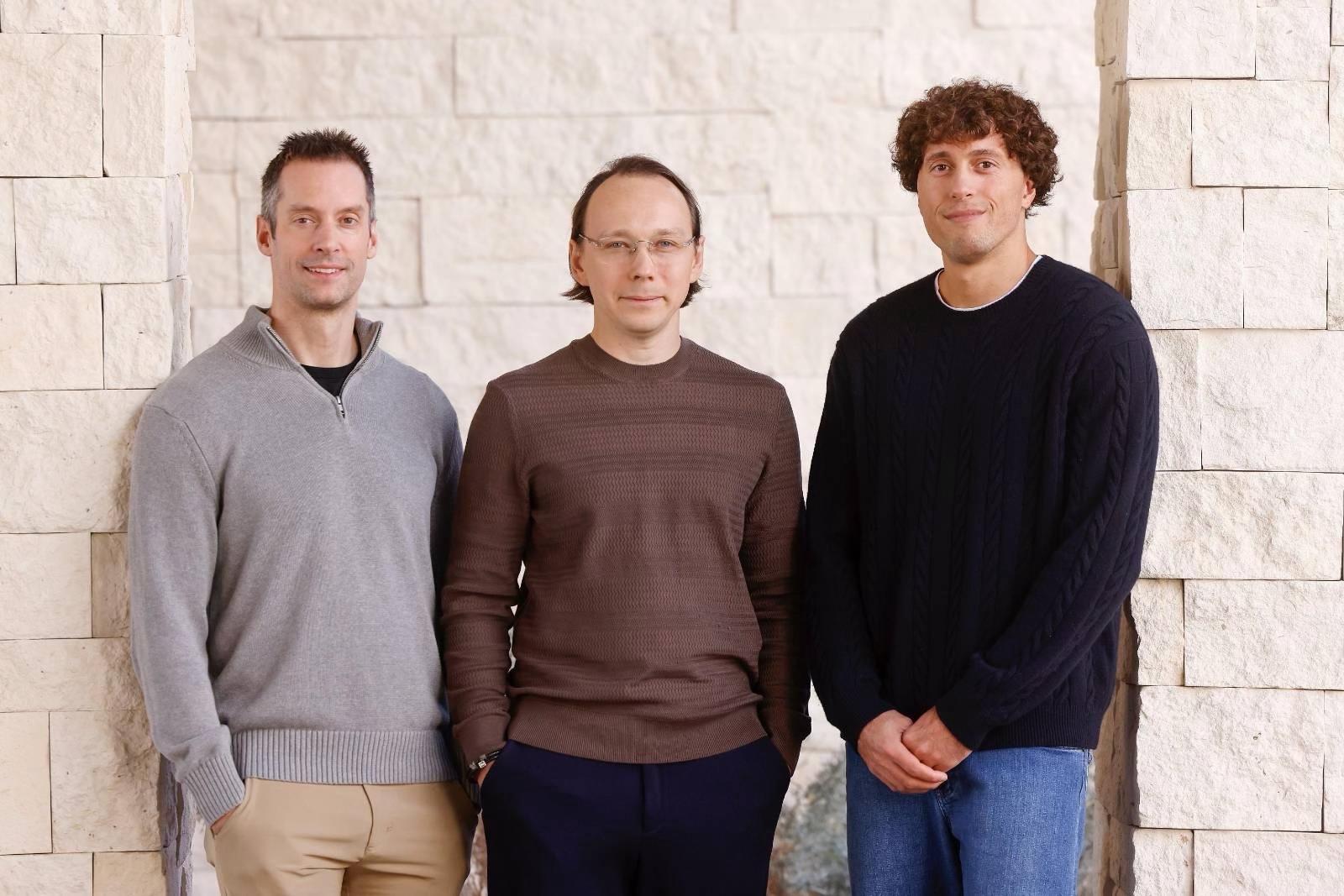
Šimaitis is former advisor to the Lithuanian Government and ex-Palantir who studied computer science at Leeds and then via a DPhil at Oxford. CTO Alexander Blessing went to Stanford and Cambridge and is also ex-Palantir, working there as a ‘forward deployed engineer.’ Christian Garrett, a partner at 137 Ventures (one of Onodrim’s key investors), is also credited as a co-founder.
Like Palantir and Anduril — two companies that Onodrim said it intends to work with as a European partner — the startup’s name is also a Lord of the Rings reference.
But by and large, Onodrim has, so far, been very under the radar
We cannot find any evidence of what products it has released in the market, nor if it has any active customers. The company was only founded in 2025, yet by early 2026 not only had it started raising big money from some significant backers, but it was already getting name-checked (by its investors at least) as a serious contender in building a new supply chain for the defence industrial base.
The company has not disclosed any acquisitions to date, either. It said today that it expects to name the first of these in the coming months.
Onodrim’s premise appears to be based on that of a classic roll-up model from tech. Applied in software by companies like Constellation and in e-commerce by the likes of the Hut Group and Thrasio, rollups raise giant sums of money to bring together and consolidate smaller players in similar fields to hold on to them for the long term to aim for better economies of scale, potentially with some tech around that premise to operate it all as one.
Here, that is being applied to the world of defence tech. Onodrim’s business model is to take controlling-stake interests (acquisitions or majority shares) in other companies, then apply “cutting-edge technology, operational and business development expertise to accelerate their growth.”
That could mean providing industrial infrastructure to build, say, the components for drones plus the drones themselves, or an AI stack for an autonomous system in development, or getting involved in other operational ways.
Startups under the Onodrim umbrella, as noted above, also will get the chance to work with larger neo-primes like Anduril and Palantir. That could serve a double benefit: these larger American companies are looking for local tie-ups for their own procurement bottlenecks. Neo-primes may be reaching the size (on paper at least) of incumbent contractors, but if they are not European, they may face an extra hurdle in a region intent on building more home-grown, resilient defence solutions.
Onodrim’s investors echo that sentiment, betting that Onodrim could have the ‘secret sauce’ for this fragmented picture to come together. “Every country needs to be in control of its own destiny, and that starts with what it can build,” said Jeannette zu Fürstenberg, president and MD at General Catalyst, in a statement. “Europe’s established manufacturers already have the expertise, customers, and trust. What they need is technology that helps them evolve and take on larger programmes.
But can Onodrim actually build something that can do what it claims it will do? Unlike Uforce, another aggregator effort that has been doing a lot of business, and itself is valued above $1 billion and is about to announce more funding — this is all still theoretical: we know nothing of Onodrim’s current acquisitions, technology or products, or customers.
Whether it can or not, Onodrim does have a point. Startups that have promising technology are already discovering a double nightmare: not only do they have to raise a lot of funding to build and grow supply chains and more, but procurement has been a near-shut-out when it comes to buying from anything other than the largest primes and neo-primes.
You know it’s dire for smaller startups when even the neo-primes are still trying to figure out the best way to crack major contractors’ procurement lock-up. In the UK, as one example, startups accounted for just 4% of all of the MoD’s defence expenditure domestically in 2024/2025.
Onodrim’s investors also lean into a bigger challenge for the region that others in defence have highlighted, which is that overall, industrially speaking, Europe needs to bulk up significantly beyond its current size to present a more credible deterrent, or to produce what it needs should actual conflicts demand that.
“Europe needs a stronger industrial foundation to meet the security challenges ahead,” said Brandon Reeves, Partner at Lux Capital, in a statement. “We see an enormous opportunity to bring a new model of ownership and investment to the continent’s most important businesses. Aistis and Alex have assembled an exceptional team with the technical depth and operational experience to realize that opportunity, combining permanent capital with the ambition to build businesses for the long term.”
Meanwhile, Onodrim is setting up operations in a number of locations to tap into local companies, and the locations should give us an idea of which companies it might start to scoop up. There are now Onodrim operations in Munich, Turin, Amsterdam, London and Vilnius.