The huge funding rounds for defence roll-ups continue to roll in. Today, Uforce — a company active in building tech for multi-domain operations — finally announced that it has raised a Series A of $700 million, at a valuation of $6 billion. It will be using the funding to continue scaling its business.
The round has been in the works since this spring and over time it’s increasingly grown. Uforce is tying the huge size of this round (and by association to other large funding rounds we are seeing in defence tech) to the need to get defence to adapt to modern conditions, where it needs to iterate at the speed of technology iterations.
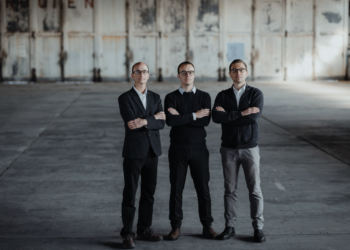
“The war in Ukraine has shown that in an increasingly volatile world, effective defence requires systems that can keep improving as threats change,” said the CEO and co-founder Oleg Rogynskyy in a statement. “Governments and the technology ecosystem need to come together to develop cost-effective, interoperable, and autonomous platforms that are ready to fight now, and can evolve to meet future needs. They are doing that by investing in Uforce. This investment will help us scale production for Ukraine and bring to allies solutions they can field, integrate and sustain at the speed of modern combat. UFORCE and our investors are united in our determination to make aggression unaffordable.”
The company — formed by Ukrainians but technically headquartered in London with an operation also in Washington, DC — up to now has been built out of a methodical acquisition strategy, picking up existing defence tech companies that were already proving their products on the battlefield in Ukraine but facing hurdles in taking those efforts to the next step. That business was already profitable, we understand. With this funding, Uforce is giving them their next step, as well as acquiring more products/startups/ideas to bolster the bigger enterprise.
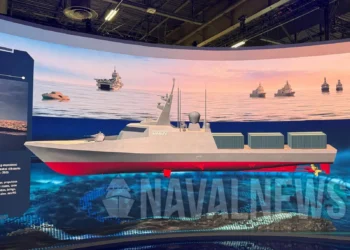
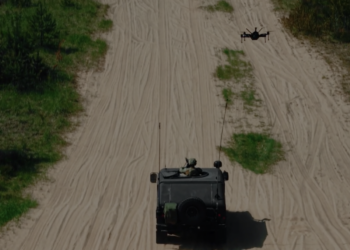
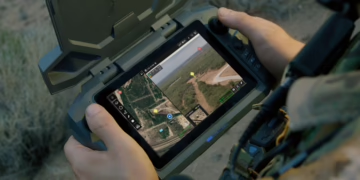
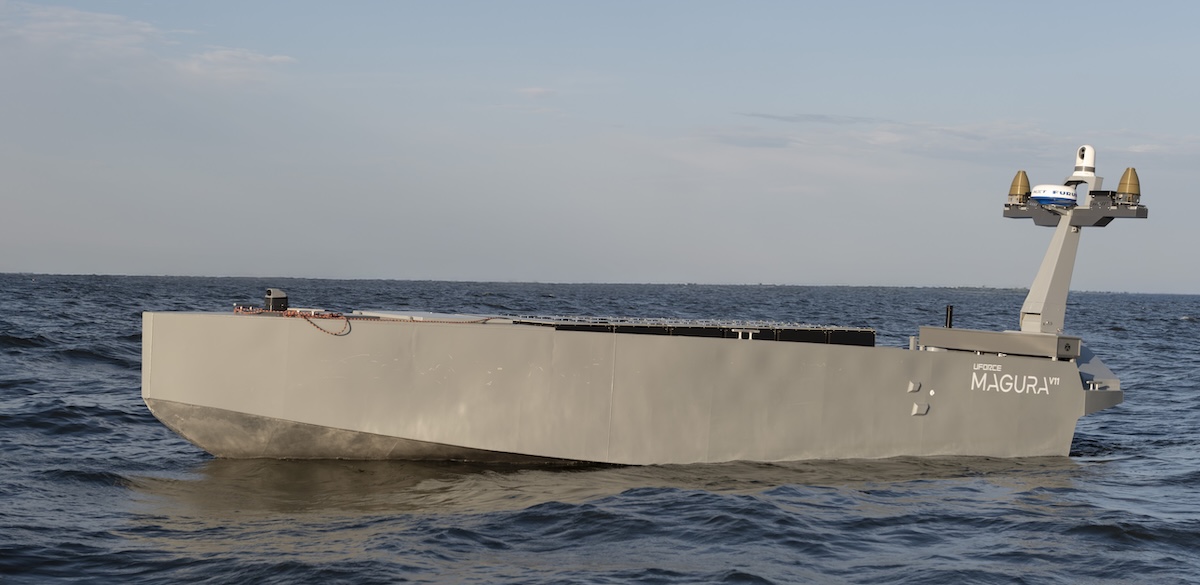
That enterprise already encompasses autonomous defence and offence systems for sea, land and air operations, including the AI software that underpins them providing a platform for orchestration and command-and-control (C2) layer. They product lines include the MAGURA USVs, NEMESIS UAVs, LIUT UGVs and PREDATOR turrets.
The round and the overall rapid succession of activity we are seeing right now comes at a moment when the war in Ukraine has not abated and if anything seems to be entering an even higher gear of aggression, in terms of the weaponry used (such as long-range missiles and jet-powered drones) and what is being attacked (more civilians and critical infrastructure in both Ukraine and Russia) and the bigger picture (grey-zone seems to be getting normalised).
But the timing of this round is not a coincidence: at the start of this week, we had news of a new company, Onodrim, which raised $300 million to hack out its own M&A track through the thicket that is the defence tech startup ecosystem. Onodrim boasted at the time that it was the biggest Series A in defence tech. By the middle of the week, Helsing — the biggest defence tech currently in Europe — announced a major C2 product to go head-to-head with Palantir (and Uforce) on that front.
But meanwhile, there have been rumours for months of Uforce raising more money — in fact, Rogynskyy admitted as much on background when we talked to him after the startup’s previous raise, a modest $50 million at an outsized valuation of over $1 billion. Uforce we understand had wanted to wait until the end of this month to announce this raise, but all of that may have forced its hand.
The list of investors speaks to the strategic interest that countries have in getting Uforce to the next level of growth.
Valor Equity Partners (Valor) and the UK National Wealth Fund (NWF) аre co-leading the round. The US–Ukraine Reconstruction Investment Fund (URIF) is participating, alongside providing support to the company to build out its operations in Ukraine. Others in the round include Menlo Ventures, Xantium, Hiro Capital, Expeditions, Shield Capital, Ballistic Ventures, Lakestar, and Squadra, several of which were in the company’s previous round, too. We also understand that Hedosophia is in the round; we’ve reached out to the company to confirm that detail.
Uforce sees itself as an ecosystem player as much as a defence tech company. It has worked with countries to convert maritime and automotive manufacturing infrastructure into building for defence, it said — one recent deal is with ReconCraft in the US to scale MAGURA surface-vessel production; and it calls itself a founder member of the EU-Ukraine Drone Alliance.
The company’s traction is due in part to the founders’ connections and experience.
Rogynskyy does not come from a military background but like other Ukrainians felt the push to become involved to help his country defend against Russia’s violent invasion. In his case, he had been the founder and CEO of people.ai — a CRM company that in April 2026 rebranded to Backstory.
Uforce’s co-founder is the former Prime Minister of Ukraine, Oleksii Honcharuk, who is also the chairman; the former Defence Secretary of the UK, Ben Wallace, is on the board. And there is another high-watt name now in the mix: General (Ret.) Christopher G. Cavoli, former NATO Supreme Allied Commander Europe, who is a partner at Valor, is also now on the board.
Uforce is very interested in expanding in the US and has appointed big names there, too, to get that going. In May 2026 the company appointed Sean Plankey to be the CEO of the US operation. You may recognise Plankey’s name: he was the person who came from the Coast Guard who the Trump Administration was trying to get appointed to lead the Cybersecurity and Infrastructure Security Agency (CISA) but he withdrew from that after the nomination got repeatedly rejected.