
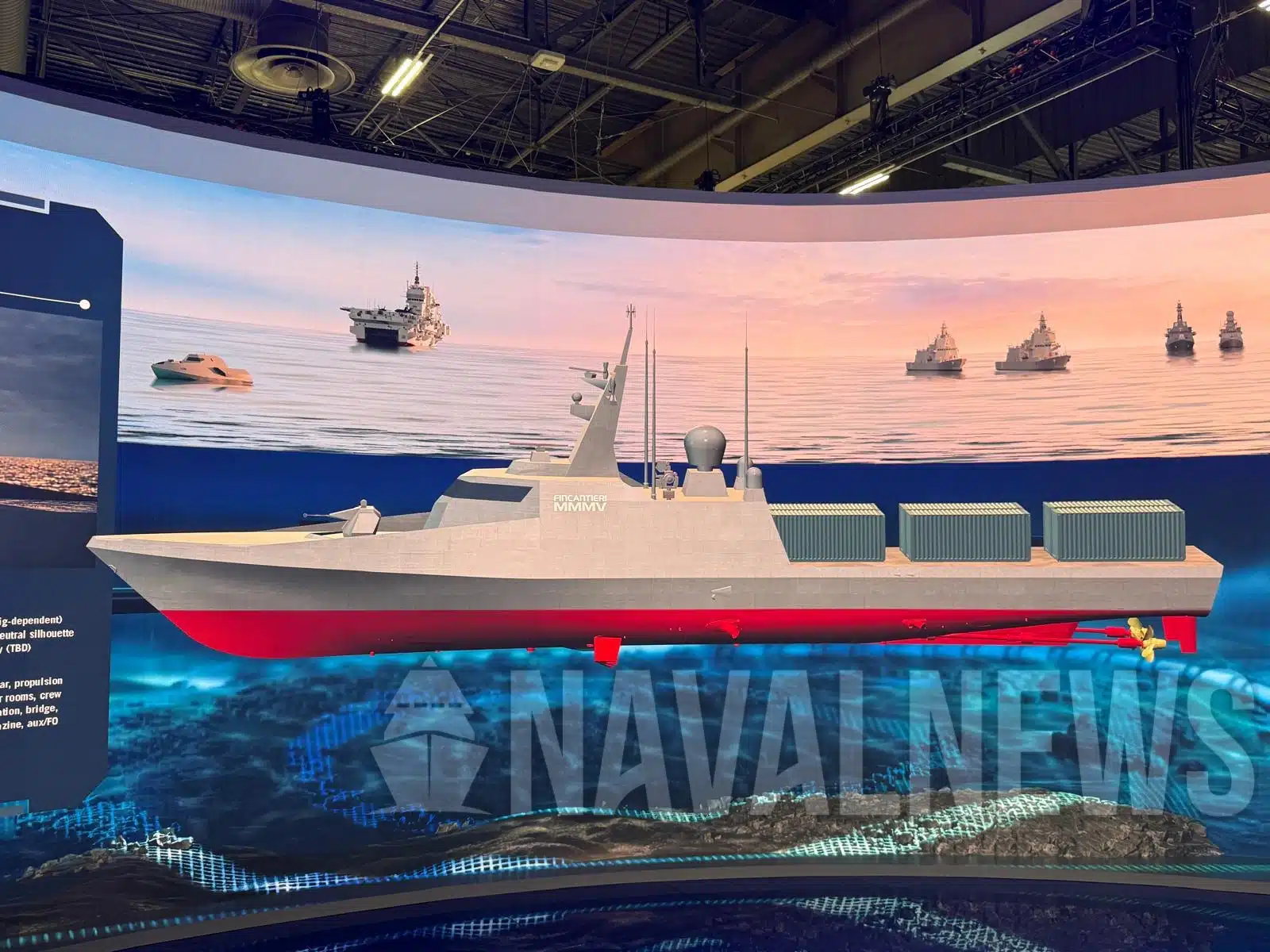
Italian shipbuilder Fincantieri has introduced its Multi-Mission Modular Vessel (MMMV). It is a compact naval platform designed to support multiple operational roles without requiring major structural changes to the base vessel, allowing users to pick and choose the systems they will need for a particular mission.
The 50-metre vessel displaces 500 tonnes and requires a core crew of just six personnel. Its design centres on a standard hull that can accommodate interchangeable modules housed in 10-foot or 20-foot containers. These modules can be exchanged while the vessel is in port, allowing operators to change its capabilities according to mission requirements.
The MMMV can be equipped for maritime surveillance, intelligence collection, law enforcement, underwater operations and the protection of infrastructure. Potential payloads include loitering munitions, unmanned aerial and underwater vehicles, sensors and launch-and-recovery equipment.
“Modern naval platforms must be conceived today for missions and technologies that will continue to evolve tomorrow,” said Pierroberto Folgiero, CEO and Managing Director of Fincantieri. “The Multi-Mission Modular Vessel embodies this vision, combining a highly flexible architecture with the ability to progressively integrate new capabilities throughout its operational life.”
Fincantieri has also designed the platform to accommodate new technologies throughout its service life. Its open systems architecture is intended to simplify the integration of additional equipment and software, including autonomous systems that could eventually support operations without an onboard crew.
The company is positioning modularity as a way to extend the useful life of naval assets while reducing the need to develop separate vessels for individual missions. Rather than committing a ship to a fixed operational role, navies could adapt its equipment as requirements change.
The MMMV reflects growing interest in smaller naval platforms that can perform several missions while operating with fewer personnel. Containerised systems could also allow navies to introduce new capabilities without extensive shipyard modifications.
Fincantieri has not disclosed procurement commitments, production schedules or potential customers for the new vessel.
The concept nevertheless points to a broader change in naval procurement, with shipbuilders seeking to separate the development of a vessel from the equipment it carries. For naval operators, the value of that approach will depend on how quickly mission modules can be exchanged, how effectively they integrate with onboard systems and whether the resulting flexibility reduces operating costs.