This week, NATO’s Communications and Information Agency announced during the NATO Edge conference that it was unlocking procurement totalling a record €2.7 billion over the next two years in areas like AI and cybersecurity. Some of that is already being doled out: yesterday OpenAI revealed that NATO working closely with the AI giant, using up to 300 billion tokens a month on the company’s cyber models.
But at the same time, senior Ukrainian officials speaking at the event in Izmir, Turkey, sounded alarm bells over fragmentation and red tape when it comes to how procurement money is spent. They also cautioned countries to take a lesson from Ukraine to understand the urgency and get much better prepared for fighting than they are right now.
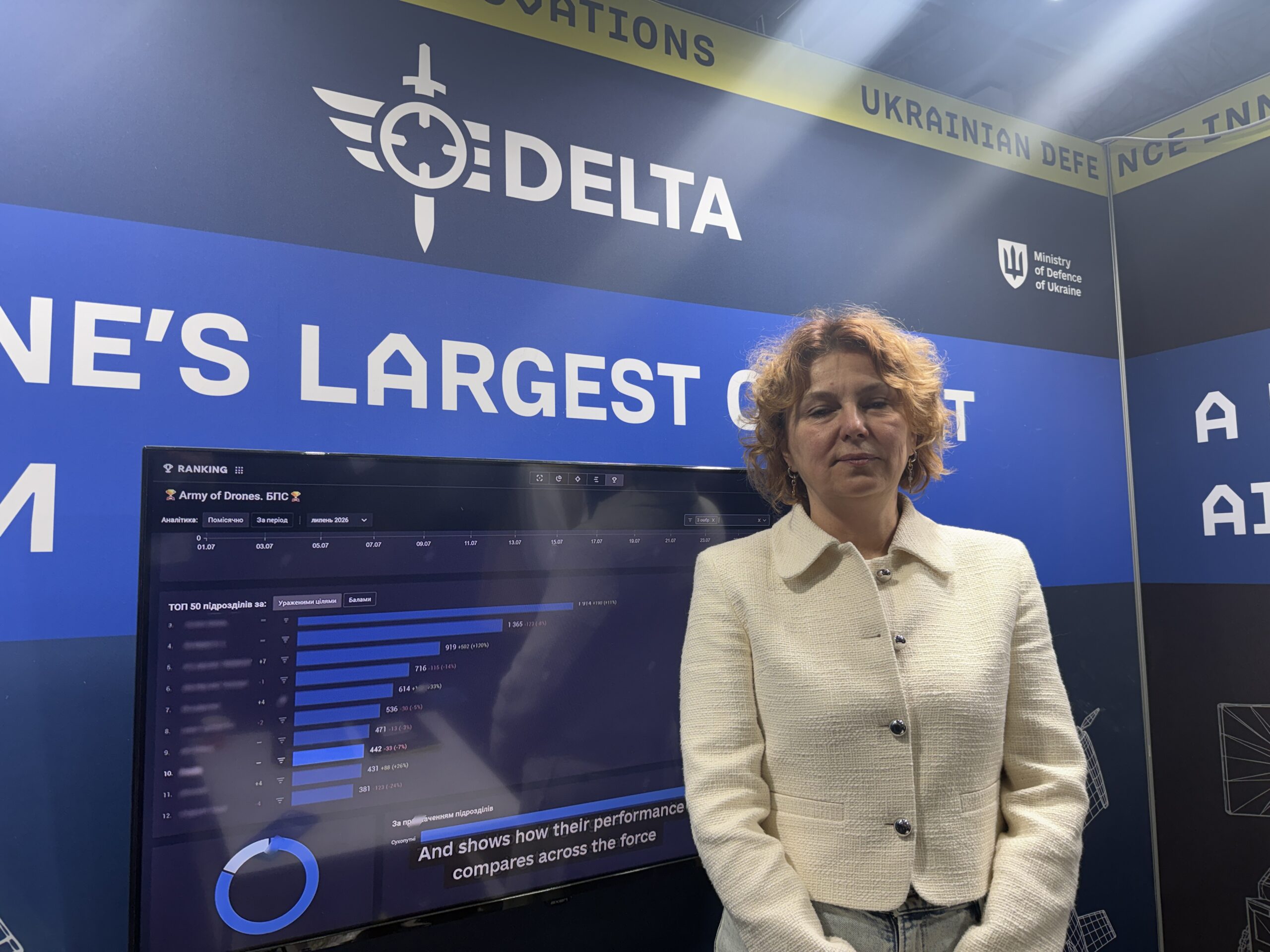
Oksana Perchuk is, as of earlier this year, Ukraine’s minister of digital transformation, but before that she spent four years in the country’s ministry of defence, where she said she saw first-hand how a jumble of equipment from multiple countries slows down how it can be used.
“I’ve seen in reality, in spare parts, in artillery, in munitions, that the standards are not, let’s say, executed in full, which means that a lot of work needs to be done in terms of interoperability between the NATO [member state] armies,” she said. (NATO sets procurement standards, but these are actually voluntary.)
Speaking to a small group of journalists, she said that this was even more serious in the digital realm.
“We still lack systems that will allow us not only to coordinate our actions but also to analyse all data available from all countries and from all armies. So [there is] a big way to go.”
Fragmentation should not be confused with redundancy, however. The throttling of Starlink continues to loom large over Ukraine, which had come to rely heavily on it to direct interceptors and run other defence operations.
Ukraine has learned a hard lesson from that situation (which some reports say is still ongoing), and Perchuk confirmed that the country is now exploring how to tap other satellite providers, along with building some of its own sovereign space infrastructure, and more. When asked about what other technologies the country is using to create more communications redundancy, the answer was very simple.
“All of them,” she said. Alongside satellite and old-fashioned fibre to the front line, “we have radio, we have mesh networks… We are speaking and talking about new technologies that will give us new abilities. The beauty is that it’s not a full overlap. Each connectivity, each technology has unique specifications that which better suits specific missions or specific type of equipment. We just have a lot of people who are studying it, testing it.”
It’s a discordant moment when you encounter people directly linked to the war effort in Ukraine at industry conferences outside of the country. On one side, you have a person or team visiting from the frontlines making decisions, these days very much technology-related, directly related to a real-time war effort. On the other, you typically have people speaking at a high level, preaching about urgency and change that for many is still an abstract concept or tied up in bureaucracy if it is being actioned. That has somewhat been the case at NATO Edge.
The name of Perchuk’s ministry might sound a little like she’s in charge of a management consultancy, but since the start of the full-scale invasion it has been anything but that. Ukraine has harnessed technology to completely modernise its war machine, and it’s been doing it as fast as it can. The ministry of digital transformation — both under Ferchuk and her predecessor, Mykhailo Fedorov (who went on to become the minister of defence for a brief moment before he was ousted in a high-profile government reshuffle) — has been behind a lot of that.
In some ways the ministry was set up precisely as a bottleneck-breaker. In a session on-stage in the conference, Oleksandr Bornyakov, who is currently the chairman of the supervisory board of Brave1, noted that the tech accelerator was established precisely not under the ministry of defence but under the digital transformation ministry that Ferchuk now heads up so that it could do its work faster and set up more channels to bring in technology from startups to the brigades ready to use it to fight.
“We decided that Brave1 would not be operated by the Ministry of Defence,” he recalled, and that the digital transformation ministry would mean “not so much regulation,” while also being “in close contact with startup and venture community.”
That was the first decision made about how to kick start more innovation. The second was “to remove red tape.” The government removed some 40 existing decrees around forming new businesses, along with a critical rule about margins for military contractors: previously, they could only make margins of 1%, and Ukraine changed that to 24%, Bornyakov said. “And BOOM,” he said. Suddenly, the country was seeing the formation of startups building, drones, electronic warfare technology, business intelligence, communications, “and many other innovations that we need right now.”
But Bornyakov also sounded his own notes of caution alongside those of his colleague Minister Ferchuk. Ukraine moved fast on all of this because it had no choice: it was outnumbered by Russia and it was completely caught off-guard, he said.
“We were not prepared,” he recalled. “We didn’t feel a sense of urgency.” This was a grave miscall, he continued. “We initially lost a lot of territory and control because of that.” Beyond the territory and infrastructure destruction, there was also a grave cost: thousands of civilians killed. “If NATO today doesn’t see the threat to Baltic countries, and can’t see the emergency, think of those thousands of people,” he said.