
Finland’s President Alexander Stubb opened the Slush tech conference in Helsinki by touching on AI, European sovereignty, and a bleak winter for Ukrainians. In a fireside chat, Stubb spent some time on the subject of Finland’s defence and the defence tech sector despite the main conference programme shying away from the topic.
The conversation inevitably turned to the current situation in Ukraine amid Russia’s full scale invasion and the peace talks that have been discussed of late.
“I think the Ukrainians are doing extremely well offensively because of their capacity of long-range strikes, not only on bridges but on oil refineries, logistics centres, and on data centres, but they have a big challenge now defensively. We can see that their air defences are not strong enough, and many things are coming through, and unfortunately destroying civilian infrastructure and civilian lives,” Stubb said.
“In terms of warfare itself it’s very much a war of attrition. It’s at an impasse. Russia is not gaining ground. Ukraine is taking a little bit back. The losses are tremendous,” he said, mentioning the 53,000 dead or wounded, on the Russian side in October alone. “We’re talking about human tragedy.”
Relaying his meetings of late, in regards to the peace negotiations, he said, “I’m carefully optimistic that we’re moving in the right direction.”
“The only point I have to make is that if you don’t talk about peace, if you don’t have a process, if you don’t have an agenda for peace, you’re never going to achieve it, and I think we need to work at this day and night. Am I optimistic that this war will end by the end of the year? I don’t think so, and that means that we’re going to have to prepare for a harsh winter in Ukraine, which basically means air defence, energy installations, and fights,” he said.
Finnish defence tech
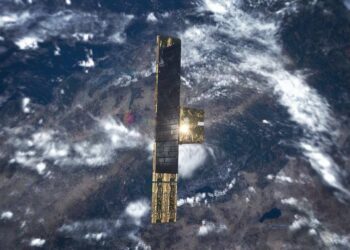
Stubb shared an anecdote about his first encounter with ICEYE while visiting an Alto startup event when he was Minister of Trade:
“There was this Polish guy and this Finnish guy, and they showed me this little aluminium box, and they said this is a satellite, and we’re going to be big on weather prediction, and we’re going to launch this. And I sort of looked at the guys and tapped them on the shoulder and said ‘good luck boys’, and here we are; the lads did pretty well for themselves, and I’m just sitting here as President.”
On European Sovereignty and hopes that the Finnish defence tech unicorn could be Europe’s answer to the Starlink issues, he said that when he learned of ICEYE’s news to purchase Italian launcher company Avio for €2.05B, “I suddenly see another opportunity.”
Despite Stubb’s on-stage conjecture about future uses of ICEYE technology, CEO Rafal Modrzewski told a press delegation yesterday that what it is building is sovereign communications systems for military and civilian use, cautioning “they are not meant for consumer communication like Starlink is.” He said the goal is to reduce European states’ reliance on external providers for secure networks. The first satellites are expected to be in orbit by the end of 2028.
Tech and defence relationship
Stubb also talked about modern warfare no longer being limited to the traditional domains of kinetic sea, land, and air. ‘It’s also space and cyber, so that means that we’ve had to diversify our defence forces. And I speak with my Chief of Defence General Janne Jaakkola on a weekly basis on what we’re doing.”
He spoke about Finland having “fantastic companies” in “modern warfare technology” giving NestAI and its founder Peter Sarlin a plug as well as others in the drone and space sectors.
“I have to say that, from an ethical perspective, it feels a little bit strange that I travel the world and I promote these Finnish defence companies. Had I done this ten years ago, it would have rustled a few feathers, but now we understand that in order to protect ourselves, we have to have modern technology – and I’m glad that the tech sector can work together with the defence sector,” he said.