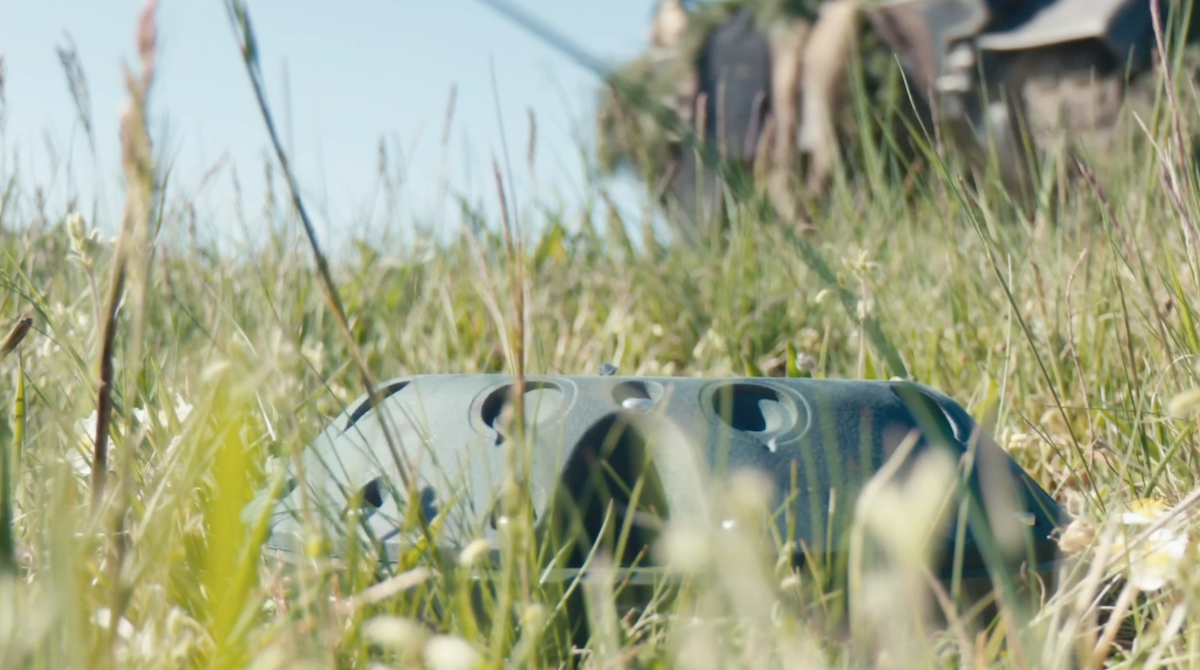
German defence technology company Project Q has unveiled a new Unattended Ground Sensor (UGS) Mission Kit at Eurosatory 2026. The device, which sits low to the ground and senses troop movements, offers armed forces a passive surveillance capability designed for large-area monitoring in contested and communications-constrained environments.
The devices can hide in tall grass or mud and are primarily designed to report back on nearby movement of humans, drones, or vehicles. These devices use a mesh network to connect to each other while avoiding electronic jamming.
The UGSs are important because they improve immensely on current sensor systems. Traditional radar systems can reveal their position through electromagnetic emissions, making them vulnerable to detection and targeting. At the same time, fibre-optically controlled drones can bypass many RF-based detection systems, while optical sensors often struggle in terrain where visibility is limited.
Project Q’s answer is a network of seismic-acoustic ground sensors that create an invisible detection layer across a wide area. The sensors are designed to identify and classify drones, vehicles, and personnel using onboard AI processing. Multiple sensors are packaged into a portable mission kit that can be rapidly deployed and placed into operation with minimal setup.
Unlike systems that require constant communications links, the UGS Mission Kit performs processing directly on the sensor itself. Information is transmitted only when a relevant detection occurs, reducing bandwidth demands while limiting the system’s electromagnetic signature. The company says this makes the platform particularly suitable for GNSS-denied and contested environments where communications infrastructure may be degraded or unavailable.
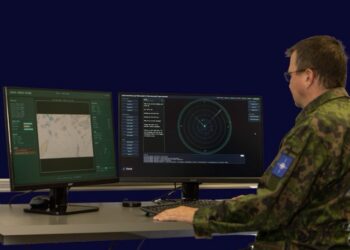
The sensors can be integrated into existing command and control networks through Hydris, Project Q’s open-core integration and orchestration layer. Hydris is designed to connect commercial technologies, legacy systems, sensors, and autonomous platforms into a common operational environment, allowing operators to combine data from multiple sources without becoming dependent on a single vendor ecosystem.
The launch reflects a broader trend across European defence. As the battlefield becomes increasingly saturated with drones and electronic warfare systems, armed forces are looking for passive sensing technologies that can remain hidden while maintaining persistent awareness across large areas. Systems that reduce emissions and push processing to the edge are becoming increasingly attractive as militaries prepare for operations against technologically sophisticated adversaries.