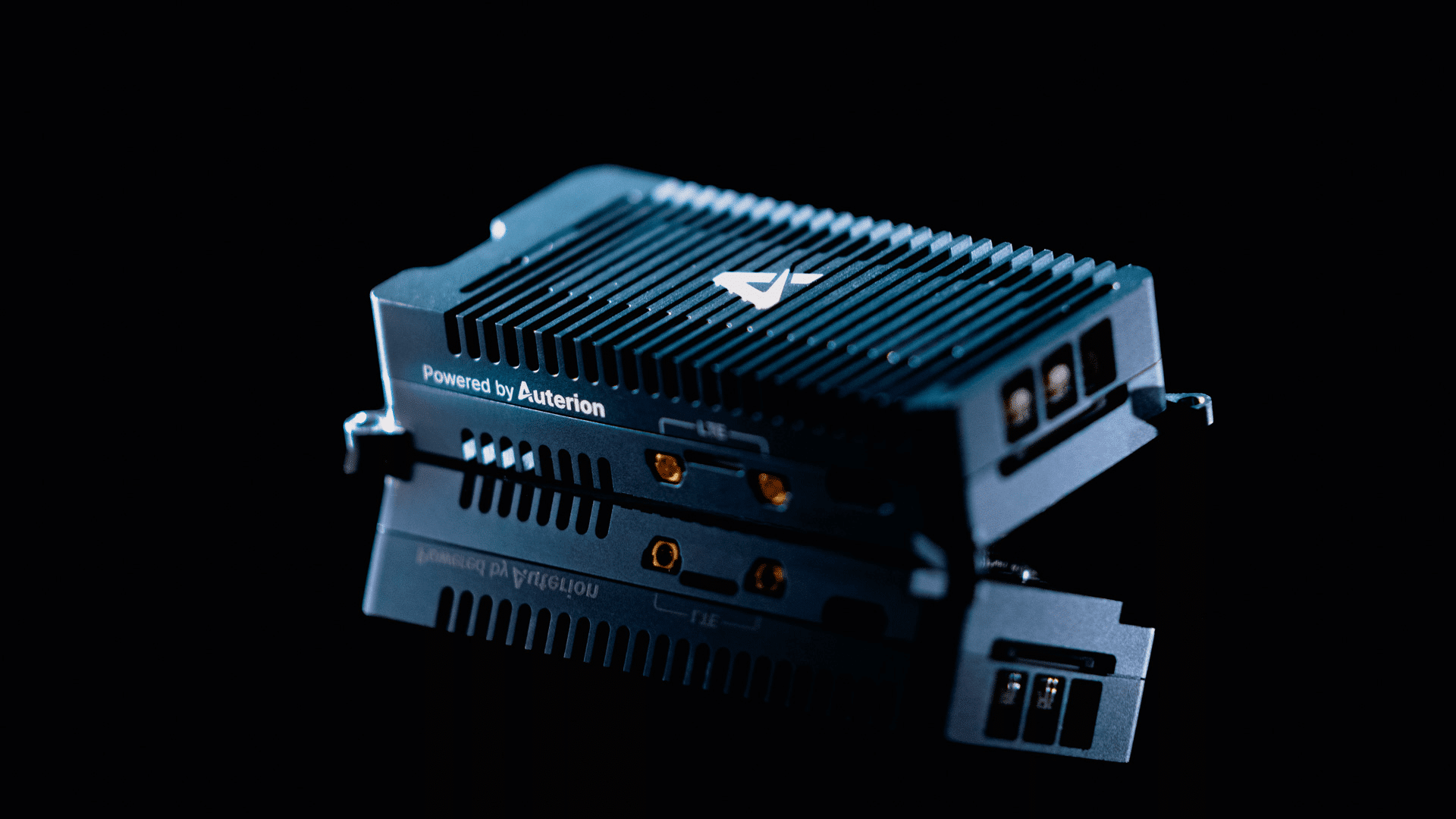
Auterion has spent the past few years building software for the drone war. Now it is applying the same logic to drone defence.
In a conversation with Resilience Media, Auterion founder and CEO Lorenz Meier said the company is moving its drone operating system technology into interceptors, using work developed for offensive strike drones in Ukraine to help allied forces counter incoming drones and, eventually, drone swarms.
“We’re building the operating system for autonomy and in the current day and age, you could also say we’re building the operating system for warfare,” he said. “We believe that working on warfare and defence is the most important problem we could possibly be working on right now.”
Before founding Auterion in 2017 originally in Switzerland (it is now has a US headquarters in Arlington, VA, with major hubs in Munich, Germany, and Zurich, Switzerland), Meier created MAVLink and Pixhawk, two pieces of infrastructure still used widely across the drone industry. Auterion originally built systems focused primarily on commercial drones before redirecting to defence, and it’s building on those early products to create tools that partners can add to their drones in order to improve swarm capabilities, security, and interceptor skills.
This shift into interceptors follows what Meier described as a key lesson from the past several months. Even advanced air defence systems can miss or be exhausted by low-cost strike drones. He posits that there will be a new class of drones — powered by Auterion — that will be deployed as defensive systems on roofs and out-of-the-way corners of important buildings and areas.
Auterion’s approach is to bring the software, autonomy, and operational lessons from ground attack drones into the air defence problem. The first version is deliberately simple. A soldier points the interceptor at an identified target and launches it. Meier described that as the “crawl” phase in a crawl, walk, run model.
“We’re starting with something that an individual soldier can launch at an identified threat. We’re not held back by integration or certifications or logistics challenges. It’s something that can be available to Allied forces pretty much immediately,” he said.
Over time, Auterion expects the system to move into launchers and deeper air defence integration. But the company is starting from the battlefield reality that new capabilities need to arrive in months or even sooner.
The same logic applies beyond Ukraine. Meier said drone threats around airports, stadiums, government buildings, and other critical sites will likely have to be addressed with fixed systems, including rooftop installations. He also said hard-kill systems, meaning kinetic weapons, will eventually be part of the discussion around civilian infrastructure.
“I could see that installing it in a fixed location on a roof can be a very economical solution because you don’t have to manage it all the time,” he said. “We will also introduce products that can be used for that later in the year. And I believe that what is very concerning right now, drone threats, will be a mitigated risk over the next few years.”
Meier said the company has always tried to operate across air, land, and sea, covering offensive systems, reconnaissance, and now drone defence. The problem changes once a force has thousands or tens of thousands of drones. At that point, the issue is no longer whether a drone can fly. The issue is how to manage them, network them, avoid collisions, coordinate missions, and keep operating when connectivity is degraded.
Meier compared the current moment in military drones to enterprise computing in the 1980s. As organisations acquired more computers, they needed operating systems, networks, management layers, and common infrastructure. Militaries are now reaching the same point with drones.
Auterion’s systems rely heavily on peer-to-peer communication, rather than forcing everything back through a central server or ground station. That gives drones a better chance of sharing information and avoiding one another even when the ground station is lost or unreachable. It also makes the system more scalable, because performance does not depend entirely on one central communications link.
The company is already moving at volume. Meier pointed to recent long-range drone work with Airlogix involving more than 5,000 units, as well as a Skyfall contract covering 50,000 drones. He said Auterion’s total for the year is now more than 100,000 systems, always in collaboration with drone manufacturers rather than as a drone maker itself. (And, sources tell Resilience Media, this activity is also translating into a wider horizon for the startup itself.)
Drones are no longer gadgets operated in small numbers by specialist teams. They are becoming a networked military layer that needs software, coordination, autonomy, and defence against enemy systems doing the same thing. That’s what Auterion wants to build.