
Tuesday 16 June, 2026
[email protected]
Resilience Media
  • News
    • Events
    • Interview
    • Startups
    • Venture
    • Weekly Digest
  • Resilience Conference
    • Resilience Conference Warsaw 2026
    • Resilience Conference Copenhagen 2026
    • Resilience Conference London 2026
  • About
  • Guest Posts
    • Author a Post
  • Subscribe
No Result
View All Result
  • News
    • Events
    • Interview
    • Startups
    • Venture
    • Weekly Digest
  • Resilience Conference
    • Resilience Conference Warsaw 2026
    • Resilience Conference Copenhagen 2026
    • Resilience Conference London 2026
  • About
  • Guest Posts
    • Author a Post
  • Subscribe
No Result
View All Result
Resilience Media
No Result
View All Result

Alpine Eagle and Origin Robotics integrate to strengthen counter-drone defence

Aligned values and complementary systems spell bigger partnerships among multinational startups

Fiona AlstonIngrid LundenbyFiona AlstonandIngrid Lunden
June 16, 2026
in News
Share on Linkedin

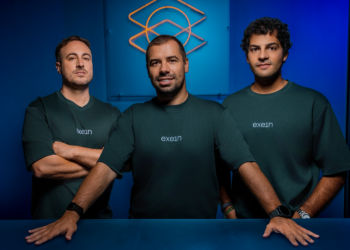
German counter-drone defence technology company Alpine Eagle and Latvian autonomous systems startup Origin Robotics have signed an integration memorandum of understanding (MOU). Origin Robotics’ Blaze interceptor will soon work within Alpine Eagle’s Sentinel counter-UAS system.

You Might Also Like

Can AI save a satellite before it fails? PiLogic thinks so

In Kyiv, naval drone developers look beyond the kamikaze era

Project Q launches passive surveillance sensor kit for contested environments

The deal was announced Tuesday at Eurosatory, the defence exposition taking place in Paris this week, where Origin had big customer news earlier in the day. It has signed a procurement deal with France, which will be buying Blaze for its armed forces after a competitive process in search of an interceptor drone system. The deal is being done by way of a partnership with French integrator DSV, which will be manufacturing Blaze in France itself and delivering the first devices “within weeks.” No financial terms have been disclosed.

Alpine Eagle has designed Sentinel to be an all-in-one solution for detecting and taking down unfriendly drones and other smaller airborne threats, but (like others in the UAS sphere) it has also pitched its solution and very “modular” and this is where Blaze will be fitting in.

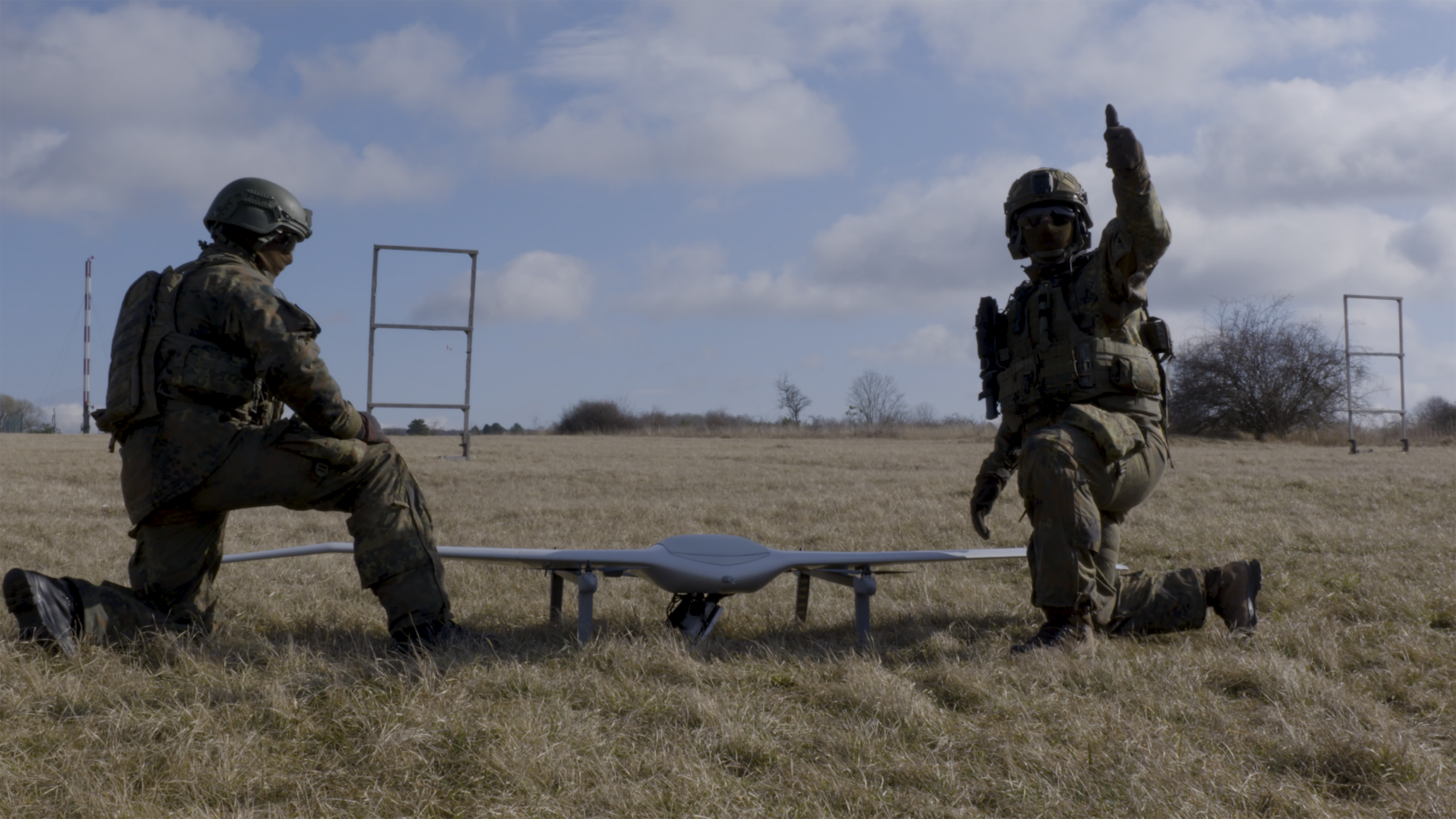
Alpine Eagle produces three UAVs of its own — the flagship Sentinel fixed-wing UAV (“the mothership,” which has both sensors and a launch platform); the Sparrowhawk, an air-launched interceptor platform; and the Sentry, a multirotor UAS. It also produces an operating system, Sentinel OS, and command-and-control software to manage the fleet.

Origin Robotics’ Blaze fills an important gap in that range, particularly in combat environments. Blaze — a NATO-codified, radar-guided autonomous interceptor drone system — has built-in safety protocols and operator-override capabilities. It also has a self-destruct protocol that triggers if its geofence is breached, communication is lost, or another critical failure occurs.
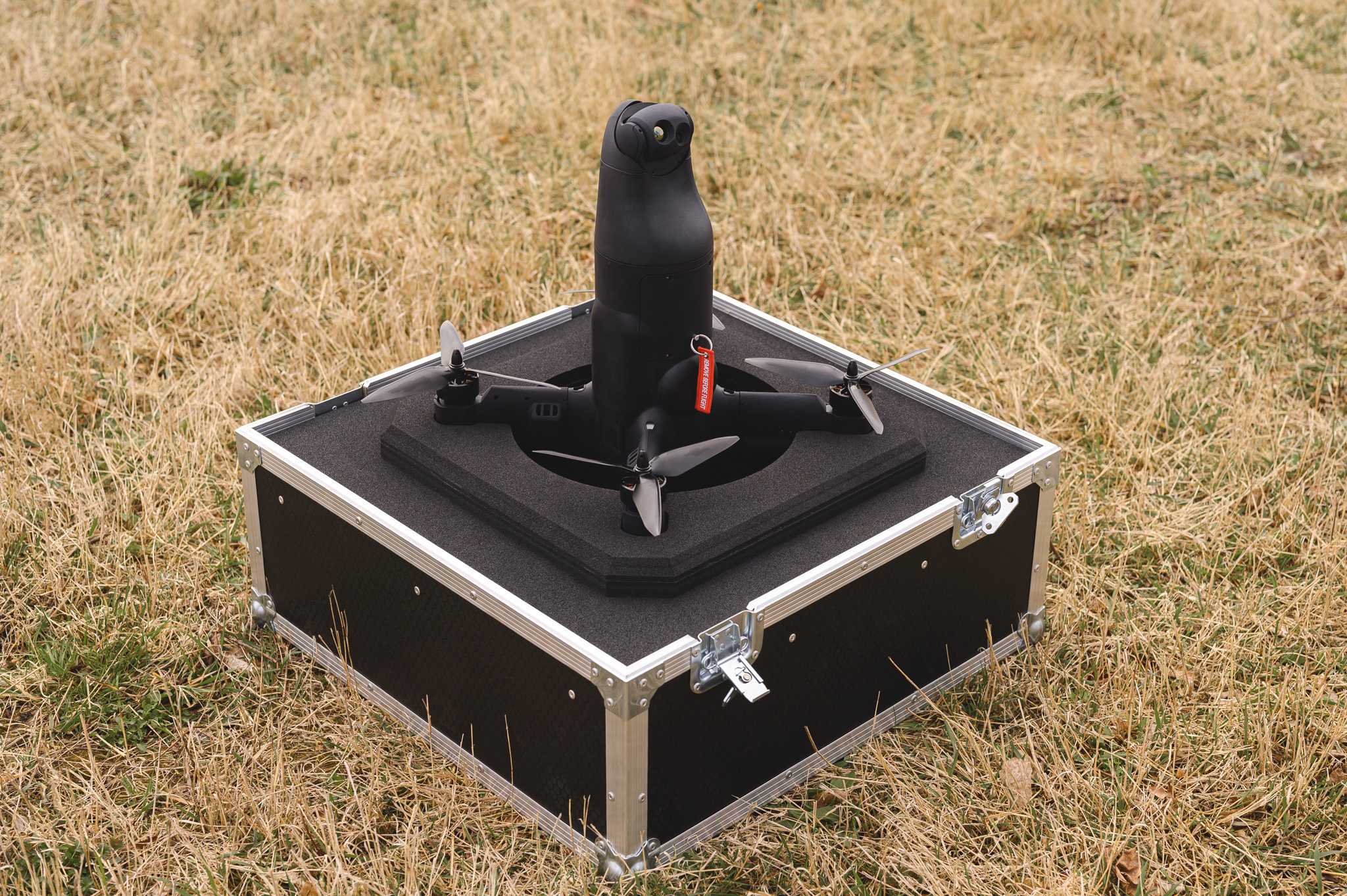
Origin Robotics Blaze

Alpine Eagle had been looking for ground launched interceptors to combine with its layered sensor-to-effector counter-drone capability, and Origin Robotics Blaze fit the bill, said Jan-Hendrik Boelens co-founder and CEO of Alpine Edge, speaking to Resilience Media ahead of his trip to Eurosatory.

“We found a world-class interceptor with a team that resonates very well with our values,” he added.

Origin Robotics’ Blaze stood out to Boelens, he said, because of a “combination of industrial scale performance of the product and a supply chain that has been thought through rather than at a prototypical stage,” he continued. “It’s the actual ability to hit something versus ‘having a warhead available.'”

Under the agreement, the companies will focus first on technical integration, customer demonstrations and operational validation, while establishing a pathway towards future local manufacturing of Blaze in Germany.

It’s a mutually-beneficial deal, with both companies expanding the surface area of how they can engage with future and current customers.

Providing their devices within a larger offering that has already been worked out, not left to the customer to sort, with the costs and time and mishaps that might come with that. Aside from that, the C-UAS market is a very crowded one at the moment — witness in France itself the unicorn Harmattan also building C-UAS — making partnerships between multiple players an even more likely evolution.

In addition to France, Origin’s existing customers include Latvia, Belgium and Estonia. Alpine Eagle counts Germany, the UK, Holland and the US among its users. Both have also had equipment tested and used in Ukraine.

“The future of drone defence depends on combining the right sensors, software and effectors. No single system can solve the challenge alone,” said Agris Kipurs, co-founder and CEO of Origin Robotics, in a statement.
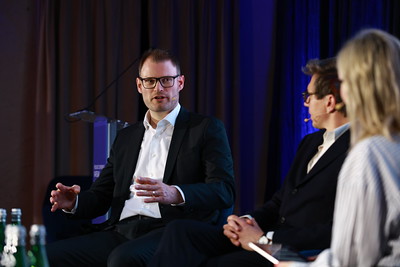
Jan-Henrik Boelens speaking on stage at Resilience Conference Warsaw

Both Boelens and Kipurs agree on a fundamental aspect of how defence and resilience need to take shape in Europe now and in the future: partnerships like the one they have formed are going to be critical going forward.

“We have to go away from the idea of national champions,” Kipurs told Resilience Media in an interview earlier this year. “‘Champions’ need to be European, formations that are geographically or politically aligned. For example the Nordics doing joint procurement is the right approach. We can’t have 27 champions in Europe. If we do that, no one gets to scale and scale is important … not just about the price point but the ability to invest in R&D. That flywheel needs to continue to spin.”

Boelens cited a recent development that highlighted the predicament, as he sees it, in the development of new technology and new products.

“I think we’ve seen that over the last couple of days, with essentially the US pulling the licence of Anthropic from Europe overnight,” he said — a situation that has caught Europe out since it does not have a home-grown replacement. Resources are finite, and so in Europe the best way ahead is to dedicate them to building one thing for many, not many doing the same one thing.

“It really drives the message home that we can talk all we want about European resilience, but if in practice that means every country supporting their local national industry, duplicating what all the other 27 countries have already done, then we are going to stay in this situation,” he said.

If we want to move the needle, he added, then we need to start “implementing Europe rather than talking about Europe – even after more than four years of war in Ukraine, European countries are not able to think beyond their national interests most of the time, and I think that has been a classic problem in the past, and it is still a problem, and it does make me wonder what needs to happen before people actually start to think about the bigger picture.”

He believes that the solution will have to come from industry.

“I think companies like ours will have to figure out how to operate in that environment, despite politics that are leaning towards a national agenda,” he said.

Both companies can be found at Eurosatory 2026 this week.
Tags: Alpine EagleC-UASinterceptorsOrigin Robotics
Previous Post

In Kyiv, naval drone developers look beyond the kamikaze era

Next Post

Can AI save a satellite before it fails? PiLogic thinks so

Fiona Alston

Fiona Alston

Fiona Alston is a defence tech, innovation and business journalist based in Estonia. With over a decade of experience covering tech, business and sustainability for Irish and European publications, she has a knack for bringing interesting and technical stories to an everyday audience.

Ingrid Lunden

Ingrid Lunden

Ingrid is an editor and writer. Born in Moscow, brought up in the U.S. and now based out of London, from February 2012 to May 2025, she worked at leading technology publication TechCrunch, initially as a writer and eventually as one of TechCrunch’s managing editors, leading the company’s international editorial operation and working as part of TechCrunch’s senior leadership team. She speaks Russian, French and Spanish and takes a keen interest in the intersection of technology with geopolitics.

Related News

Can AI save a satellite before it fails? PiLogic thinks so

Can AI save a satellite before it fails? PiLogic thinks so

byJohn Biggs
June 16, 2026

https://youtu.be/xSj3z-7nzqA Artificial intelligence is rapidly finding its way into defence and aerospace systems, but many of today's AI tools come...

In Kyiv, naval drone developers look beyond the kamikaze era

In Kyiv, naval drone developers look beyond the kamikaze era

byLuke Smith
June 16, 2026

Ukraine has made effective use of sea drones, surface vessels and other new technology to take on Russia's traditional naval...

Project Q launches passive surveillance sensor kit for contested environments

Project Q launches passive surveillance sensor kit for contested environments

byJohn Biggs
June 15, 2026

German defence technology company Project Q has unveiled a new Unattended Ground Sensor (UGS) Mission Kit at Eurosatory 2026. The...

Saronic, Castelion plan autonomous hypersonic strike platform for maritime operations

Saronic, Castelion plan autonomous hypersonic strike platform for maritime operations

byJohn Biggs
June 15, 2026

Two surface vessel drone makers, Saronic and Castelion, have announced plans to build a hypersonic vehicle for maritime maneuvers. The...

Alta Ares reaches a new high with €50M in funding

Alta Ares reaches a new high with €50M in funding

byIngrid Lundenand1 others
June 15, 2026

With all the investment we’re seeing into drones, we’re also witnessing a major surge of attention around companies building tech...

the big ben clock tower towering over the city of london

John Healey’s resignation – a defence investor’s view

bySamuel Burrell
June 15, 2026

John Healey and Al Carns resigned last week rather than put their names to a Defence Investment Plan (DIP) that...

The world according to Ragnar

The world according to Ragnar

byFiona Alston
June 15, 2026

“My biggest surprise this year is that the fastest growing vertical among Ukraine startups is UGVs,” said Ragnar Sass said,...

NATO Innovation Fund appoints Nur Özdemir as its newest partner

NATO Innovation Fund appoints Nur Özdemir as its newest partner

byIngrid Lunden
June 12, 2026

The NATO Innovation Fund, the $1 billion+ investment vehicle for NATO to back innovative startups in defence and resilience tech,...

Load More
Next Post
Can AI save a satellite before it fails? PiLogic thinks so

Can AI save a satellite before it fails? PiLogic thinks so

Most viewed

InVeris announces fats Drone, an integrated, multi-party drone flight simulator

Uforce raises $50M at a $1B+ valuation to build defence tech for Ukraine

Auterion, the drone software startup, eyes raising $200M at a $1.2B+ valuation

Palantir and Ukraine’s Brave1 have built a new AI “Dataroom”

Twentyfour Industries emerges from stealth with $11.8M for mass-produced drones

Senai exits stealth to help governments harness online video intelligence

Resilience Media is an independent publication covering the future of defence, security, and resilience. Our reporting focuses on emerging technologies, strategic threats, and the growing role of startups and investors in the defence of democracy.

  • About
  • News
  • Resilence Conference
    • Resilience Conference Copenhagen 2026
    • Resilience Conference Warsaw 2026
    • Resilience Conference 2026
  • Guest Posts
  • Subscribe
  • Privacy Policy
  • Terms & Conditions
  • Mission Statement & Code of Practice
  • Press

© 2026 Resilience Media

No Result
View All Result
  • Home
  • About
  • Subscribe
  • Events
  • Guest Posts
  • Interview
  • News
  • Resilience Conference London 2026
  • Resilience Conference Copenhagen 2026
  • Resilience Conference Warsaw 2026

© 2026 Resilience Media

This website uses cookies. By continuing to use this website you are giving consent to cookies being used. Visit our Privacy and Cookie Policy.