Artificial intelligence is rapidly finding its way into defence and aerospace systems, but many of today’s AI tools come with a problem. They are probabilistic. Given the same inputs, they may produce slightly different outputs. For applications like content generation, that uncertainty is acceptable. For satellites, military systems, and autonomous platforms, it is not.
That is where PiLogic believes it has an advantage.
The California-based company is developing reasoning-based AI systems designed for aerospace and defence environments where explainability, speed, and predictability matter more than creativity. The firm’s technology focuses on probabilistic inference, logical reasoning, and exact search, techniques that have existed for decades but have often struggled to scale in real-world applications.
“There’s a lot of talk about generative AI, LLMs, machine learning, and they’re amazing at cases where you have a lot of data and where a little bit of hallucination is okay,” said founder and CEO Johannes Waldstein. “But in aerospace and defence, you have to be really explainable and the outputs have to be deterministic.”
According to Waldstein, the company’s systems are designed to ensure that identical inputs produce identical outputs. “You don’t want variance, or you don’t want surprises. You want to make sure that the autonomy is doing what you’re trying to do.”
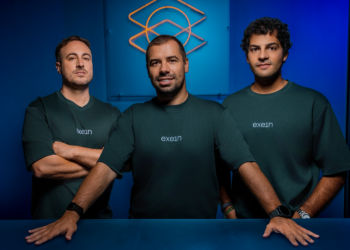
The company was founded by a team with deep roots in both defence and large-scale commercial AI. Waldstein’s co-founder, Mark Chavira, previously spent a decade at Raytheon before earning advanced degrees focused on automated reasoning and probabilistic inference. He later joined Google, where he led inference-related work before returning to the aerospace sector.
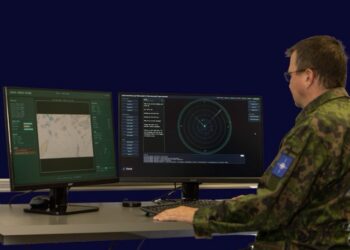
PiLogic’s first government contract is with the Air Force Research Laboratory (AFRL), and the company says its technology is already operating on orbit with a major satellite operator.
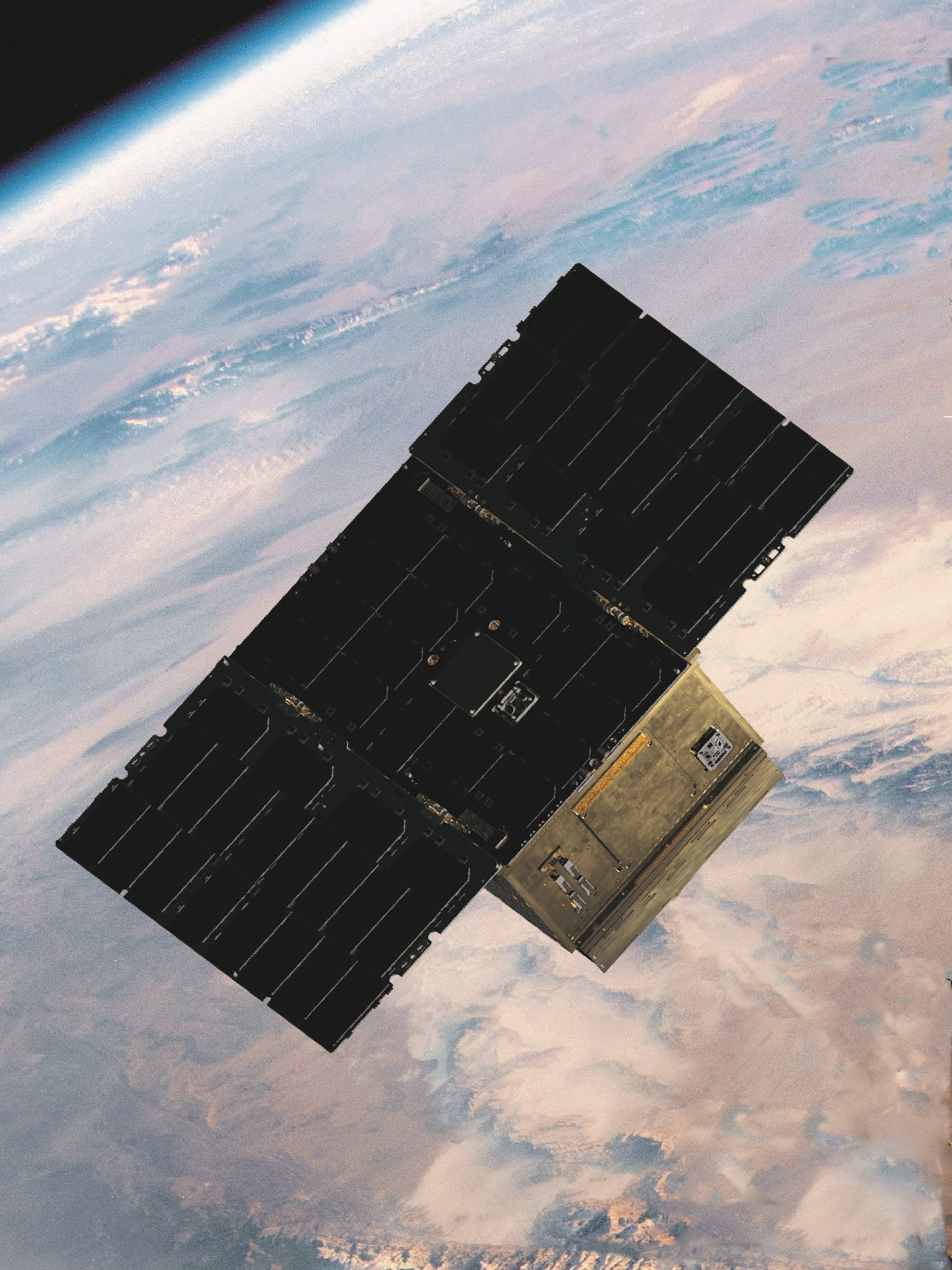
One of the firm’s primary offerings focuses on satellite diagnostics. Rather than relying on large shared machine-learning models, PyLogic creates customised reasoning models tailored to each spacecraft.
“A big advantage of reasoning models over machine-learning models is that no data is ever shared between customers,” Waldstein explained. “You get a model template and you input the layout of your own satellite or the layout of your own system and it creates a custom model for that configuration.”
The approach also avoids many of the export-control challenges associated with defence software. Because customer data never returns to a central training system, the company says it can support both commercial and government deployments while remaining accessible to allied nations.
A major challenge for reasoning-based AI has traditionally been performance. Building these models often requires significant time and computational resources, making them difficult to deploy in real-time environments. PiLogic claims it has solved much of that problem.
“A lot of the AI that we do is pre-deployment and it factors and simplifies the model,” he said. “What you put on the satellite is just a directed graph with addition and multiplication.”
This means the AI at the edge of the network can be loaded directly into a satellite and even on old hardware. That optimisation allows the system to operate at remarkable speeds.
“On orbit, it’s running in 0.23 milliseconds,” Waldstein said. “It’s doing tens of thousands of queries because it’s just addition and multiplication.”
The ability to operate on older hardware is particularly important for military and commercial satellite operators, many of whom manage platforms launched years ago with limited computing resources.
The technology is currently focused on thermal systems and electrical power systems, two areas that frequently contribute to satellite failures.
“If you imagine solar arrays and batteries and everything in between, all of the wiring, all of the sensors, all the components, we’re tracking all of that and predicting what’s going wrong with it and how to avoid a failure,” Waldstein said.
The stakes can be high. A thermal runaway event can destroy a satellite if operators do not react quickly enough. In those situations, speed matters as much as accuracy.
“If you don’t go to a backup mode or turn the payload off or go to an alternate battery, that thermal event will run away and you’ll lose the satellite,” Waldstein said. “The timeliness is a must.”
Looking ahead, the company plans to expand beyond diagnostics into sensor fusion, radar processing, and eventually guidance-related applications. Waldstein also sees opportunities in programmes connected to future missile-defence architectures and space-based interceptors.
The company raised $4 million from Scout Ventures, Seraphim Space, Sovereign’s Capital, and Flex Capital. With a team of just five people, PyLogic expects to generate low seven-figure revenue this year and plans to raise additional funding as it scales.
For now, the focus remains on proving that deterministic AI can deliver where traditional machine learning often falls short.