Good afternoon from Resilience Media
While NATO Allies showed progress toward 5% GDP defence spend and committed $50b to defence industry deals during the Ankara NATO Summit, the private sector showed it refuses to slow down where defence investment is concerned.
Warsaw-founded Expeditions, Europe’s first pure-play defence tech investor, announced its €197m Fund II — overshooting its €75m original target. While we knew BAE Systems joined as a new LP, it was also interesting to see European Investment Fund put money into the fund. This is a welcome sign, as the bank’s ESG clauses have made accessing their capital difficult in the last few years. Managing Editor Ingrid Lunden chatted with founding partner Dr Mikolaj Firlej about the announcement and what to expect as Expeditions deploys the capital across Europe.
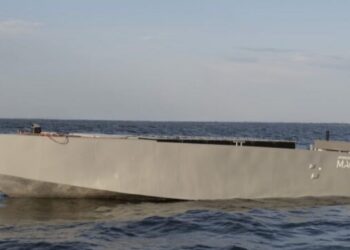
Kraken Technology Group closed a £145M Series B making it the newest defence tech unicorn to come out of the UK. The funding, led by DTCP — which has been active recently — will be used to continue developing more technology and payload capabilities for its vessels, as well as expanding localised manufacturing facilities in geographies where it is active globally. Read Ingrid Lunden’s piece on the announcement here. More funding announcements from Six Robotics, Trinity Robotics, and Proxima Fusion are demystified below in our Deals section.
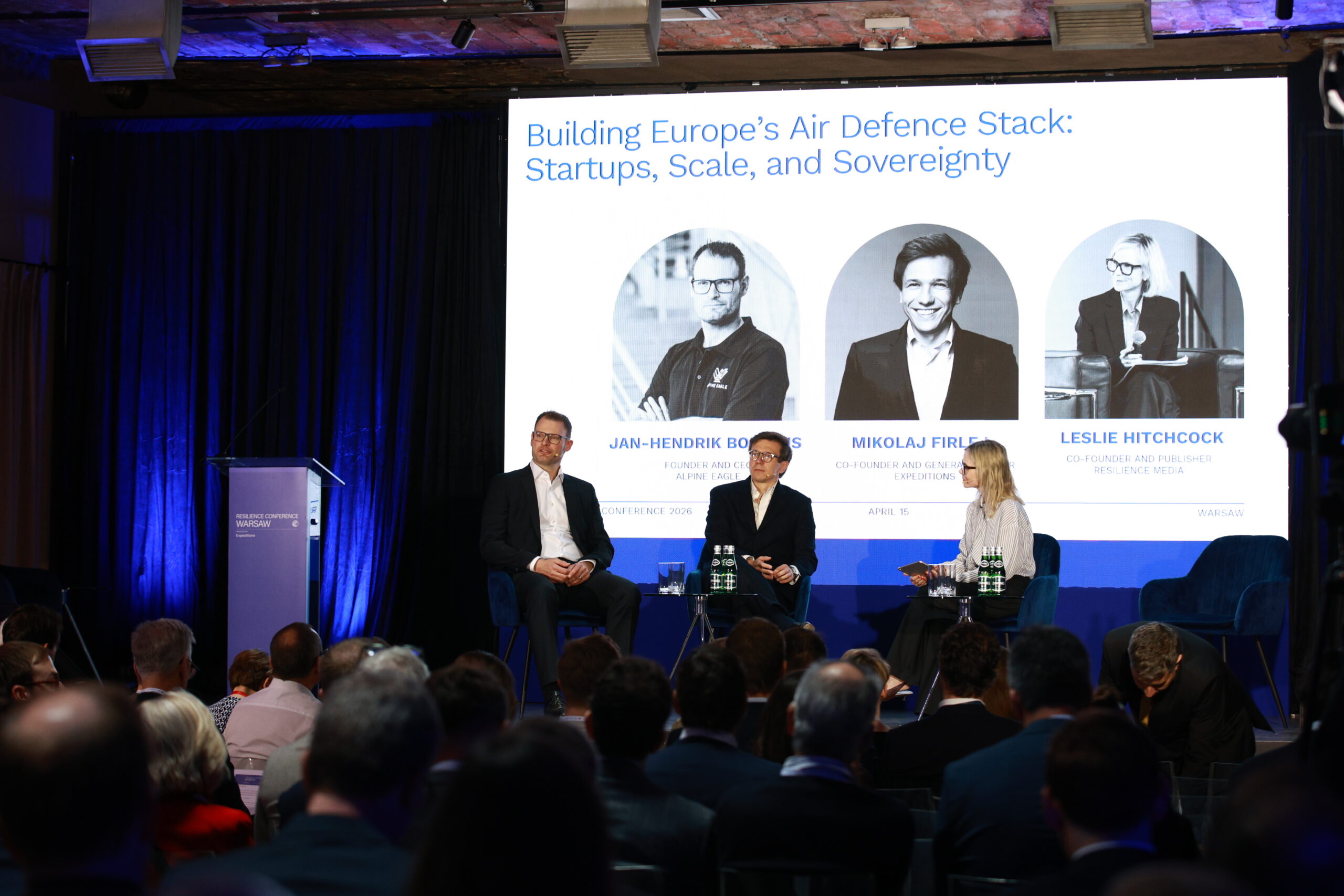
Speaking of unicorns, this week we announced that Sven Kruck, Co-CEO of Quantum Systems will join us on stage at Resilience Conference London, following the company’s monster funding announcement. Also joining us are VC players from across Europe and the States funding defence tech: Nicola Sinclair, Twin Track Ventures; Eric Slesinger, 201 Ventures; and Bastiaan Janmaat, Linse Capital.
Early Bird tickets are available until the end of July. Get yours today and we’ll see you in London 5-6 October.
Danish-Ukrainian MITS Capital doubled down on Denmark by investing in Dropla Tech, as reported by Luke Smith: “We were not looking for capital. We were looking for infrastructure,” said Viacheslav Shvaidak, co-founder and CEO of Dropla Tech. “For a company scaling between Denmark and Ukraine, that is worth more than any check.” Read the full piece here. More on the Ukrainian investment landscape can be found in our Dispatches from Ukraine section below, where Luke analyses a Pitchbook report on funding into the country’s tech.
Elsewhere on Resilience Media:
- GUEST POST: National defence requires much better cybersecurity advice for citizens
- IQM becomes first European quantum computing company to list on NASDAQ
- Nordic Air Defence demonstrates a super-fast, super-light drone designed to destroy other drones
- Software before drones: Dutch defence ministry bets on interoperability
I’ll be back in your inboxes next week. Thanks for reading.
-Leslie Hitchcock, co-founder and Publisher, Resilience Media
DEALS 💰
Kraken becomes the UK’s newest defence tech unicorn with a fresh $175M raise
- Kraken has been one of the more visible UK defence tech startups to make waves around the world with its distinctive uncrewed surface vessels, and now the company is capitalising on that activity with a large fundraise.
- Today Kraken confirmed that it has raised $175 million, a Series B values the company at $1 billion, making it the latest “unicorn” to come out of the UK.
- The funding will be used both to continue developing more technology and payload capabilities for its vessels, and to set up more localised manufacturing facilities in geographies where it is active globally.
Six Robotics raises €12M to help individual drones work as a team
- Six Robotics builds software, called Valkyrie, that lets a single operator command multiple drones as one coordinated team rather than flying each of them separately, handling the mission planning and real-time decision-making needed to keep them working together in contested or degraded conditions — environments where GPS and communications links can’t be relied on.
- The company announced a €12 million seed round of funding to accelerate development of Valkyrie, expand deployments across European and allied defence markets, and grow its team.
- The round is led by DTCP, a Hamburg-based growth equity investment firm, through its DTCP Defence fund, with Denmark’s state-owned EIFO and Copenhagen VC firm Scale Capital also participating. DTCP Defence is the vehicle behind Project Liberty, the €500 million fund DTCP launched in January dedicated exclusively to European defence, security and resilience technology.
Trinity Robotics raises more than €500,000 to expand production of autonomous combat vehicles
- In Ukrainian, Konyk means “horse,” and that’s exactly what Kyiv-based Trinity Robotics has built: an autonomous pack vehicle to support soldiers in the field, whether it comes to delivering resources, dropping off ammunition, or taking a wounded comrade back to base.
- The company calls their device Konyk One, and it’s just nabbed them over half a million euros in funding from Front Ventures, Hede Capital, and Defence Builder Fund I.
- The $18,000 Konyk One is seeing active duty, and the founders report success on their mission to bring these systems to the front line.
- Weighing in at 460 kg and able to carry up to 300 kg, the Konyks can go 14 km/h with a range of 45 kilometers.
Proxima Fusion raises €411m to accelerate Europe’s fusion power ambitions
- Europe’s bid to commercialise fusion energy received a major boost on Tuesday after German startup Proxima Fusion announced a €411 million funding round, valuing the company at €2.4 billion and making it one of the best-funded fusion businesses on the continent.
- The investment was led by XTX Ventures and East X Ventures, with strategic backing from Google and German energy giant RWE, alongside a syndicate of existing and new investors including KfW Capital, Germany’s Federal Agency for Disruptive Innovation (SPRIND), Plural, Balderton Capital, Lightspeed, and the European Innovation Council (EIC) Fund.
- The latest raise brings Proxima’s total funding to more than €650 million, including €95 million in public grants, and provides the capital needed to develop Alpha, its planned net-energy stellarator demonstrator near Munich.
Danish-Ukrainian defence tech axis deepens as MITS Capital invests in Dropla Tech
- MITS Capital, the Kyiv-based defence tech VC, has made an investment in Dropla Tech.
- The Danish-Ukrainian startup develops edge-AI explosive threat detection systems, dubbed “Blue Eyes,” and unmanned ground vehicle systems.
- The investment amount and valuation are not being disclosed; it will be used to help the company scale and enter more NATO-aligned markets.

DISPATCHES FROM KYIV

Ukraine 2025 defence tech investment topped $57.2M, but the ‘funded market’ is $6.8B says PitchBook
Luke Smith, Contributor
Ukraine’s defense tech sector has proven its products on the battlefield. But the question for investors is whether any of this battlefield validation converts into investable businesses. A new report from PitchBook dives into the details. Here are some of the more notable takeaways:
By the numbers
PitchBook said that $57.2 million was invested into Ukrainian defense tech in 2025, spread over 28 disclosed deals. The figure doesn’t take into account investments where the amounts were not made public, nor investments that were made without any publicity at all, nor the many significant defence tech companies that have never raised outside funding; yet directionally the figure is a small sum compared to the $510 billion in venture capital invested into privately-backed startups in the same period globally – the majority in the United States.
To be fair, Ukraine started from virtually nothing, it’s carrying this all out under heavy clouds of war with Russia, and maybe most importantly, it’s been growing fast. In 2023, just $0.2 million had been invested across six deals. By 2024, that number had jumped to $37.9 million across 20 deals, and then $57.2 million by 2025. Again, these are just venture rounds that have been disclosed. Brave1 and Kyiv School of Economics (KSE) estimates, which also fold in grants alongside priced rounds, roughly double those disclosed figures.
PitchBook cites KSE data published earlier this year that estimates the total “funded market” for defence tech in Ukraine in 2025 – that is, the purchased value of what these companies are producing in aggregate – and at $6.8 billion, it is a much bigger figure. At about $6.3 billion, UAVs account for the vast majority of that amount, with just $250 million for unmanned ground vehicles and $220 million for electronic warfare.
Production capacity, meanwhile, is much larger than funded demand. In 2025, it was closer to $35 billion, and the researchers estimate that it potentially could grow to as much as $55 billion in 2026. The larger figure presumes a larger export market this year.
One customer
Right now, however, rather than a diversified commercial customer base, there is just one buyer. All the demand for Ukrainian defense tech comes from the Ministry of Defence using monies from public budgets, donor-financed procurement, and unit-level purchasing.
Many Ukrainian defense tech companies work with individual military units directly. Soldiers log combat evidence in DELTA, Ukraine’s battlefield situational-awareness system, and earn ePoints they spend in the Brave1 Market on drones, robots, and EW kits. It is an excellent mechanism for facilitating fast procurement in wartime, but it is not a system that can be replicated with exports, where multi-year, bulk order contracts are the norm.