Europe’s bid to commercialise fusion energy received a major boost on Tuesday after German startup Proxima Fusion announced a €411 million funding round, valuing the company at €2.4 billion and making it one of the best-funded fusion businesses on the continent.
The investment was led by XTX Ventures and East X Ventures, with strategic backing from Google and German energy giant RWE, alongside a syndicate of existing and new investors including KfW Capital, Germany’s Federal Agency for Disruptive Innovation (SPRIND), Plural, Balderton Capital, Lightspeed, and the European Innovation Council (EIC) Fund.
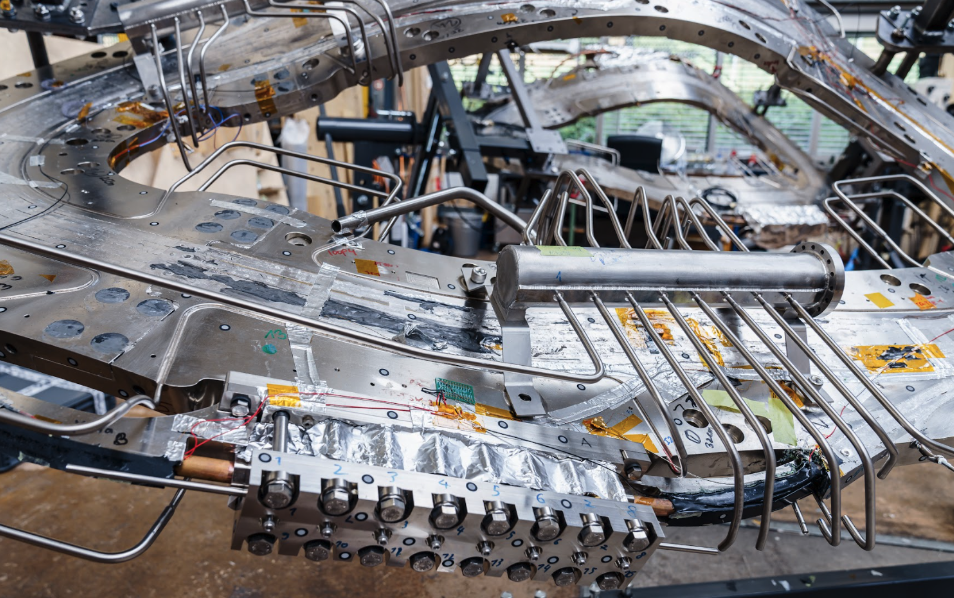
The latest raise brings Proxima’s total funding to more than €650 million, including €95 million in public grants, and provides the capital needed to develop Alpha, its planned net-energy stellarator demonstrator near Munich.
Founded as a spin-out from the Max Planck Institute for Plasma Physics, Proxima is developing fusion power plants based on stellarators, an alternative to the more widely pursued tokamak design. The company argues advances in high-temperature superconducting magnets and modern computing make stellarators a more practical route to commercial fusion than previously thought.
The funding follows an agreement signed earlier this year between Proxima, RWE, the Free State of Bavaria, and the Max Planck Institute to develop what they hope will become the first stellarator fusion power plant on the site of the former Gundremmingen nuclear power station.
Chief executive and co-founder Francesco Sciortino said the investment demonstrated Europe’s ability to compete in the global race to commercialise fusion technology.
“Europe is racing with the United States and China to get to the first fusion power plant,” he said. “Investors recognise both the urgency and the opportunity of what we’re doing.”
Proxima will use the fresh capital to finish its Alpha demonstrator, ramp up production of the superconducting magnets at the heart of its stellarator design, and add engineers and manufacturing staff across its sites in Munich, Oxford and Zurich.
Fusion remains years away from commercial deployment, but investors continue to pour billions into companies promising virtually limitless, carbon-free electricity if the longstanding scientific and engineering challenges can finally be overcome.