Most militaries buy hardware first and work out how to make it talk to everything else afterwards. The Dutch Ministry of Defence is trying it the other way round.
On Friday, the ministry announced a three-year partnership worth more than €30 million with Dutch defence company Intelic, to build the command-and-control software that will connect its future fleet of unmanned aerial and ground systems — before it has settled on which manufacturers will even supply the drones.
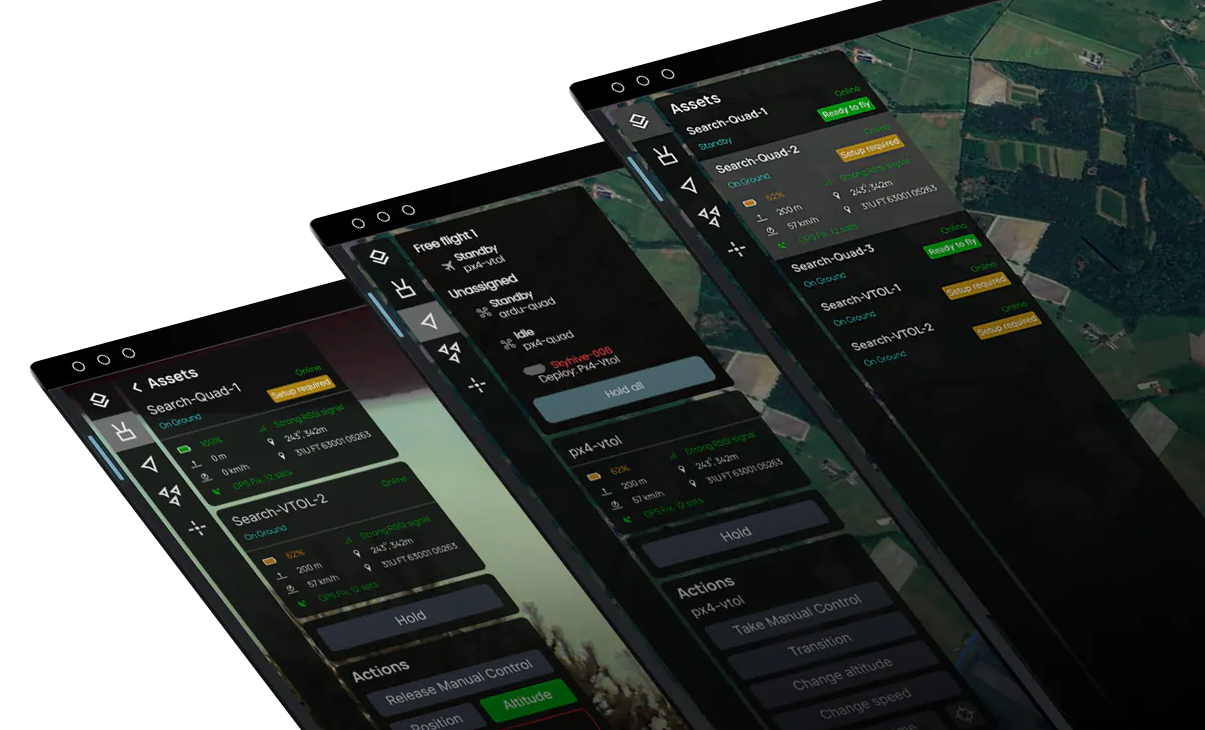
At the centre of the deal is NEXUS, Intelic’s command-and-control platform, which lets unmanned systems from different manufacturers operate within the same mission environment. The Ministry’s reasoning is that buying the coordination software first means any drones purchased later only need to plug into a system that’s already running.
Derk Boswijk, the Netherlands’ state secretary for defence responsible for arms procurement, points to lessons drawn from Ukraine as the thinking behind the shift. Indeed, Ukraine’s drone effort grew through rapid, decentralised development from hundreds of small suppliers, which produced fast results early on but also left forces managing a “zoo of solutions” that struggled to work together.
“Ukraine teaches us that not only the hardware, but also the software is of great importance,” Boswijk said in a statement. “Making different drone systems work together makes the fight easier.”
Notably, Intelic also said that NEXUS has been used in Ukraine since 2025, meaning the ministry isn’t signing up to an entirely unproven system.
Intelic describes the deal as making the Netherlands the first country to commit to this kind of software-first approach. For Boswijk, the more significant change is in how the two sides work together: rather than treating Intelic as a supplier hired to deliver a fixed product, the arrangement locks the two organisations into a multi-year relationship in which both sides are expected to keep adapting the software as needs change.
“We are entering into a partnership together, leaving the classic customer-supplier relationship behind us and committing to each other for a longer period of time,” Boswijk said.

Derk Boswijk: Minister for Arms Procurement and Personnel
Solving the interoperability problem
Oslo-based Six Robotics made a strikingly similar case to investors this week, closing a €12 million seed round to build coordination software already used by, among others, the Norwegian Armed Forces. Intelic’s deal with the Dutch Ministry of Defence works differently: NEXUS isn’t just a product a military has bought, it’s now the standard any drone the ministry buys in future will have to work with, agreed before a single drone has been purchased.
Alongside NEXUS, the company also runs Intelic BASE, a procurement marketplace it launched in May where European Ministries of Defence can browse and buy unmanned systems from multiple manufacturers that are already integrated with NEXUS.
Intelic co-founder and CEO Maurits Korthals Altes said that with European drone manufacturers now numbering well into the high hundreds, interoperability has become the harder problem for defence organisations.
“The challenge is no longer access to technology, but ensuring those technologies can operate together,” Altes said. “Military advantage increasingly depends on software that connects platforms rather than locking governments into individual systems.”