Tuesday 18 August, 2026
[email protected]
Resilience Media
  • News
    • Events
    • Interview
    • Startups
    • Venture
    • Weekly Digest
  • Resilience Conference
    • Resilience Conference London — Oct 2026
    • Resilience Conference Copenhagen — May 2026 (PAST)
    • Resilience Conference Warsaw — Apr 2026 (PAST)
  • Launch
  • About
  • Guest Posts
    • Author a Post
  • Subscribe
No Result
View All Result
  • News
    • Events
    • Interview
    • Startups
    • Venture
    • Weekly Digest
  • Resilience Conference
    • Resilience Conference London — Oct 2026
    • Resilience Conference Copenhagen — May 2026 (PAST)
    • Resilience Conference Warsaw — Apr 2026 (PAST)
  • Launch
  • About
  • Guest Posts
    • Author a Post
  • Subscribe
No Result
View All Result
Resilience Media
No Result
View All Result

LITILIT secures €8m to develop high-power modular laser system

Lithuanian laser specialist targets 1,000W system as it looks to take femtosecond technology into large-scale industrial production

Carly PagebyCarly Page
August 18, 2026
in News
Share on Linkedin

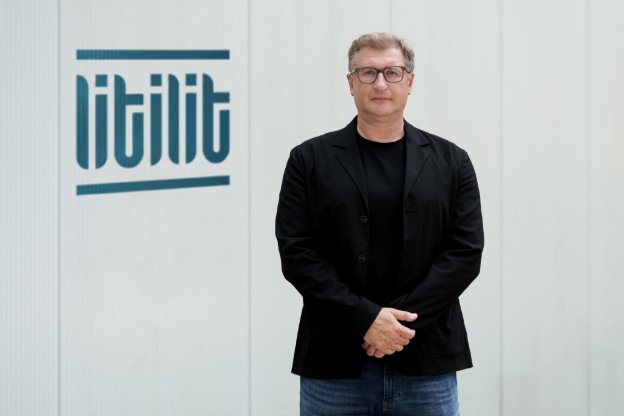
Lithuanian laser specialist LITILIT has secured €8 million in financing to develop a high-power modular femtosecond laser system, technology that could ultimately find applications across advanced manufacturing, aerospace and defence supply chains.

You Might Also Like

Nigeria’s Terra raises $18M, opens an office in London and facility in Ghana

Fibre-optic drones: flying in the face of reason

Australia puts speed ahead of perfection in new defence technology strategy

Lithuania’s national development bank, ILTE, will cover most of the € 10 million bill with an €8 million loan. LITILIT will put in the remaining €2 million as it works towards a FEMODA system capable of reaching 1,000W of average optical power.

Development began in 2024, with commercialisation targeted for the second half of 2029.

Rather than concentrating its output into a single beam, FEMODA is being designed to distribute power across between 10 and 20 independent channels. Each could deliver femtosecond pulses to a separate processing point, potentially allowing manufacturers to use the technology across larger components or multiple production stages simultaneously.

Femtosecond lasers deliver extremely short pulses that can remove or modify material while minimising heat transfer into the surrounding structure. That precision has already made them useful in semiconductor, electronics, and medical manufacturing, but LITILIT believes their industrial footprint can expand considerably.

The company is targeting applications including mass production of metal tools and specialist coatings across large surfaces such as aircraft and vehicle bodies. Those capabilities also have an obvious relevance to defence manufacturing, where greater production capacity, precision processing and the ability to work with advanced materials are increasingly important.

A key part of the project is therefore less about raw power than making the technology easier to deploy on factory floors.

Existing high-power femtosecond systems can require water-cooling infrastructure, heavy optical equipment and tightly controlled operating environments. LITILIT says FEMODA will instead integrate control electronics, optics and cooling into individual industrial modules, designed to tolerate greater variation in temperature, humidity and vibration.

The modular approach could also improve resilience. Individual units can be combined to increase system power, while a failed module could be replaced without taking out the entire system.

FEMODA forms part of a wider push by LITILIT to industrialise femtosecond laser production. The company began developing a new factory in Vilnius in June, which is due to begin operating this autumn and is targeting annual capacity of 3,000 lasers.

If LITILIT can translate that scalability from individual lasers to high-power modular systems, femtosecond technology could move from a specialist manufacturing tool towards a more practical part of high-volume industrial production.

Tags: laserLITILIT
Previous Post

Nigeria’s Terra raises $18M, opens an office in London and facility in Ghana

Carly Page

Carly Page

Carly Page is a freelance journalist and copywriter with 10+ years of experience covering the technology industry, and was formerly a senior cybersecurity reporter at TechCrunch. Bylines include Forbes, IT Pro, LeadDev, The Register, TechCrunch, TechFinitive, TechRadar, TES, The Telegraph, TIME, Uswitch, WIRED, & more.

Related News

Terra bags $22M more to build out Africa’s first defence prime

Nigeria’s Terra raises $18M, opens an office in London and facility in Ghana

byIngrid Lunden
August 17, 2026

Terra Industries, the Nigerian defence tech startup building aerial and ground systems designed for defence of national and critical infrastructure,...

Fibre-optic drones: flying in the face of reason

Fibre-optic drones: flying in the face of reason

byJohn Biggs
August 14, 2026

  The image is arresting: a once-pristine Ukrainian forest is now strung with plastic fibre-optic cable, gossamer lines spanning trees...

A helicopter flying next to a flag flying in the sky

Australia puts speed ahead of perfection in new defence technology strategy

byCarly Page
August 13, 2026

Australia has unveiled a 10-year plan to overhaul how it develops and buys military technology, with AI, autonomous systems and...

Image credit: Kraken

Chinese tech in Royal Navy drones exposes UK defence supply chain dilemma

byCarly Page
August 12, 2026

Britain’s push for cheaper, faster military technology comes with a catch: somewhere inside that shiny new British-built drone, there may...

grey concrete wall

Material issue: the sovereign supply chain Europe is trying to build

byPaul Sawers
August 11, 2026

Drones need carbon fibre, buildings need cement, and shells need TNT -- meet the startups helping Europe to make its...

UK-based OLIX raises $312 million Series B to build better AI infrastructure

UK-based OLIX raises $312 million Series B to build better AI infrastructure

byJohn Biggs
August 4, 2026

London-based OLIX has raised a $312 million Series B at a $3.3 billion valuation, one of the largest in the...

Ore Energy raises $43m to scale iron-air batteries for Europe’s AI boom

Ore Energy raises $43m to scale iron-air batteries for Europe’s AI boom

byCarly Page
August 4, 2026

Amsterdam-based Ore Energy has raised $43 million (£32 million) in Series A funding to commercialise its iron-air battery technology, betting...

Taiwan’s defence plans are up in the air

Taiwan’s defence plans are up in the air

byHarry Saunders
July 31, 2026

For an island nation with no regional ambitions and territory roughly the size of the Netherlands, Taiwan has an impressive...

Load More

Top stories

Image credit: Kraken
News

Chinese tech in Royal Navy drones exposes UK defence supply chain dilemma

August 12, 2026
Terra bags $22M more to build out Africa’s first defence prime
News

Nigeria’s Terra raises $18M, opens an office in London and facility in Ghana

August 17, 2026
A helicopter flying next to a flag flying in the sky
News

Australia puts speed ahead of perfection in new defence technology strategy

August 13, 2026
grey concrete wall
NATO

Material issue: the sovereign supply chain Europe is trying to build

August 11, 2026

Resilience Media is an independent publication covering the future of defence, security, and resilience. Our reporting focuses on emerging technologies, strategic threats, and the growing role of startups and investors in the defence of democracy.

  • About
  • News
  • Resilence Conference
    • Resilience Conference Copenhagen 2026
    • Resilience Conference Warsaw 2026
    • Resilience Conference 2026
  • Guest Posts
  • Subscribe
  • Privacy Policy
  • Terms & Conditions
  • Mission Statement & Code of Practice
  • Press

© 2026 Resilience Media

No Result
View All Result
  • Home
  • About
  • Subscribe
  • Events
  • Guest Posts
  • Interview
  • News
  • Resilience Conference London 2026
  • Resilience Conference Copenhagen 2026
  • Resilience Conference Warsaw 2026

© 2026 Resilience Media

This website uses cookies. By continuing to use this website you are giving consent to cookies being used. Visit our Privacy and Cookie Policy.